New Delhi [India], October 30 (ANI): The US Embassy in India on Friday marked one year of the US-India Major Defence Partnership framework, highlighting key priorities of defence cooperation between the two countries, including operational coordination, information sharing and defence industrial collaboration.
In a post on X, the US Embassy in India shared highlights of the framework, which was signed on October 31, 2025, by US Secretary of War Pete Hegseth and Defence Minister Rajnath Singh.
https://t.co/2OmsEby82r
— U.S. Embassy India (@USAndIndia) October 30, 2026
"One year of the US-India Major Defense Partnership. Signed in October 2025 by U.S. Secretary of War Pete Hegseth and Indian Defense Minister Rajnath Singh, this landmark framework guides the U.S.-India defense relationship," the embassy said.
Highlighting the key priorities under the framework, the embassy listed: "Operational coordination, information sharing, regional and global cooperation, defense industrial, science and technology."
It further stated, "Advancing cooperation across land, sea, air, space, and cyberspace."
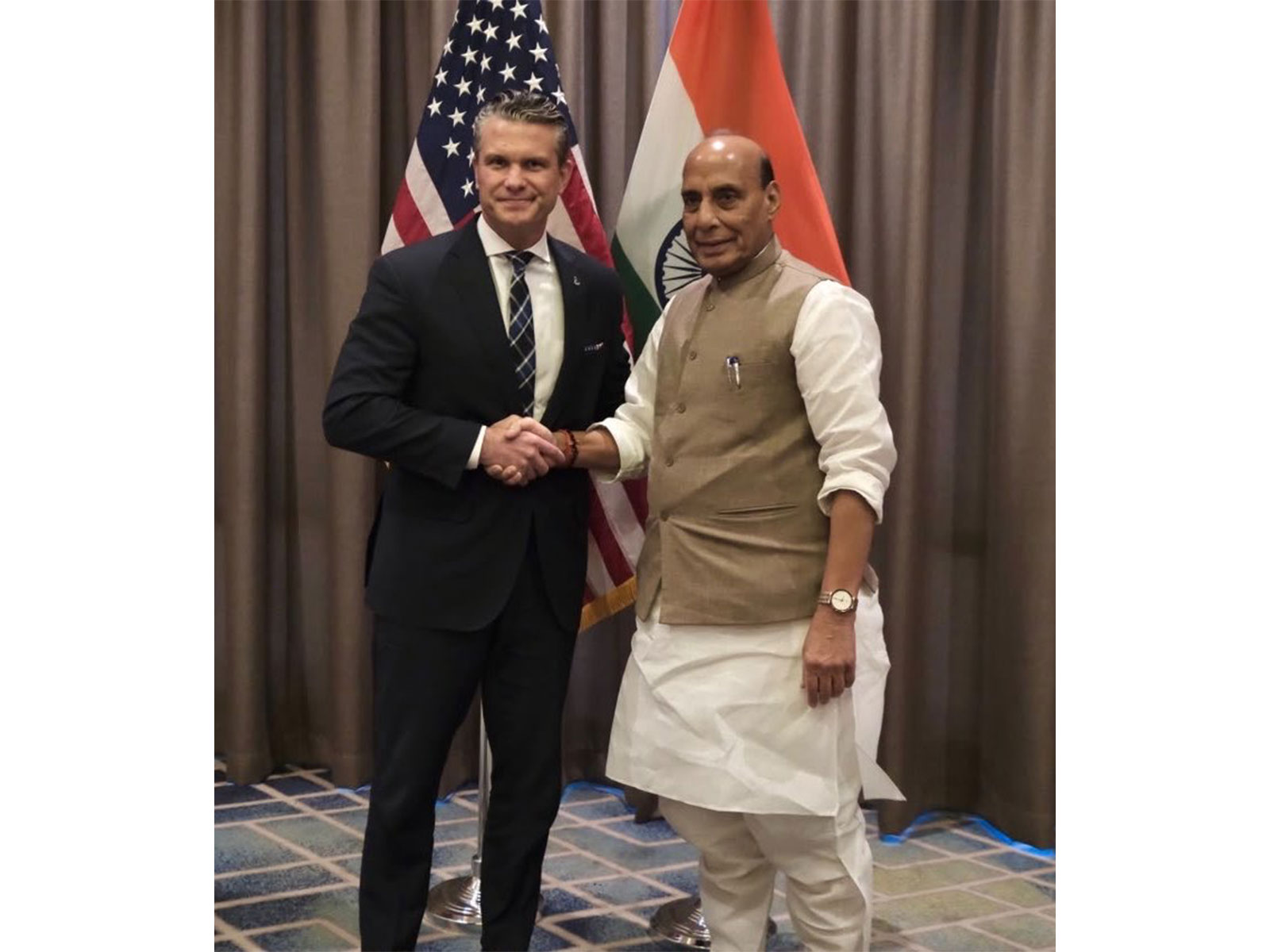
The highlight comes days after Defence Minister Rajnath Singh met his US counterpart Pete Hegseth in Cebu, the Philippines, on the sidelines of the 13th Association of Southeast Asian Nations (ASEAN) Defence Ministers' Meeting (ADMM)-Plus on Wednesday.
The meeting followed the signing of the framework by the two leaders in October 2025, which marked a new chapter in India-US defence ties and outlined a roadmap to transform the partnership over the next 10 years.
The 10-year Framework for the US-India Major Defence Partnership was officially signed on October 31, 2025, in Kuala Lumpur, Malaysia, on the sidelines of the 12th ASEAN Defence Ministers' Meeting-Plus.
According to the Ministry of Defence, the framework is intended to provide a unified vision and policy direction for deepening defence cooperation between India and the United States.
Earlier on Friday, Rajnath Singh departed for Delhi after concluding his engagements at the 13th ASEAN Defence Ministers’ Meeting-Plus (ADMM-Plus).
He held bilateral meetings with the defence ministers of six countries. Alongwith Hegseth, he conducted high-level discussions with Japanese Defence Minister Shinjiro Koizumi and Australian Defence Minister Richard Marles.
Additionally, Singh met with Gilberto C Teodoro Jr., the defence minister of the host nation, the Philippines, as well as South Korean Defence Minister Kang Shin-chul and Singaporean Defence Minister Chan Chun Sing to strengthen regional security ties.
The visit followed Singh's participation in the 13th ADMM-Plus, where he highlighted India's commitment to strengthening defence cooperation with ASEAN member states and promoting peace, stability and prosperity across the Indo-Pacific region.
During his address at the meeting, the Defence Minister proposed the establishment of an ‘India-ASEAN Youth Bridge’ to strengthen people-to-people connectivity, digital innovation and capacity building among young people in India and ASEAN countries.
Singh also reiterated India's commitment to regional security and counter-terrorism cooperation, citing Operation Sindoor as an example of India's approach to tackling terrorist infrastructure.
The ADMM is the highest defence consultative and cooperative mechanism in ASEAN. ADMM-Plus is a platform for ASEAN member states (Brunei, Cambodia, Indonesia, Lao PDR, Malaysia, Myanmar, Philippines, Singapore, Thailand, Timor-Leste and Vietnam) and its eight Dialogue Partners (India, US, China, Russia, Japan, South Korea, Australia and New Zealand) to strengthen security and defence cooperation.
India became the dialogue partner of ASEAN in 1992, and the inaugural ADMM-Plus was convened in Hanoi, Vietnam on October 12, 2010. Since 2017, ADMM-Plus Ministers have been meeting annually to bolster defence cooperation amongst ASEAN and the Plus countries.
The Philippines is the chair of ADMM-Plus for 2026. Under the construct of ADMM-Plus, India is co-chairing the Experts Working Group on Counter-Terrorism with Malaysia for the cycle 2024-2027. India’s active participation in the ADMM-Plus mechanisms underscores the deepening defence diplomacy in Southeast Asia under the Act East policy, aimed at ensuring peace, stability and collective growth in the region. (ANI)