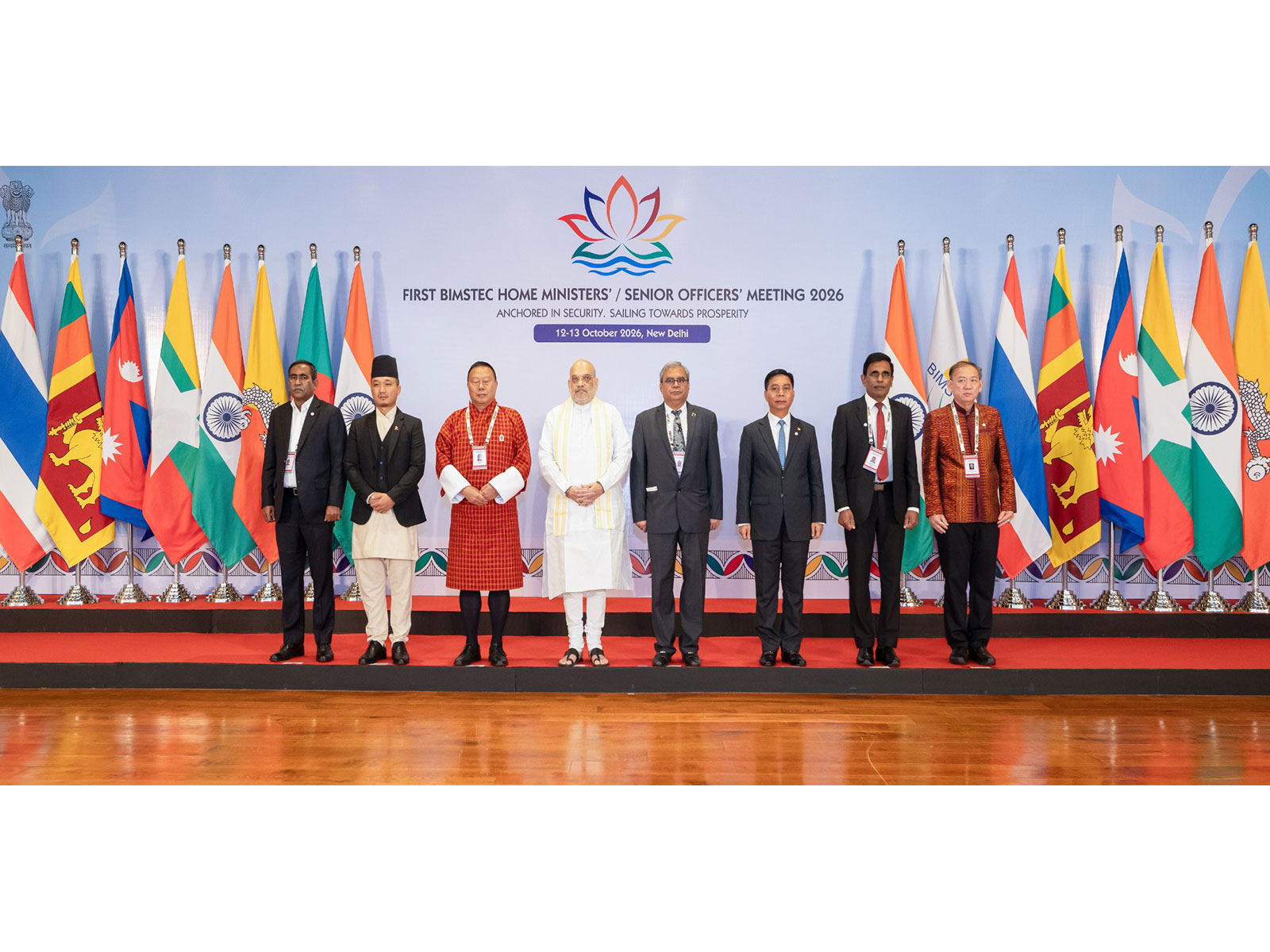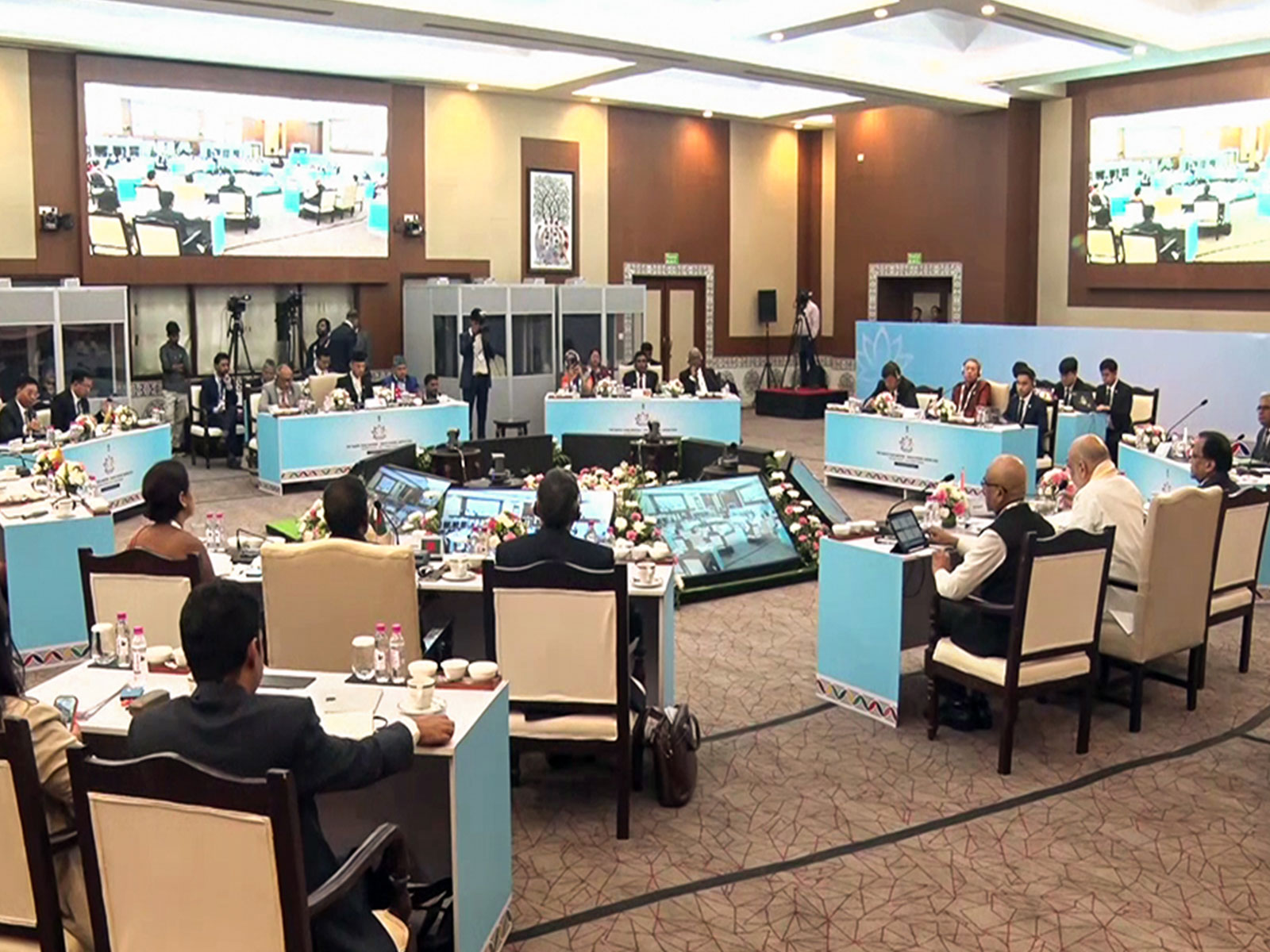
New Delhi [India], October 13 (ANI) India and other BIMSTEC member countries on Tuesday approved five key regional security initiatives, including agreements on human trafficking, drug control, money laundering, terror financing and illicit financial flows, at the first BIMSTEC Home Ministers' Meeting chaired by Union Home Minister Amit Shah in New Delhi.
The meeting also adopted the Delhi Declaration, reaffirming the commitment of member countries to strengthening regional security, trust, and cooperation in the Bay of Bengal region.
The five initiatives approved by the Home Ministers include the BIMSTEC Convention against trafficking in persons, the BIMSTEC plan of action on drug control, a Memorandum of Understanding (MoU) on capacity building to combat money laundering and terror financing, a plan of action on illicit financial flows and their prevention, and a plan of action to enhance preparedness and coordination in addressing natural disasters in the Bay of Bengal region.
The BIMSTEC convention against trafficking in persons aimed at enhancing cooperation among member countries in the prevention of human trafficking, criminalisation of the offence, and the protection and rehabilitation of victims of human trafficking.
The drug control plan seeks to combat the illicit trafficking of narcotic drugs, psychotropic substances and precursor chemicals. The MoU on money laundering and terror financing provides for expert training, the exchange of best practices and cooperation in financial intelligence, investigations, asset recovery, anti-money laundering measures, countering terror financing and proliferation financing.
The BIMSTEC plan of action on Illicit financial flows and their prevention aimed at identifying the sources, risks, and channels of illicit financial flows among member countries.
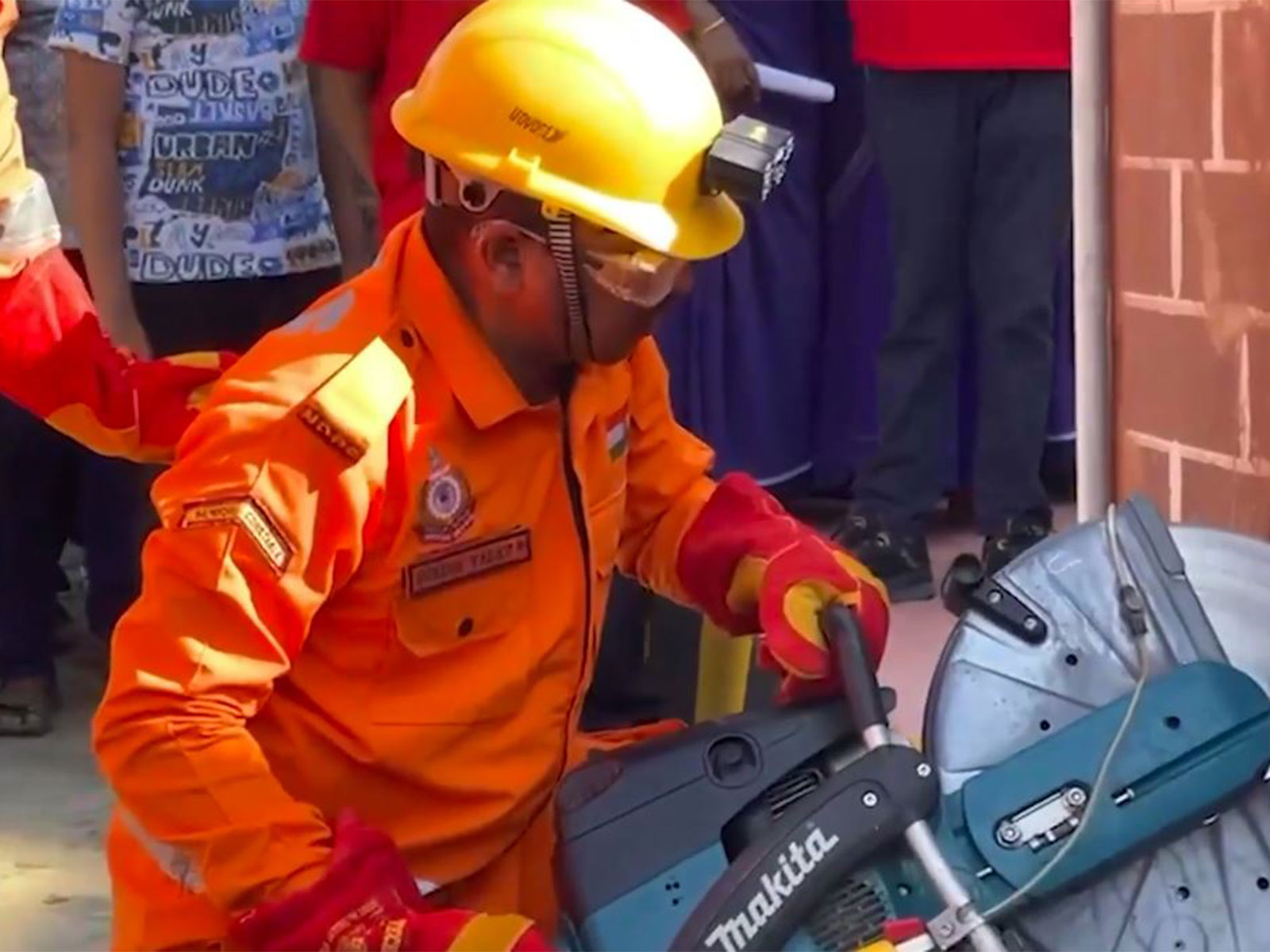
A plan of action for enhancing preparedness and coordination to address natural disasters in the Bay of Bengal Region proposed coordinated efforts by member countries in regional risk planning, joint exercises, early warning systems, disaster mapping, training centres, information sharing, research, technological innovation, and tsunami risk reduction.
The declaration emphasised combating cross-border terrorism, terror financing, radicalisation, drug trafficking, human trafficking, cybercrime, and organised crime.
It prioritised information sharing, mutual legal assistance, extradition, capacity building, and the effective implementation of existing agreements and plans of action. It also emphasised the protection of victims of human trafficking involved in online scams. The declaration appreciated India's leadership in strengthening regional security cooperation.
Ministry of Home Affairs (MHA), in a statement, said that India reiterated its commitment to sharing expertise in police training, counter-terrorism operations and forensic investigations.
The meeting also highlighted cooperation in disaster management, including the proposed BIMSTEC Centre for disaster management in Gujarat's Jamnagar.
The Bay of Bengal Initiative for Multi-Sectoral Technical and Economic Cooperation (BIMSTEC) brings together Bangladesh, Bhutan, India, Myanmar, Nepal, Sri Lanka and Thailand, linking South and Southeast Asia through regional cooperation in multiple sectors
The decision to hold meetings of BIMSTEC Home Ministers was taken at the fourth BIMSTEC Summit in 2018 to strengthen regional security coordination. During the Sixth BIMSTEC Summit, Prime Minister Narendra Modi reiterated India's support for the initiative and its commitment to hosting the first meeting.
In his address, the Union Home Minister emphasised India's policy of 'Zero Tolerance' towards terrorism and called for enhanced cooperation in combating terrorism, cross-border organised crime, drug trafficking, human trafficking, and emerging cyber threats.
He stressed the importance of timely intelligence sharing, financial investigations, mutual legal assistance, and extradition to ensure that criminals and terrorists are brought to justice.
Shah stated that our shared resolve should be to ensure that terrorist networks are not allowed to find safe havens, recruit members, provide training, raise funds, or carry out activities against neighboring countries from any part of the region.
The minister said that, in accordance with national laws and applicable treaties, cooperation in mutual legal assistance and extradition could strengthen our efforts to bring criminals to justice.
He also highlighted the importance of five key areas of cooperation: drug control, counter-terrorism and legal cooperation, repatriation of fugitive criminals, cyber-security and cybercrime investigations, and institutional cooperation and capacity building.
The Minister emphasised the need for a coordinated regional approach to combat illicit financial transactions and terror financing. He also stressed the importance of strengthening cooperation among law enforcement agencies, intelligence agencies, and border management agencies.
Shah said India believes that drug trafficking is essentially 'death trafficking.' In this spirit, he reiterated that there is nothing 'golden' about the trafficking of narcotics.
He further said, this is not merely the drug trade, but an attack on the lives of our youth, society, culture, and the future of coming generations. Union Home Minister said, this cannot be tackled by the efforts of a single country alone. (ANI)
BIMSTEC Home Ministers approve five regional security initiatives, adopt Delhi Declaration