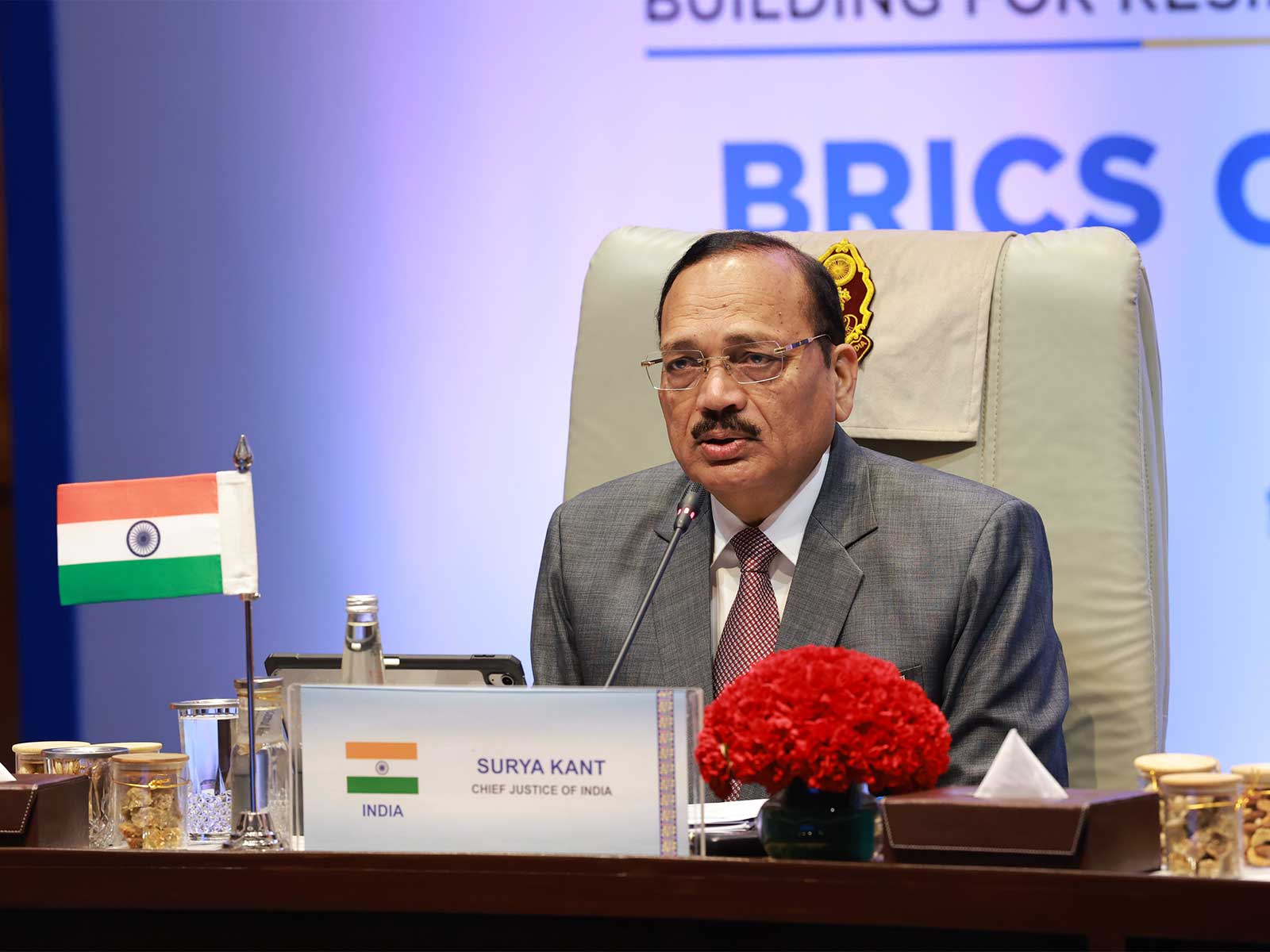
New Delhi [India] September 5 (ANI): Chief Justice of India Surya Kant on Saturday said BRICS should become a “living Nalanda University”, drawing on the ancient institution’s tradition of bringing scholars from different civilisations together to exchange and refine ideas.
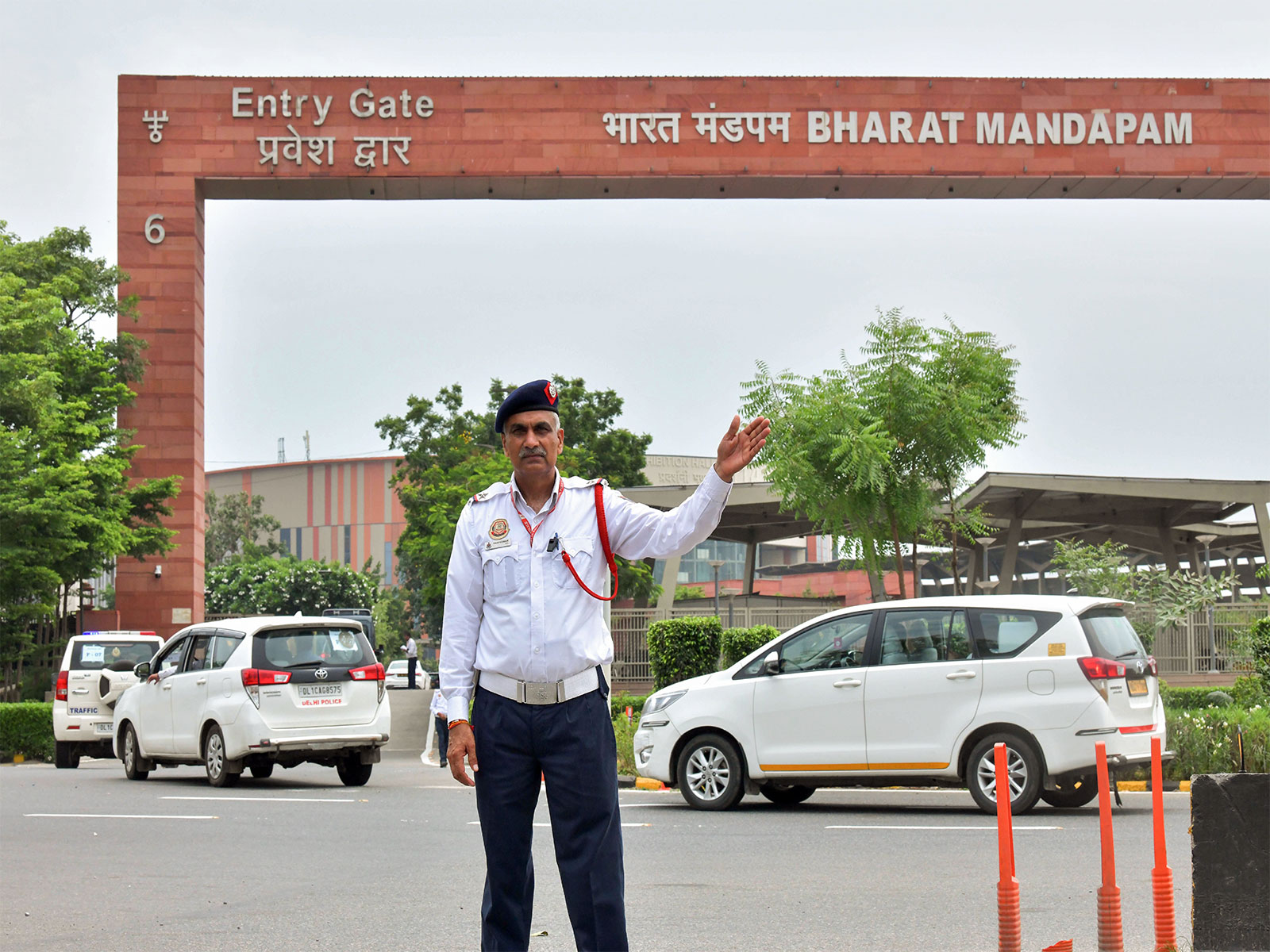
Addressing the second day of the BRICS Chief Justices’ Forum at the Supreme Court of India, the CJI said Nalanda, more than a millennium ago, was a centre of intellectual inquiry where scholars from distant lands gathered to debate and exchange ideas that transcended geographical and cultural boundaries.
He said what made Nalanda unique was that it did not require scholars to first agree upon a common system of law or philosophy before admitting them. Instead, it offered a “healthy and hospitable space for disagreement and deliberation”.
The CJI said this tradition was a precedent for what the BRICS forum sought to achieve -- bringing different schools of thought together to engage directly with each other rather than merely observing one another from a distance.
“That, I would submit, is the truest precedent for what BRICS Forum now seeks to do,” he said.
He said BRICS should similarly provide a space for different judicial systems and traditions to engage with one another.
“BRICS should also be known as the living Nalanda University,” he said.
The CJI also stressed the importance of timely and predictable delivery of justice, saying it was the foundation for economic progress, technology, dispute resolution and sustainable energy.
He compared the justice delivery system to a “load-bearing wall” in a building, saying that while it may not be visible, no building can stand without it.
The CJI said uncertainty over how swiftly and fairly a dispute would be resolved could directly burden foreign investors through higher risk premiums, additional securities and stringent exit clauses.
“Courts that deliver judgments swiftly, consistently, and in language the world can rely upon, are capable to remove that hidden cost altogether,” he said.
The forum’s substantive deliberations are centred on four issues: mediation and international commercial disputes; cross-border enforcement of arbitral awards; artificial intelligence and the judiciary; and judicial leadership and sustainable development.
The session on mediation examined its use as a strategic mechanism for resolving international commercial disputes, while the session on cross-border enforcement of arbitral awards focused on enforcement challenges and prospects for greater procedural harmonisation.
The artificial intelligence session examined the use of digital innovation in judicial administration, including AI-assisted case listing and triage and predictive analytics in court management. It also considered the need to ensure that human judgment remains at the heart of judicial decision-making.
The final session focused on judicial leadership in ecological governance and the role of courts as countries transition towards solar, wind and other sustainable energy systems, including disputes involving renewable infrastructure and forests, wildlife and water bodies.
The forum has brought together judicial representatives from Brazil, China, Egypt, Ethiopia, Indonesia, Iran, Russia, South Africa and the UAE, besides partner countries Belarus, Bolivia, Kazakhstan, Malaysia, Thailand, Uganda and Uzbekistan.
Among the judicial leaders addressing the gathering were Justice Luiz Edson Fachin, President of the Supreme Federal Court of Brazil; Justice Zhang Jun, Chief Justice of China and President of the Supreme People’s Court; Justice Boulos Fahmy Iskander Boulos, Chief Justice of the Supreme Constitutional Court of Egypt; Justice Tewodros Meheret Kebede, President of the Federal Supreme Court of Ethiopia; Justice Sunarto, Chief Justice of Indonesia; Justice Gholam Hossein Mohseni-Eje’I, Chief Justice of Iran; Justice Igor Krasnov, Chief Justice of the Supreme Court of the Russian Federation; Justice Mahube Betty Molemela, President of the Supreme Court of Appeal of South Africa; and Justice Mohammed Hamad Al Badi Al Dhaheri, President of the UAE Federal Supreme Court.
Justice Fachin, who addressed the gathering through a video recording, called for multipolarity and greater international collaboration and stressed the importance of international law and the rule of law amid global instability and transition.
Justice Zhang highlighted judicial cooperation and solidarity among BRICS member and partner states. He also stressed rule-based international trade and commerce and spoke about the growing role of AI in judicial functioning and the judiciary’s role in resolving cross-border commercial disputes.
Justice Boulos spoke about the need for a free and fair legal system with a common global voice, while Justice Kebede focused on alternative dispute resolution mechanisms and the link between the rule of law and economic development.
Justice Sunarto called for the exchange of best practices and a durable platform for judicial dialogue among member nations.
Justice Mohseni-Eje’I highlighted BRICS’ role in shaping economic and political developments and raised concerns over widespread violations of human rights, sovereignty and territorial integrity, humanitarian crises and displacement of civilians.
Justice Krasnov said BRICS had a key role in ensuring cooperation and promoting a multipolar world, while Justice Molemela called for cooperation on international issues and spoke about judicial leadership in ecological governance.
Justice Al Badi Al Dhaheri said arbitration and mediation were integral to the modern economy. He said digital technology and AI were advancing justice delivery but should not eliminate the human element from the process. He also emphasised environmental law as essential to protecting the rights of future generations.
Other participating judicial leaders included Justice Andrei Shved, Chairman of the Supreme Court of Belarus; Justice Romer Saucedo Gomez, President of the Supreme Court of Bolivia; Justice Aslambek Mergaliyev, Chairman of the Supreme Court of Kazakhstan; Justice Datuk Seri Abu Bakar Bin Jais, President of the Court of Appeal of Malaysia; Justice Muntharee Ujjin, President of the Court of Appeal of Thailand; Justice Flavian Zeija, Chief Justice of Uganda; and Justice Malikakhon Kalandarova, Deputy Chairperson of the Supreme Court of Uzbekistan.
The CJI said the forum was aimed at promoting judicial dialogue, exchange of experiences and deeper cooperation among BRICS member states and partner countries on emerging legal and institutional issues.
He urged the delegates to approach the deliberations in the spirit of Nalanda, with openness and rigour, and to test ideas through reason.
“Let us enter our deliberations with that ethos -- open, rigorous and inspired by the pursuit of a higher good,” he said. (ANI)
BRICS should become ‘living Nalanda University’: CJI Surya Kant bats for judicial dialogue, timely justice