VMPL
New Delhi [India], October 8: What if a piece of land could produce both electricity and food? As India expands its renewable energy capacity while confronting the pressures of agricultural productivity and resource use, the possibility of combining solar infrastructure with cultivation is attracting interest. One Delhi-based farming venture is now exploring how the two could work together.
After six years of experimenting with controlled-environment agriculture, 9Growers is turning its attention to agrivoltaics, an approach that combines agricultural production and solar power generation on the same land. For the company, the move represents a shift from growing crops inside carefully managed environments to understanding how food production might coexist with energy infrastructure.
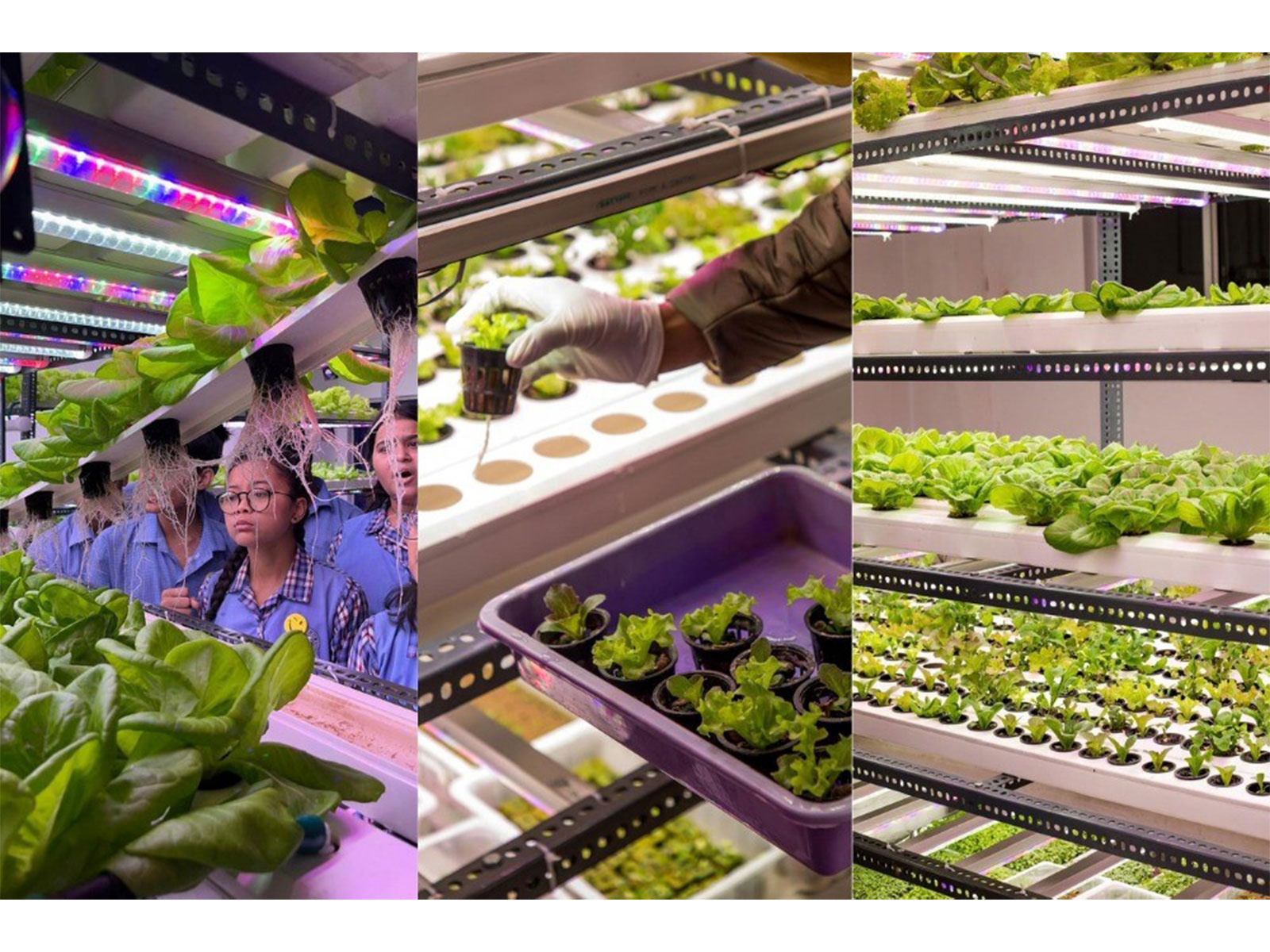
Founded by mother-and-son duo Pratibha Aggarwal and Himanshu Aggarwal, 9Growers began with experiments in urban farming. Its early hydroponic systems were designed around a practical challenge: how to grow fresh produce consistently under Indian conditions, where temperature, space, energy costs and access to resources can affect the economics of cultivation.
Over time, its Delhi-based indoor farms became testing grounds for crop selection, nutrient management, lighting and climate control. Working with chefs, hotels and consumers also brought a commercial dimension to the experiments. The challenge was no longer simply whether a crop could grow successfully, but whether it could be produced consistently, delivered fresh and find a viable market.
The next experiment: Farming alongside solar power
That experience is now shaping 9Growers' proposed agrivoltaics model. The company is exploring a combination of cultivation beneath elevated solar panels and modular growing rooms integrated with solar infrastructure.
The idea is to examine how the same site can support two forms of production without one significantly compromising the other.
But putting agriculture and solar infrastructure together raises practical questions. How much sunlight will different crops need? Can the positioning of panels provide useful shade without restricting growth? How should growing beds be arranged to allow access for solar maintenance? And can the arrangement become economically viable under Indian conditions?
These are among the considerations that will influence the company's experiments with raised beds, soilless cultivation and climate-controlled growing systems.
Rather than presenting agrivoltaics as an established solution, 9Growers is approaching it as the next stage of its research. Its success will depend on how effectively the agricultural and energy components can operate together.
From Delhi's farms to international conversations
Marisa Gerards, Ambassador of the Kingdom of the Netherlands to India, visited 9Growers' Delhi research facility and indoor hydroponic farm. The Netherlands Embassy subsequently shared the visit publicly, highlighting the farm's technology-driven cultivation approach. The engagement was particularly meaningful given the Netherlands' established expertise in advanced agriculture and controlled-environment farming.
For 9Growers, the visit provided an opportunity to demonstrate its work in a field where international experience could offer useful lessons for India's agricultural innovation ecosystem.
Co-founder Himanshu Aggarwal has also taken the company's experience to international platforms. He participated in the House of Switzerland programme during the World Economic Forum gathering in Davos in 2022. The company's work has additionally been represented at the World Food Forum at the Food and Agriculture Organization's headquarters in Rome and the 50th session of the Committee on World Food Security.
Back in India, the company has experimented with bringing cultivation into spaces not traditionally associated with farming. A hydroponic project at the International Institute of Hotel Management's Delhi campus connected food production with culinary education, while a portable farm at Max Estates in Noida explored how growing systems could be introduced into commercial properties.
Through Project PAHAL, developed with the Directorate of Education, Government of NCT of Delhi, 9Growers has also introduced students to modern farming methods, connecting agricultural education with technology and entrepreneurship.
Together, these initiatives have helped the company test how cultivation systems might operate across different environments, an experience that could prove relevant as it moves towards more integrated agricultural infrastructure.
Testing the next phase in Delhi
9Growers is now developing a flagship modern farming campus in Delhi, where it plans to cultivate more than 200 varieties of local and high-value crops, including strawberries in climate-controlled rooms.
The campus is intended to bring together its experience in indoor cultivation, crop development and commercial operations, while providing a setting to further develop and test its agrivoltaics approach.
For a company that started by experimenting with growing food inside Delhi's urban spaces, the next question is considerably larger: can agricultural land and renewable energy infrastructure become productive partners?
The answer will depend on what happens beyond the concept stage, as crop performance, energy generation, operating costs and practical deployment are tested together.
For 9Growers, that is where the next phase of experimentation begins.
(ADVERTORIAL DISCLAIMER: The above press release has been provided by VMPL. ANI will not be responsible in any way for the content of the same)
Can the same land grow food and generate solar power? 9Growers is exploring the possibility