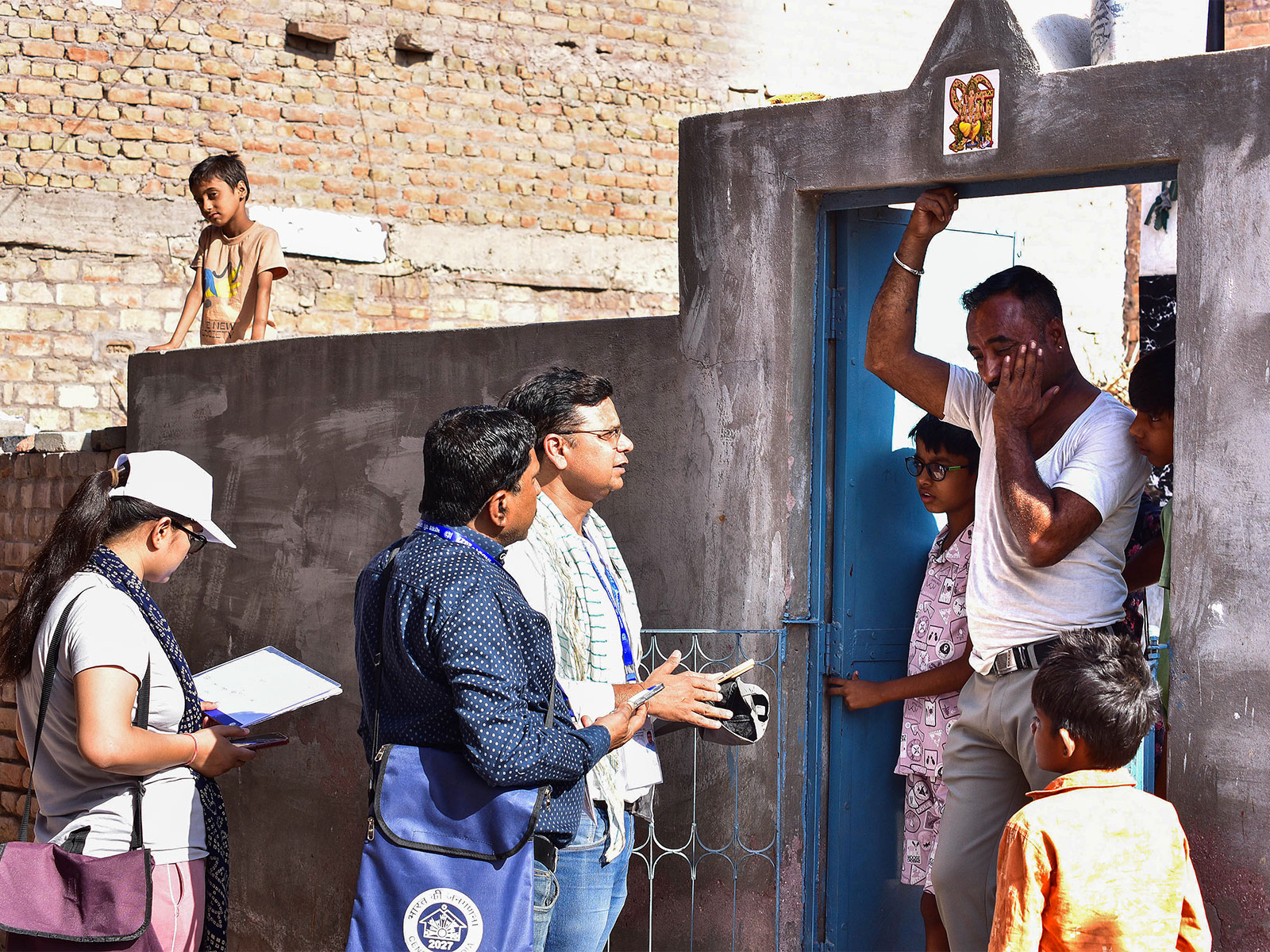
New Delhi [India], August 17 (ANI): A 15-day self-enumeration process as part of house-to-house population enumeration under Phase-II of the most awaited Census 2027 started on Monday in the Union Territory (UT) of Ladakh and the snow-bound non-synchronous areas of Jammu and Kashmir, Himachal Pradesh and Uttarakhand.
The self-enumeration under Phase II of the Census 2027 exercise in these states and UTs will be available till August 31. This exercise is a step prior to the commencement of house-to-house population enumeration. The self-enumeration is a digital process that lets residents fill out and submit their own official census details online. Instead of waiting for a field worker to visit, a household can use an official web portal to log information.
Census 2027 is India's first digital census, with data collection being carried out through digital tools and an optional self-enumeration facility.
However, the population enumeration in these areas will be conducted from September 1 to September 30, 2026, followed by a five-day revision round from October 1 to October 5, 2026. The population enumeration in other states and UTs is scheduled for February 2027.
On August 3, the Ministry of Home Affairs (MHA) had notified the Phase II of Census 2027 -- Population Enumeration (PE)-- declaring that the operation will be conducted in Ladakh, and the snow-bound non-synchronous areas of Jammu and Kashmir, Himachal Pradesh and Uttarakhand from September 1 to September 30, 2026, followed by a revision round from October 1 to October 5, 2026.
The reference date for the Census in these notified areas of the states and UTs will be 00:00 hours of October 1, 2026. It was also announced in the notification that the "provision for self-enumeration will be available in these states and UTs from August 17 to August 31, 2026, prior to the commencement of house-to-house Population Enumeration."
Phase II of the Census 2027 began in Ladakh and the snow-bound non-synchronous areas of Jammu and Kashmir, Himachal Pradesh and Uttarakhand almost three days after the MHA notified a set of 40 questions instructing officers within the limits of the local area for which they have been respectively appointed to ask all persons residing within such limits. These questions will be asked in the population enumeration exercise that began in Ladakh and the snow-bound non-synchronous areas of Jammu and Kashmir, Himachal Pradesh and Uttarakhand on Monday.
The notification issued by the MHA on August 14 through the Office of the Registrar General, India, lists the information to be collected from every person through the Household Schedule. It includes details on caste, religion, education, employment, migration, family and other demographic parameters.
The whole questionnaire include questions such as name of the person, relationship to head, sex, date of birth and age (in completed years), current marital status; age at marriage (in completed years); spouse name; nationality as declared; religion; Scheduled Caste (SC), Scheduled Tribe and caste details; father's particulars; mother's particulars; disability' mother tongue and other languages known; literacy and digital literacy status; status of attendance in educational institution; highest educational level attained and stream and discipline; worked any time during last year; category of economic activity; occupation; nature of industry; trade or service; class of worker; non-economic activity (for marginal, semi-marginal and non-worker); seeking or available for work (for marginal, semi-marginal and non-worker); travel to place of work; birth place; place of last residence; reason for migration; duration of stay in this village and town since last migration; permanent residential address; number of children surviving at present (for currently married, widowed, divorced and separated women only); number of children ever born alive (for currently married, widowed, divorced and separated women only); number of children born alive during last one year (for currently married women only);
Besides, the set of questions includes place of COVID-19 vaccination, total number of bank accounts, mobile number (if available), Aadhaar number (if available), voter ID number (if available), passport number (if Indian Passport holder) and availability of driving license.
Caste enumeration has emerged as a key feature of the Census 2027. The inclusion of caste at question number 10 assumes particular significance as Census 2027 will be the first census since Independence to undertake comprehensive caste enumeration. Until the 2011 Census, the Census exercise included the systematic enumeration of only SCs and STs. The decision to include caste enumeration in Census 2027 was taken by the Cabinet Committee on Political Affairs (CCPA) on April 30, 2025.
The Census 2027 is being conducted in two phases, with the first phase covering House Listing and Housing Census, followed by Population Enumeration. The first phase of the Census 2027 (Houselisting and Housing), which started in April this year, has already been completed in 31 states and UTs. In the remaining states, the first phase of the census is scheduled to be completed by September this year. It is held over a period of 30 days in each state and UT, as per the convenience of the state and the UT governments. There will also be an option of self-enumeration during a 15-day period just before the 30-day period of house-to-house HLO work. This phase gathers detailed information on housing conditions, availability of amenities, and assets possessed by households, while also creating the essential frame for the subsequent phase.
The Central government has approved an outlay of Rs 11,718.24 crore for Census 2027, making adequate provisions for payment of honorarium and training to Census functionaries, IT infrastructure, and logistics. Census 2027 will be conducted in 36 states and UTs, covering 7,092 sub-districts, 5,128 statutory towns, 4,580 Census towns and around 6,39,902 villages. (ANI)
Census 2027: Phase-II covering population enumeration begins today