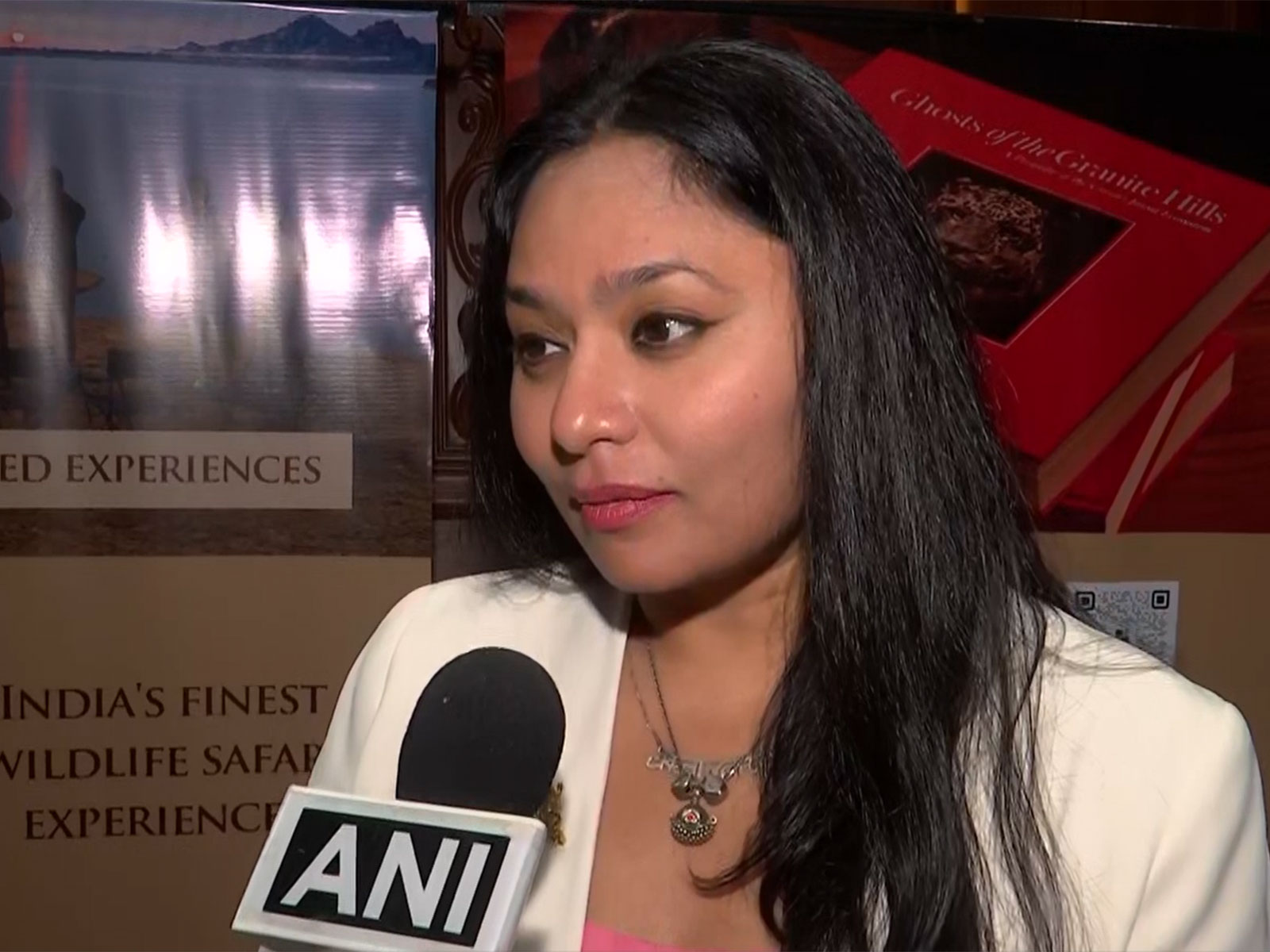
Ramnagar (Uttarakhand) [India], October 12 (ANI): The next time you spot a pigeon in Delhi, look a little closer. It might not be the familiar blue rock pigeon, but a green pigeon that many city residents may not even recognise. For conservation biologist and author Neha Sinha, noticing such overlooked species is the first step towards making cities more welcoming to wildlife.
“In Delhi, there’s this beautiful pigeon called the Green Pigeon. And people don’t know about the Green Pigeon,” Sinha told ANI, recalling how people often ask her to identify the bird when she posts about it.
She continued, “So when I post about the Green Pigeon, people say, which pigeon is this? Because they only know the blue rock pigeon, the one that you see everywhere now, the green pigeon is completely different.”
“My plea to every person is just to look around you locally to see what bird is around you, that’s living around you. Pay attention to it. What does it eat? What does it need? If we can start providing the right plants, the right shelter, they will come back. They always do come back,” Sinha added.
The author of Wild Capital: Discovering Nature in Delhi, also published internationally as My Wild City: Finding Nature, Meaning, and Hope in India’s Capital, has spent around 15 years working in wildlife conservation. Her book draws on a decade of research into Delhi’s wilderness, including its forts, Sanjay Van, the Ridge forest and wetlands.
Sinha believes that as cities expand and more people move into urban areas, conservation must become an integral part of urban planning. Green spaces, wetlands, forests and biodiversity parks, she said, are important not only for wildlife but also for people dealing with the stress and pressures of urban life.
Highlighting Delhi's rich bird diversity, Sinha said the national capital could serve as an example for other Indian cities seeking to protect their natural ecosystems.
“Delhi is the second most bird-rich capital on earth. So we actually have more than 400 bird species,” and biodiversity parks that feature native vegetation. She cited the Aravalli Biodiversity Park and Yamuna Biodiversity Park as examples of spaces that support local ecosystems.
“We need more native vegetation, more native parks with native Indian trees, plants, and creepers,” she said, adding that cities should not be designed exclusively for human convenience.
“Cities cannot just be for us. Cities are also for the Yamuna Nadi. Cities are also for the Sahibi Nadi. Cities are also for Goraiya, which is the sparrow and for Jatayu, which is the vulture,” she said at the Corbett Literature Festival.
Sinha said the decline in the presence of familiar birds should encourage people to pay greater attention to their immediate surroundings. Recalling the hoopoe, known as 'Hurhur' in Hindi, she said the bird was commonly seen on lawns when she was growing up in Delhi but is no longer spotted as frequently in the same settings.
She also highlighted the house sparrow, which continues to be found in certain parts of the city, and explained how suitable vegetation and reduced chemical use can help support its population.
“So the house sparrow is still there in Delhi in certain parts, and the house sparrow needs insects to feed its chicks. The house sparrow needs hedges like small bougainvillaea hedges where it can rest and roost. So you know through certain small actions we can actually bring back some of these birds. In places in Delhi like Vasant Kunj and Dwarka where there are hedges and there is less use of chemicals, we actually do have house sparrows,” shared Neha.
She urged residents to rethink the idea of perfectly manicured lawns and reduce the use of insecticides, which harm insects that birds depend on for food.
“Every lawn does not need to look very neat. You know the idea of a very neat lawn, we have to challenge that idea,” she said.
Sinha also emphasised the importance of leaving fallen leaves on the ground, as they provide shelter for insects, frogs and other small creatures. She said native plants grown in gardens, balconies and verandas could support butterflies and birds, while excessive chemical use had contributed to the decline of firefly populations.
Encouraging residents to take small steps towards conservation, Sinha urged them to learn the names of at least five native Indian trees or flowers and grow them wherever possible. She named “Semal, Palash and Vajradanti among the plants people could become familiar with”, arguing that native vegetation is better suited to local conditions than ornamental plants that do not naturally belong to the region.
Beyond urban birds, Sinha called for greater conservation attention to species such as the Indian wolf and hyenas, which often receive less public attention than tigers.
The Indian wolf is a threatened species that inhabits grasslands and open forest areas rather than dense forests, she said. Wolves and hyenas can also come into conflict with people when they prey on livestock, making their conservation more challenging.
While stressing the importance of tiger conservation, Sinha said other predators also required greater attention and dedicated conservation efforts.
“The Indian wolf is a good example of a species that actually isn't very high in number. It is actually a threatened species today. The Indian wolf does not live in forest, it lives outside forests, it lives in grasslands and open forest areas. And it's not doing that well. So apart from the tiger, the tiger is great, but other animals, which are other predators such as the wolf, such as the hyenas, need a lot of conservation focus. Sometimes they come into conflict with people because they're eating the livestock,” shared Sinha, emphasising the fact that conservation begins with recognising that "wildlife is not separate from everyday urban life".
Emphasising the need to broaden conservation efforts beyond iconic wildlife, Sinha called for greater awareness of the species that share urban and rural landscapes with people. She emphasised that protecting biodiversity requires changes in everyday habits, urban planning and public attitudes towards nature. (ANI)
"Cities cannot just be for us": Conservation Biologist Neha Sinha calls for wildlife-friendly urban planning