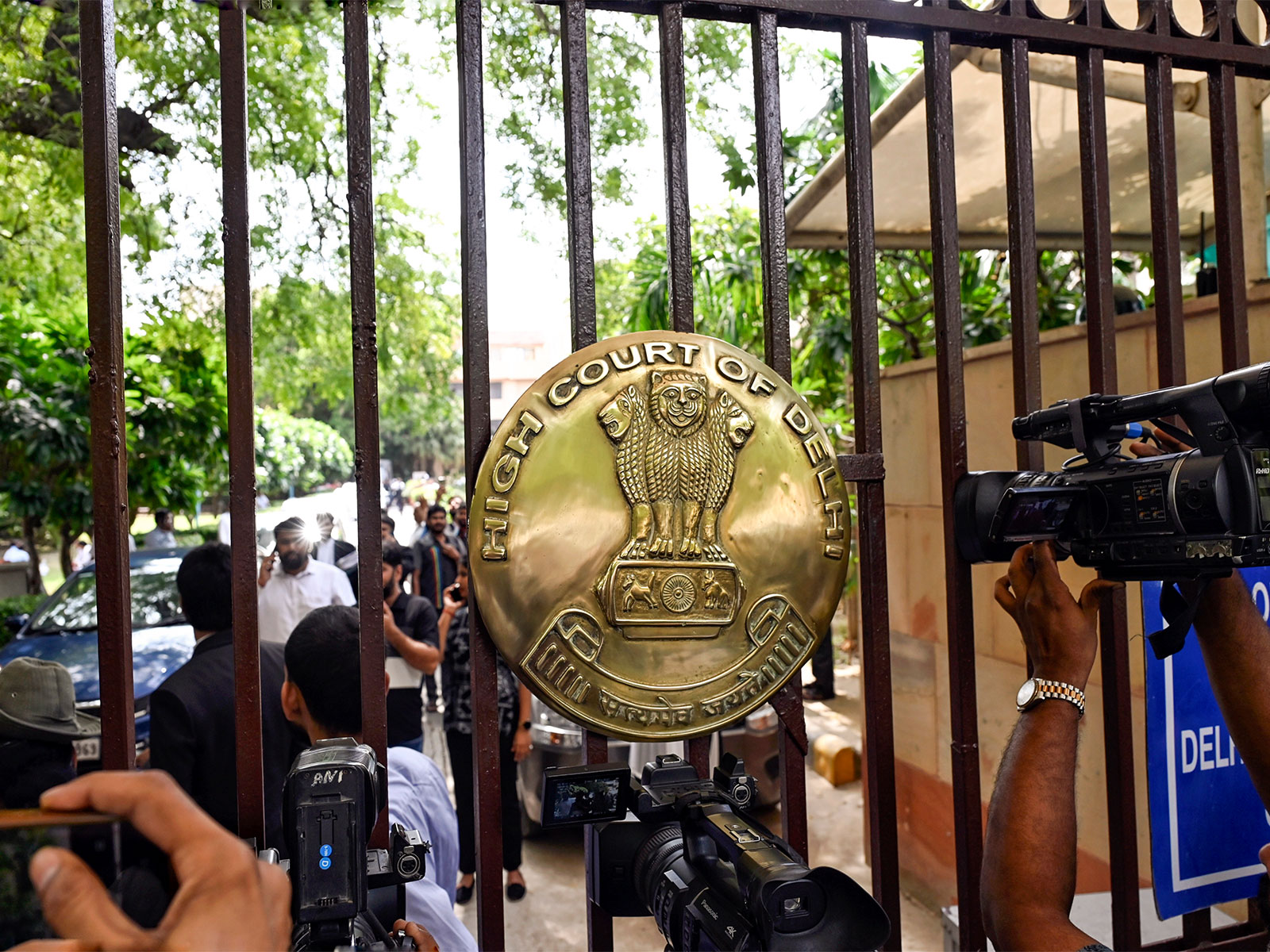
New Delhi [India], September 21 (ANI): The Delhi High Court has held that an accused who has categorically declined to undergo a Narco Analysis Test cannot be compelled to undergo the test at the instance of the complainant, observing that the consent required for such a test is a personal and non-derogable safeguard.
Justice Purushaindra Kumar Kaurav dismissed a petition filed by the father of a 21-year-old woman who died in connection with an FIR registered in 2017, challenging orders of the trial court and the Additional Sessions Judge which had rejected his plea seeking Narco Analysis Tests of the accused persons.
The High Court noted that two of the accused, Jaspal @ Tinku and Vivek Kumar @ Monu, had separately stated before the trial court that they did not wish to undergo the Narco Test. The trial court had thereafter held that the test could not be enforced upon them.
The High Court, however, also pointed out that the trial court’s order recorded the refusal of only two accused but proceeded on the footing that all three surviving accused had declined the test.
The petitioner had argued that the murder took place inside a room where the possibility of eyewitnesses was virtually nonexistent and that scientific tools, including Narco Analysis, should be used to uncover the truth. It was also argued that the victim and her family have a right to fair investigation and trial under Article 21.
Rejecting the plea, the High Court relied on the Supreme Court’s decision in Selvi, which held that forcibly subjecting an individual to Narco Analysis, polygraph or similar techniques violates substantive due process and amounts to an unwarranted intrusion into personal liberty. The Supreme Court had also held that compelling such techniques cannot be justified even by invoking public interest.
The High Court further referred to the Supreme Court’s subsequent ruling in Amlesh Kumar, which reiterated that involuntary administration of Narco Analysis violates the protection against self-incrimination under Article 20(3) and the requirement of substantive due process.
The court made a significant observation that even an accused does not have an indefeasible right to undergo a Narco Analysis Test merely by seeking it. Any voluntary test has to satisfy safeguards including free consent and other circumstances prescribed by law.
“If, therefore, even an accused person cannot claim an indefeasible right to undergo the test on an application moved by himself, it necessarily follows, a fortiori, that no such right, indefeasible or otherwise, can be said to inhere in a complainant seeking to compel an unwilling accused to undergo the very same test,” the High Court held.
The court acknowledged the victim’s right to a fair trial and fair investigation, observing that it could not be oblivious to the circumstances of the case or “the entirely legitimate anguish of a father seeking justice for a daughter so brutally done to death.” It, however, held that the interests of the victim cannot override the constitutional protections available to an accused.
The High Court consequently found no illegality, perversity or jurisdictional error in the orders passed by the Sessions Court and trial court, holding that the surviving accused persons, having declined the Narco Analysis Test, could not be compelled to undergo it at the complainant’s instance.
At the same time, the court clarified that the petitioner could pursue remedies concerning fair investigation. Since the chargesheet had been filed, the concerned court was given liberty to examine all aspects of the matter and, if the petitioner desired, he could seek further investigation or monitoring of the investigation. (ANI)
Complainant cannot compel unwilling accused to undergo Narco Test: Delhi High Court