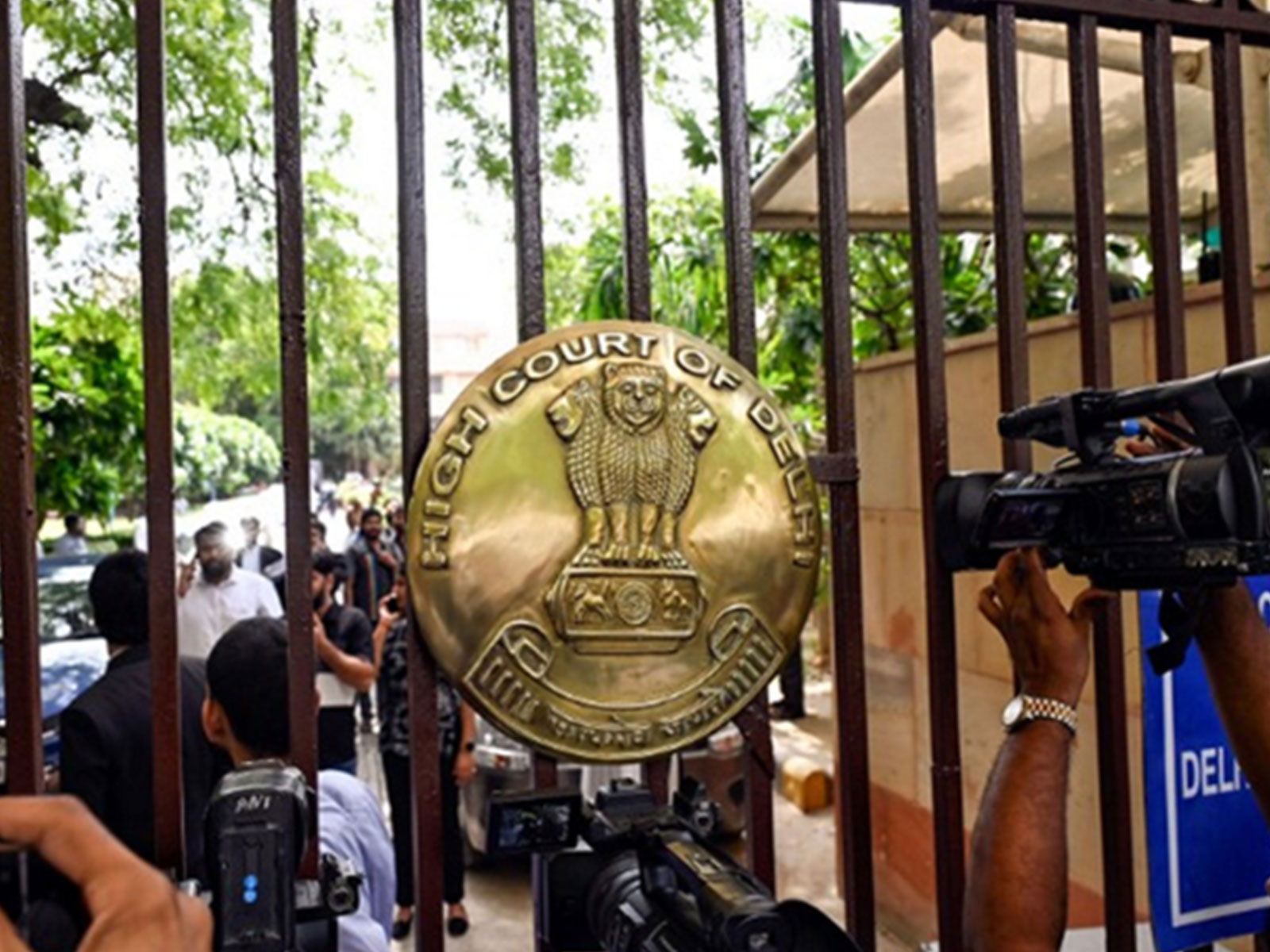
New Delhi [India], November 20 (ANI): The Delhi High Court has held that the cyber-fraud reporting mechanism cannot be invoked to undo voluntary contractual transactions between known parties, particularly when the dispute arises out of an existing civil or commercial relationship.
The Court observed while directing the removal of the freeze and lien imposed on two bank accounts of a father and son in connection with a cyber complaint involving an alleged transfer of ₹30 lakh.
Justice Amit Mahajan noted that the investigating agency had itself recorded that the dispute did not, prima facie, disclose the ingredients of cyber fraud and that the amount had been voluntarily transferred through banking channels by the account holder or her family members.
“Permitting the continued freezing of the Petitioners’ accounts in such circumstances would result in a private dispute between known parties being given the complexion of a cyber-fraud case,” the Court observed.
The Court also took note of the materially different versions given in the original and supplementary complaints. While the original complaint alleged that ₹30 lakh had been inadvertently transferred and was not returned despite requests, the supplementary complaint claimed that the amount was transferred towards the purchase of raw gold as an investment, which was allegedly never supplied.
The investigating agency had described the two versions as mutually contradictory.
The case arose from a property transaction dating back to July 2013, when the father agreed to purchase the third floor of a property in Karol Bagh, Delhi, along with roof and terrace rights, for a total consideration of ₹60 lakh. He paid ₹30 lakh as earnest money to the company concerned.
After the company allegedly failed to execute the sale deed, he instituted a suit for specific performance before the Tis Hazari Courts in 2016.
The parties subsequently decided to settle the dispute through a refund of ₹30 lakh in exchange for withdrawal of the civil suit. A settlement deed was executed on March 16, 2026, and the amount was transferred to the father’s bank account in four tranches on March 17.
Thereafter, the father transferred the amount to his son’s bank account as part of a family arrangement.
However, on March 18, a cyber complaint was lodged by the daughter of the woman who had transferred the money, alleging internet banking-related fraud and claiming that her mother had mistakenly transferred the amount.
The petitioners subsequently discovered that their bank accounts had been frozen and a lien had been marked on them. They approached the High Court seeking quashing of the cyber complaint and de-freezing of their accounts.
During the proceedings, the investigating agency informed the Court that it had examined the father and considered documents including the agreement to sell, orders passed in the civil proceedings, the settlement deed and CCTV footage.
The agency also stated that it had no objection to the accounts being de-frozen but submitted that the disputed ₹30 lakh should continue to remain on hold until completion of the enquiry.
The Court, however, observed that when the respondents were specifically asked under which statutory provision the amount had been directed to be secured, no satisfactory response was provided.
Justice Mahajan further noted that the Standard Operating Procedure dated January 2, 2026, issued by the Ministry of Home Affairs, itself provides that directions for seizure of bank accounts or suspension of digital banking services must be issued under Section 106 of the Bharatiya Nagarik Suraksha Sanhita (BNSS) or any other applicable law.
The Court noted that the respondents did not dispute that no order under Section 106 of the BNSS had been passed to prevent the petitioners from operating their bank accounts.
It observed that the cyber-fraud reporting mechanism and administrative SOPs are intended to facilitate prompt intervention in cases where financial transactions result from cyber fraud and immediate coordination with banks and financial institutions is necessary to prevent further dissipation of funds.
However, the mechanism is not intended to be used as a means of undoing voluntary contractual transfers between known parties, particularly where the transactions have been acknowledged by the parties and form part of an existing dispute.
Accordingly, the Court directed that the freeze and lien imposed on the petitioners’ bank accounts be lifted.
The Court clarified that its order should not be construed as diluting the effectiveness of the cyber-fraud reporting mechanism or the guidelines governing genuine cyber-fraud cases.
It further clarified that the investigating agency or any other competent authority would remain free to take such action as may be permissible under law, following the appropriate statutory procedure, if considered necessary for investigation or other proceedings.
The High Court, however, declined to quash the cyber complaint, observing that it contained allegations which had resulted in an enquiry and that the rival versions raised factual issues that could not be conclusively determined in the present proceedings.
The rights and remedies of the parties concerning the underlying transaction were left open, with liberty to pursue appropriate remedies in respect of the civil and commercial dispute in accordance with law. (ANI)
Delhi High Court: Cyber fraud mechanism cannot be used to resolve private financial disputes, lifts freeze on bank accounts