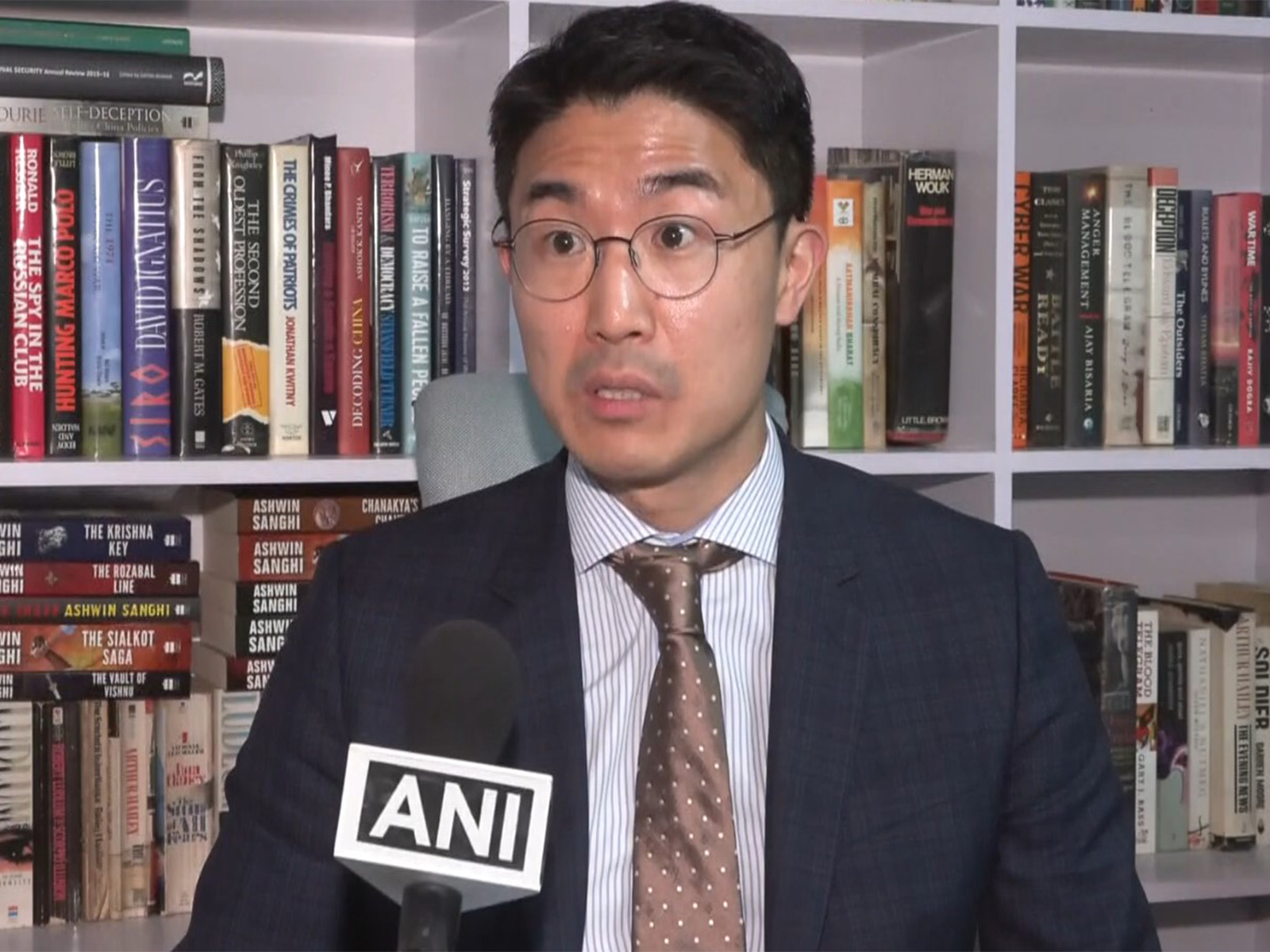
New Delhi [India], October 18 (ANI): India needs to maintain policy credibility and continuity to sustain foreign investment inflows, as strong economic growth alone may not be enough to reassure global investors about the country's long-term business environment, highlighted Kyunghoon Kim, Head of the India and South Asia Team at the Korea Institute for International Economic Policy (KIEP).
In a conversation with ANI, Kim said India's investment, trade and industrial policies were attracting foreign direct investment (FDI) across manufacturing and services, including financial services and global capability centres.
He said the government should maintain its current policy direction and ensure that investors remain confident about the continuity of its business-friendly environment.
"I think the Indian government is doing very well in terms of investment policies, trade policies as well as industrial policies," Kim said.
He added that the government should "strengthen policy credibility and continuity to ensure the global investors that the support as well as the business-friendly environment will continue in the coming years".
Kim's remarks come against the backdrop of India's strong economic growth, with several international institutions raising their growth forecasts to seven per cent or higher for the current or next fiscal year.
Explaining the reasons behind the upgrades, Kim pointed to India's stronger-than-expected GDP growth of 7.8 per cent in the first quarter, supported by investment, consumption and exports.
He said investment had grown particularly strongly, backed by government capital expenditure, private investment, favourable financial conditions and strong demand. Consumption remained robust in both urban and rural areas, supported by government tax cuts and subsidies aimed at cushioning the impact of rising energy prices.
On the supply side, services and manufacturing were the main drivers of growth. Services expanded by more than 12 per cent, while manufacturing grew by more than nine per cent, according to the figures discussed during the interview.
Kim said India's strong economic fundamentals and policy flexibility had helped the country maintain growth despite global uncertainty. He also highlighted foreign exchange reserves of around USD 730 billion, along with improvements in banking sector non-performing loan ratios and corporate debt ratios, as factors supporting the economy's resilience.
Alongside policy continuity Free trade agreements can also support investment.
He referred to India's trade agreements with the United Kingdom and the European Union, saying such arrangements could benefit the economy over the medium to long term by opening up opportunities to reach a wider range of markets.
Kim said the country's industrial policies had helped attract investment from both international businesses and domestic conglomerates.
He cited production-linked incentive schemes and the India Semiconductor Mission as examples of government initiatives aimed at encouraging companies to expand production, investment and employment in India.
According to Kim, these policies are playing an important role in supporting the country's industrialisation drive and maintaining high economic growth.
However, Kim cautioned that strong GDP growth does not automatically translate into sufficient employment opportunities or higher incomes for everyone.
He said India needs to ensure that investment in manufacturing and other productive sectors creates jobs and helps workers move from lower-productivity activities, such as agriculture, to higher-productivity industries and services.
"However, the question is whether India has enough skilled workers to fill these posts," he said, referring to the employment opportunities expected from labour-intensive industries.
Kim said the government had an important role in providing effective education and training so that workers could develop the skills required by new industries and benefit from rising productivity and incomes.
He added that India could grow at around 7 per cent over the medium term and potentially become the world's third-largest economy by 2031 or 2032. However, he stressed that sustaining growth would require continued investment, structural transformation and a supportive business environment.
Kim also flagged inflation as a risk that needs close monitoring, particularly if the Middle East crisis continues to put pressure on food, fuel and fertiliser prices.
He said India's inflation had risen from around zero per cent in October last year to 5.5 per cent in September this year.
During the interview, he also referred to a 25-basis-point increase in the central bank's policy interest rate to 5.5 per cent, describing it as the first increase in nearly four years.
Kim said India's economic momentum was likely to continue, supported by infrastructure investment, factory spending and demand for automobiles and other durable goods.
However, maintaining investor confidence, expanding export markets, improving workers' skills and managing inflation will remain important for sustaining growth over the coming years. (ANI)
Foreign investment needs policy credibility beyond India's strong GDP growth