VMPL
New Delhi [India], November 2: From a printing press in 1999 to a devotional goods company in 2021, Gagan Dhawan has made a career of bringing reliability to places that ran on habit, and of building businesses that work for each other.
Gagan Dhawan grew up in cantonments. His father, Brigadier S. C. Dhawan (Retd.), was an Army officer, and his mother, Kamal Dhawan, ran the home that moved with each posting. Schools meant Kendriya Vidyalayas and Army Public Schools in several cities, which gave him an early lesson in starting over and a habit of discipline that he still credits to the fauji way of living. He studied at the University of Delhi and then spent about five years in private-sector sales and marketing, in the years when India’s economy was opening up and brands were learning how to speak to a new kind of customer.
In 1999 he started RHI Printographics in New Delhi. The timing suited a young printer. Satellite television was spreading, corporate branding was becoming serious business, and agencies wanted catalogues, brochures and brand books that looked as expensive as the products inside them. RHI became a commercial printing, advertising production and graphics company, and later the first in India to bring in the PUR perfect binding machine. PUR, short for polyurethane reactive adhesive, makes a stronger and more flexible bond than conventional hot-melt glue. Pages lie flatter, spines resist cracking, and a book survives years of handling.
Over the years, RHI’s client list became a tour of premium Indian business. It included BMW India, Mercedes-Benz, Audi India, Volkswagen, Land Rover and Porsche India in automobiles. Swarovski, Suneet Varma, Gucci and Louis Vuitton came from luxury, and Hennessy India, Moët & Chandon and Johnnie Walker from spirits. Hotels such as Shangri-La, The Oberoi and ITC Hotels appeared too, as did ISB Hyderabad, XLRI, Ogilvy and McCann. Continental Airlines, whose offices in India and Austria used RHI for eight years, praised first-class print services and results held to exact specifications. Oriflame called RHI its dependable print partner in India, citing quality, flexibility and capacity.
Today, RHI takes no outside work. Its team prints only for Dhawan’s own brands, including ServDharm and Metis Learning, and the volume those brands require is enough to fill the press floor. It is a measure of how far his other ventures have travelled, and it reflects a design Dhawan describes with some satisfaction: a group of brands that serve one another, each giving the end customer the best product it can at the highest quality. “Because we are both the customer and the producer, we have much tighter control over quality,” Dhawan said. “We can push the team to hit standards that are rarely seen, because we want the best for the end customer of our other brands.”
The people running that press floor are the same people who started it. In 27 years, not one member of RHI’s founding team has left. “Nobody walks away from something they helped build,” Dhawan said. “I think that says more about the team than it does about me, though I would like to believe I had a hand in it.”
Printing taught Dhawan the unglamorous parts of business: production schedules, client relationships and cash flow. It also taught him that a client remembers whether a deadline was kept. From there he widened out. He is a co-founder of Metis Learning Solutions, whose STEM learning kits are sold in India as Einstein Box and abroad as Doctor Jupiter.
ServDharm, which he founded in December 2021, is where the earlier threads meet. India’s market for pooja and devotional goods is vast and largely informal. Families buy from the same shop or vendor they have always used, and trust is tied to a face. ServDharm was among the first pooja samagri brands in India to bring order to that market, with set standards for sourcing, quality and packaging where there had been none. Dhawan saw room for structure that left the tradition alone: dependable sourcing, quality checks, standardised packaging and wider availability. “The products themselves are extremely personal,” he told Republic World. “It’s what is used in someone’s home, in their most private moments of faith.” The job, as he describes it, is to make sure the sourcing, quality and consistency are things people can actually rely on.
The range now covers pure brass diyas, idols, incense, pooja thalis, gift boxes and hardbound devotional books. A trilingual edition of the Bhagavad Gita became a bestseller on Amazon India. ServDharm is sold through quick commerce platforms, marketplaces and bookstores, has an outlet at Jammu Airport serving pilgrims bound for Vaishno Devi, and, with its launch in the United States, now reaches customers well beyond India.
The market around him is growing. India’s incense market was valued at about USD 1.3 billion in 2025 and is projected to reach about USD 2.2 billion by 2034, according to IMARC Group. Dhawan is wary of treating faith as a growth story. “Faith is not a trend,” he told PTI. “It cannot be packaged aggressively. If you approach it with a short-term mindset, people feel it immediately.”
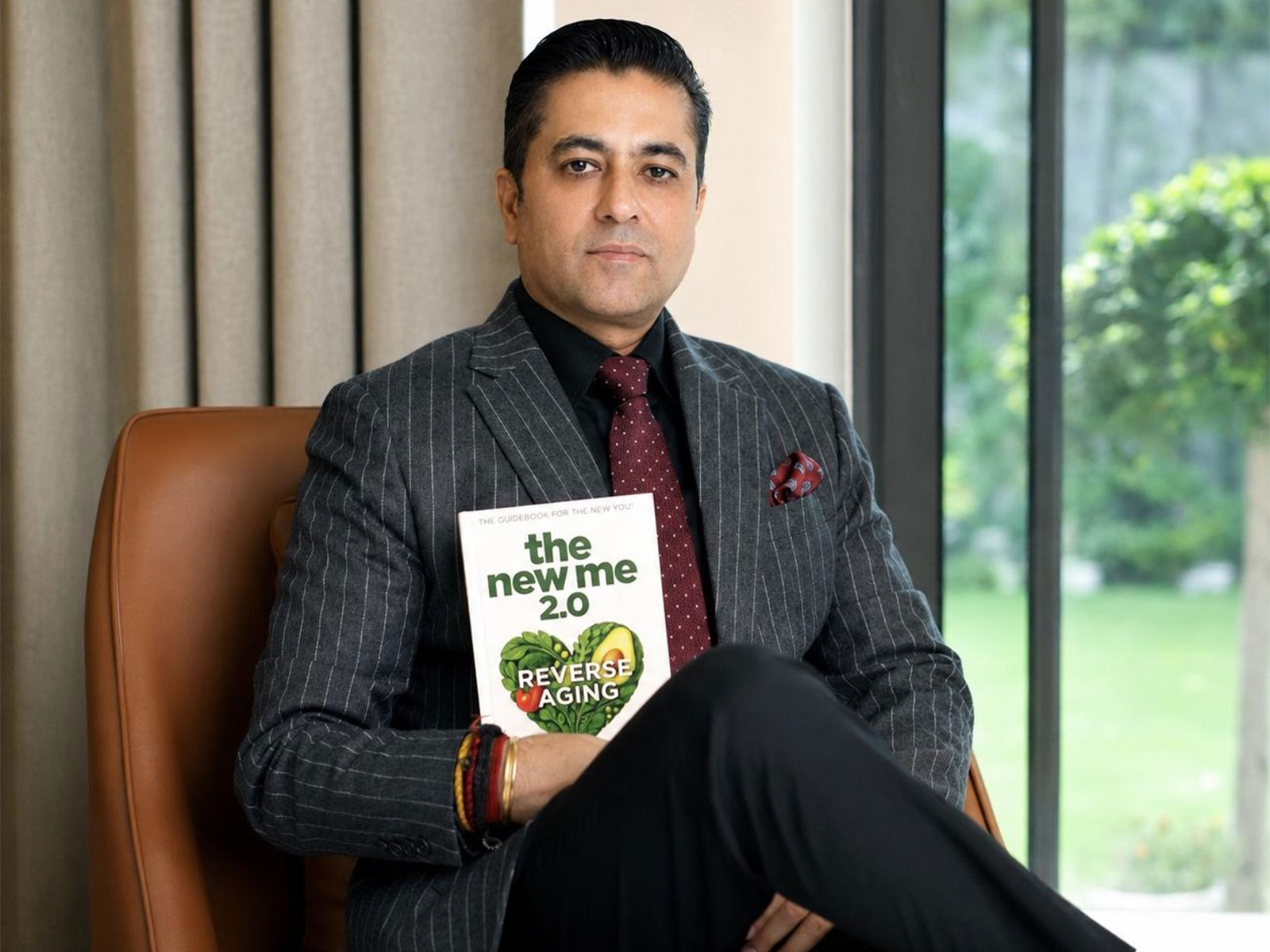
A different kind of reliability entered his life in 2017. A professional setback brought stress, a round of medical tests showed dangerously high cholesterol, blood pressure and sugar, and his doctor advised medication at once. Dhawan chose a ninety-day experiment in food, sleep, movement and hydration, moved to a plant-based diet, and says every marker returned to normal. He lives medicine-free today. He wrote about it in The New Me (2022), which received the International Book of Honour at the House of Lords in 2023, and again in The New Me 2.0 (2026), built on a mantra he calls W.I.S.E.: Water, Intention, Sleep and Eat Plant-Based. “The businesses were working,” he told PTI. “But somewhere along the way, I realised that success alone does not guarantee meaning.”
Alongside the operating businesses, he is an angel investor. His portfolio includes Tyche Retail and Marketing, which brings the TiZO mineral sunscreen brand to India, and a hospitality project at Tehri Lake that is now under construction with Taj Hotels. The common thread across them is an eye for categories that are fragmented and ready to be organised.
In October 2026 he received a Special Recognition for Wellness Thought Leadership at the Times of India Healing India Forum Awards, held at The Westin Gurugram on 15 October.
Asked what ties the printing press, the pooja shelf and the book together, Dhawan answers quickly. “Every business I have built has asked the same thing of me, which is to show up the same way every day,” he said. “Health turned out to be no different. Faith, print or the body, people trust what is consistent.”
(ADVERTORIAL DISCLAIMER: The above press release has been provided by VMPL. ANI will not be responsible in any way for the content of the same.)
Gagan Dhawan: Building trust in a market built on faith