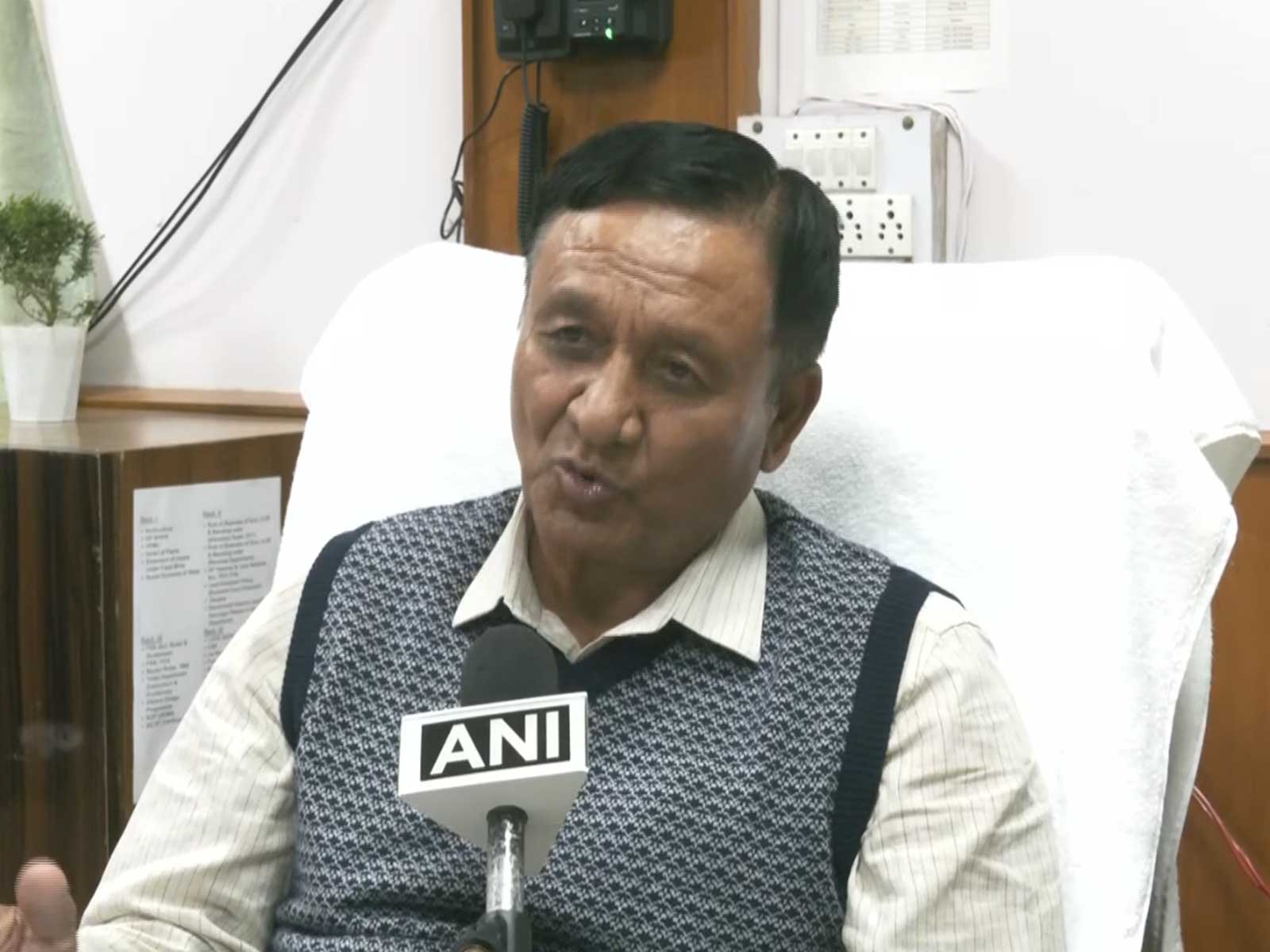
Shimla (Himachal Pradesh) [India], August 29 (ANI): Himachal Pradesh Revenue, Horticulture and Tribal Development Minister Jagat Singh Negi has called for a dedicated India-China hotline and real-time exchange of disaster-related information to provide early warnings about glacial lake outburst floods (GLOFs), sudden river blockages and other hazards originating in Tibet.
Negi, who is also the MLA from Kinnaur, a constituency bordering Tibet, said timely information about changes in glaciers, glacial lakes, rivers and tributaries could give downstream authorities crucial time to take preventive measures and evacuate vulnerable populations.
Speaking to ANI in Shimla, Negi said the increasing vulnerability of the Himalayan region to GLOFs, flash floods and other extreme weather events made timely cross-border information sharing essential.
"Especially with China, there should be a hotline on this issue, and information of this nature should be exchanged without losing time," he said.
Negi said several major rivers, including the Sutlej and Brahmaputra, as well as rivers that flow through the northeastern states, originate in or have their source areas in Tibet.
He said sudden changes in upstream areas, including river blockages, rapidly rising water levels, the formation of artificial lakes or breaches, could have serious consequences for people and infrastructure downstream.
Referring to the recent disaster in Nepal, Negi said reports of a tributary in Tibet being blocked following a glacial event, leading to the formation of an artificial lake that subsequently burst after two to three days, underlined the importance of rapid communication.
"If it was known two days earlier, or even a few hours earlier, that the tributary had been blocked and water was beginning to rise, and this information had been passed on to areas outside Tibet, particularly Nepal, perhaps lives could have been saved," Negi said.
He said the incident pointed to a possible gap in the exchange of critical hydrological information.
"Somewhere, there appears to have been a deficiency in the exchange of information," he said.
Negi called for continuous satellite monitoring of vulnerable areas across the Himalayan region, including glaciers, glacial lakes, rivers and riverbeds.
"This is not only the requirement of Himachal Pradesh. All Himalayan regions, including the northeastern areas, need satellite monitoring, particularly of our riverbeds, rivers and lakes," he said.
He said satellite monitoring should be combined with ground-level early warning systems in identified vulnerable areas.
According to Negi, physical intervention at high-altitude glacial lakes may not always be technically feasible, making early detection and rapid communication critical to saving lives.
"If we maintain continuous 24-hour surveillance through satellite imagery and, as soon as something happens in any such area, the information and warning are sent to the downstream areas where we perceive danger, at least we can save valuable lives," he said.
Negi said Himachal Pradesh had received a GLOF-related scheme under the national disaster management framework covering four particularly vulnerable glacial lakes.
Two of these lakes are located in Kinnaur and two in Lahaul-Spiti, he said, adding that preliminary investigations into two lakes had already begun.
"We have started preliminary investigations of two of them, but the work is not easy. These glacial lakes are located at very high altitudes," Negi said.
He said authorities would have to assess what mitigation measures could realistically be undertaken if water levels increased because of glacier melting, a blockage or a breach.
"The big question is how we will mitigate them if the water increases because of glacier melting, because of a blockage, or if the lake itself breaches," he said.
Negi said that where physical mitigation was difficult, continuous monitoring and rapid communication could still help reduce the risk to human life.
The minister also expressed concern over Himachal Pradesh residents who may have travelled to Nepal and could have been affected by the recent floods.
He said the state government did not have an exact record of residents currently in Nepal because Indian citizens can travel there without a visa.
"It is possible that quite a few people from Himachal may also be there," he said.
Negi appealed to families whose relatives had travelled to Nepal and were now uncontactable to immediately inform the concerned Deputy Commissioners.
He said the state government would compile information about possible missing persons and coordinate with the concerned authorities.
"If there are any missing persons, we will take up the matter with the Nepal Embassy and the Indian Embassy in Nepal and make every possible effort to provide whatever assistance we can," he said.
On concerns about Himachal Pradesh residents working on SJVN projects in the region, Negi said the status of employees and projects would have to be confirmed by the company.
He said SJVN operates projects on different river systems and it could not be assumed that employees or a particular project had been affected merely because a disaster occurred in a specific area.
"There could be many people from Himachal Pradesh working with SJVN," Negi said, adding that he did not have specific information at that point on whether Himachal residents were present at the particular project associated with the incident.
He said SJVN would be the appropriate source to confirm the status of its employees and projects.
Negi said the Nepal disaster and the growing threat of extreme events in the Himalayan region highlighted the need for institutionalised, rather than ad-hoc, communication mechanisms between countries sharing the region.
He said a dedicated India-China hotline could enable information about sudden changes in rivers, glacial lakes, blockages and breaches in upstream areas to reach Indian authorities without delay.
The minister said the ultimate objective should be to detect hazards as early as possible and ensure warnings reach downstream populations before an event develops into a major disaster. (ANI)
Himachal minister calls for India-China hotline, real-time alerts on Tibet-origin disasters