Guwahati (Assam) [India], August 25 (ANI): The Indian Institute of Technology (IIT) Guwahati researchers have developed a water-treatment technology that can remove arsenic and fluoride simultaneously from contaminated groundwater. This could be a vital contribution towards ensuring safer and affordable drinking water in regions affected by naturally occurring groundwater pollution.
The researchers from IIT Guwahati developed a rotating-anode electrocoagulation (RA-EC) reactor that achieved up to 98.2% arsenate and 91.8% fluoride removal within minutes. The initial demonstration was performed at an estimated operating cost of Rs 18 to Rs 58 per 1,000 litres of treated water, depending on contaminant concentration, a release said.
The findings suggest that the technology could support a wide range of applications, including community drinking-water purification, decentralised rural water-treatment systems, treatment of arsenic- and fluoride-contaminated groundwater, industrial wastewater remediation and integration with other advanced treatment processes such as adsorption and membrane filtration.
The findings were published in Chemical Engineering Journal, a leading peer-reviewed international journal that publishes high-impact research on chemical engineering, materials, energy, environmental technologies, and process engineering.
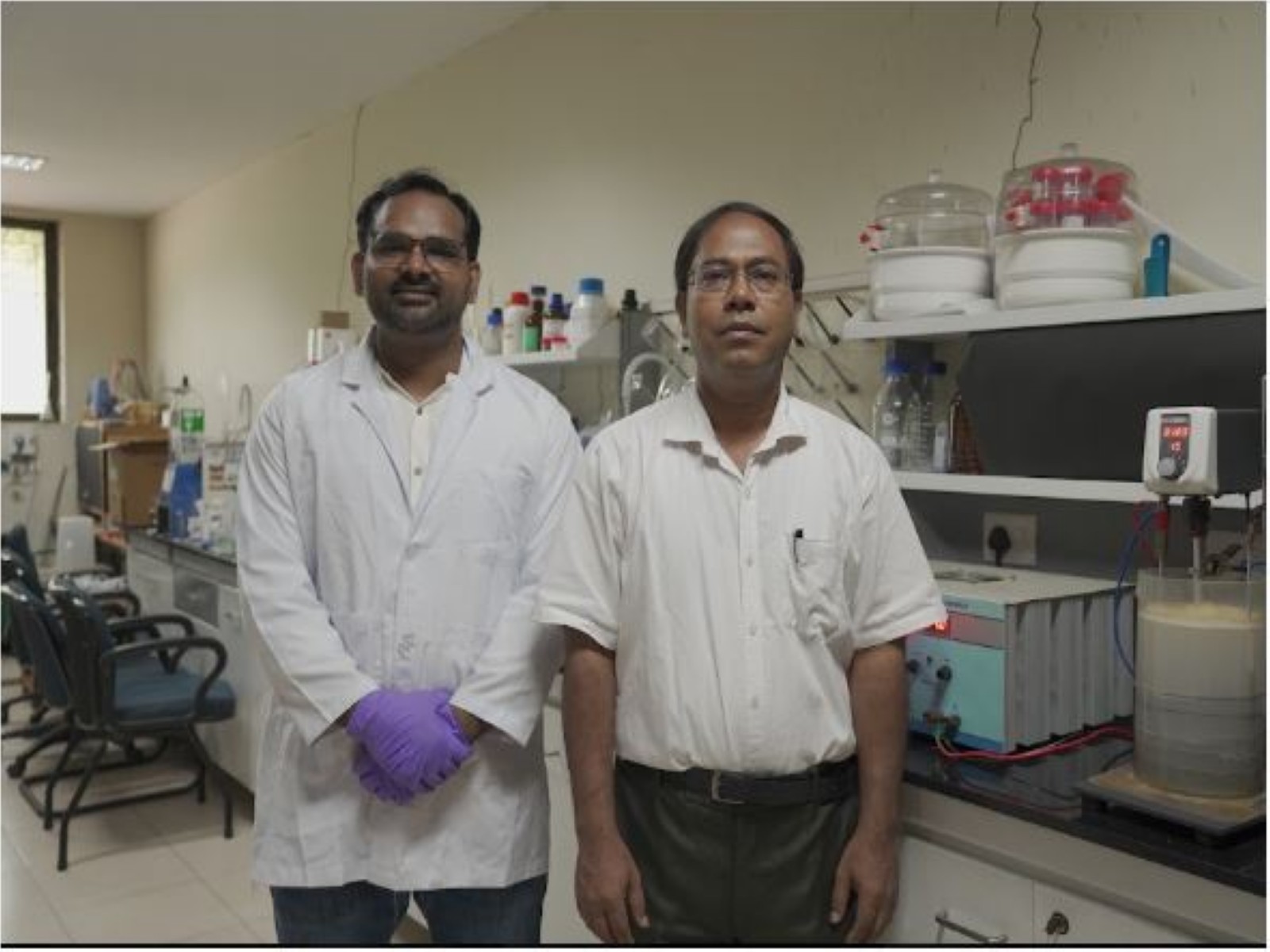
The paper was co-authored by Professor Dr Mihir K Purkait and research scholar Mukesh Bharti from IIT Guwahati.
Elaborating on the need for such research, Dr Purkait, Department of Chemical Engineering, IIT Guwahati, said, "Groundwater serves as the primary source of drinking water for millions of people across India. In several regions, however, it contains both arsenic and fluoride, two contaminants that pose significant long-term health risks. Treating them together has remained particularly challenging because they behave differently during conventional purification processes and compete for removal sites."
To address this challenge, the researchers from IIT Guwahati developed a faster and more efficient reactor configuration capable of simultaneously removing both arsenic and fluoride.
Instead of using a stationary aluminium electrode, the IIT Guwahati team redesigned the electrocoagulation process by developing a rotating aluminium anode that continuously improves mixing inside the reactor, enhances mass transfer, renews the electrode surface, and promotes the formation of pollutant-capturing aluminium hydroxide flocs.
When electricity passes through the reactor, aluminium ions and hydroxide ions combine to form microscopic flocs that bind with arsenic and fluoride, allowing both contaminants to be removed through adsorption, coagulation, and precipitation. The rotating electrode substantially improves the efficiency of this process while reducing electrode passivation, a common limitation in conventional electrocoagulation systems.
Further, Mukesh Bharti, Research Scholar, Department of Chemical Engineering, IIT Guwahati, added, "We systematically evaluated how operating conditions, including rotational speed, current density, electrode spacing, and treatment time, influence performance. Our technology was also tested under realistic groundwater chemistry, including the presence of naturally occurring ions such as calcium, magnesium, bicarbonate, sulphate, and phosphate, as well as real groundwater samples collected from Assam."
The next phase of the research will focus on developing a pilot-scale continuous-flow version of the reactor suitable for practical deployment. Future studies will also incorporate sensor-based automated process control for real-time monitoring of parameters such as pH, conductivity, electrical current, and rotational speed, bringing the technology closer to scalable field implementation. (ANI)
IIT Guwahati researchers develop low-cost water treatment technology to remove arsenic and fluoride