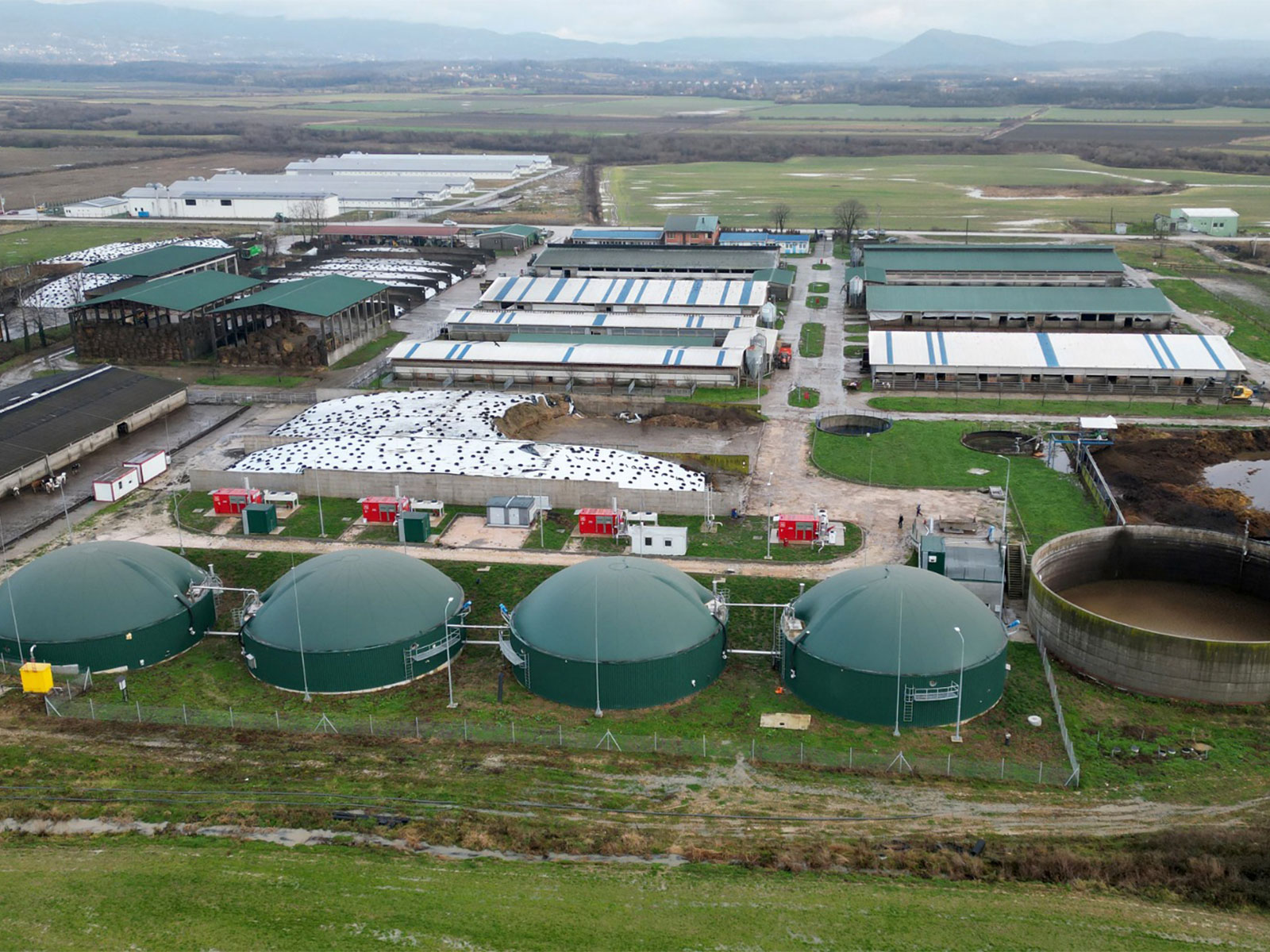
New Delhi [India], September 13 (ANI): India has the potential to produce around 62 million metric tonnes (MMT) of compressed biogas (CBG) annually from an estimated 472 MMT of feedstock, with animal waste alone accounting for nearly 41 per cent of the total potential, according to an Equirus report.
The report noted, “India has an estimated 472 million metric tonnes (MMT) annual feedstock potential,” which is equivalent to ~62 MMT of annual CBG potential.
Within this, animal waste represents the largest opportunity, with about 190 MMT of waste capable of producing nearly 25 MMT of CBG, “41% of national CBG potential, but only c.15% of gross dung is collectable,” however, the country needs dense rural clusters to achieve this target.
Agricultural residues, including paddy and wheat straw and cane trash, offer around 150 million MT of potential waste that could generate nearly 20 million MT of CBG, though aggregation remains a key constraint due to the 45-day harvest window.
About 62 million MT of municipal solid waste could produce around 5 million MT of CBG, with only 50-55 per cent of urban wet and food waste being biodegradable. Sewage treatment plant biomass offers another 50 million MT of waste with the potential to generate nearly 10 million MT of CBG, while around 20 million MT of press mud from sugar mills could produce about 2 million MT of CBG and offers favourable economics due to single-point sourcing and no pre-treatment requirement, Equirus noted in its report.
As per Equirus, CBG conversion addresses several of India’s key environmental concerns, including stubble burning, municipal waste, soil nutrient loss and dependence on imported gas. Around 87 million MT of crop residue is burnt annually, “CBG offtake moves straw off the field and avoids 0.8-1.2 t CO2e per tonne diverted,” it noted.
At the same time, in municipal waste management, only around 0.92 lakh tonnes per day (TPD) of the 1.70 lakh TPD of municipal solid waste is treated, while CBG production through digestion can capture methane that would otherwise be released from about 2,400 dumpsites.
CBG production also generates fermented organic manure as a by-product, helping return carbon to the soil and reverse nutrient loss. “Every tonne of CBG carries fermented organic manure (Verbio Sangrur runs 33 t CBG and 600 t FOM daily), returning carbon to soill,” the report noted.
Additionally, domestic biogas production can help replace imported gas, with the PNGRB estimating that India’s 472 million MT feedstock base could support around 230 MMSCMD of biogas, it noted. (ANI)
India has 62 MMT annual compressed biogas potential; animal waste could become the biggest contributor: Report