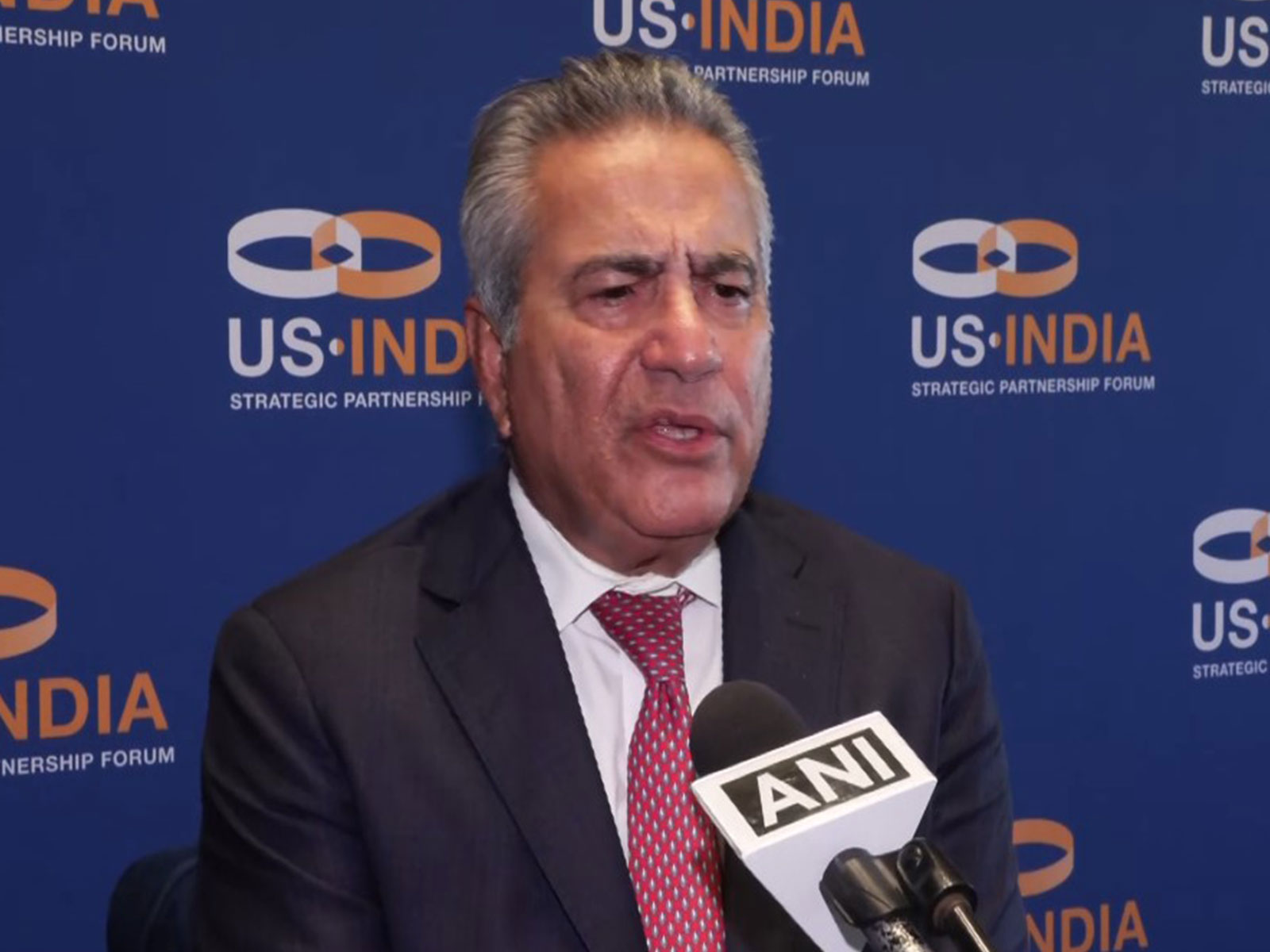
New Delhi [India], November 18 (ANI): India presents a tremendous long-term opportunity for American and Israeli businesses, particularly in manufacturing, technology and next-generation commerce, Avenir Growth Capital Partner Ben Jubas said. He highlighted growing interest among Israeli companies in exploring investment opportunities in the country amid global supply chain realignment.
Speaking to ANI, Jubas on Tuesday said India was becoming an increasingly attractive destination for businesses, offering opportunities not only as a growing consumer market but also as a manufacturing hub and a partner for technology development.
Emphasising India's long-term manufacturing potential for American businesses as well, Jubas acknowledged that the country could face occasional challenges but said its overall prospects remained strong.
"For America too, India is a manufacturing location. Not without its occasional hiccups, but it's a tremendous, you know, secular opportunity. And so I think the opportunity is only up and to the right," he said.
Jubas, who has been investing in India for the past five to six years, said he had invested approximately USD 500 million in several new-age companies and remained optimistic about the country's growth prospects.
"I've been investing in India for 5, 6 years, put about a half a billion dollars in a number of new-age companies and coming from the US, broadly very optimistic about the future of India and have seen tremendous entrepreneurship and significant opportunity as the country continues to grow and formalise," he said.
On the idea behind bringing American, Israeli and Indian businesses together, Jubas said the three countries had complementary strengths that could generate significant commercial opportunities through greater collaboration.
"My view in general is that the whole is better than the sum of the parts and each of these countries brings significant strengths and there's a lot of synergy between them. And so my general goal is to bring people together, to build rapport, build connections with significant commercial opportunities that can be created out of that," he said.
Highlighting the sectors attracting investment interest, Jubas pointed to manufacturing and next-generation commerce, while underlining the opportunities created by India's expanding digital public infrastructure and the formalisation of its economy.
He said technology-enabled businesses could introduce new value propositions for Indian consumers, while the country's growing manufacturing capabilities offered opportunities to cater to domestic demand as well as international markets.
"For my part, we've generally invested in manufacturing. We've invested in next-generation commerce companies. My general thesis coming here was trusted intermediaries that effectively there's an opportunity within India as the country continues to formalise, and through the penetration of digital public infrastructure, there's more opportunities for tech-enabled players to add new value propositions that are attractive to, you know, Indian citizens," he said.
"As the country continues to burnish its manufacturing sector, both for domestic purposes and for global exports. It's an increasingly attractive location for manufacturing," he added.
On whether American and Israeli companies were looking at India primarily as a consumer market or increasingly as a manufacturing and technology hub, Jubas said the country offered opportunities on both fronts.
He said several companies backed by his firm were catering to India's growing consumer base through technology-enabled solutions, while the manufacturing sector was witnessing growth, professionalisation and movement up the value chain.
"I think it's both. From a technology standpoint, I think we've invested in a number of companies that are catering exclusively to the Indian market and the growing consumer base here, albeit with technology-enabled solutions. But I think as well on the manufacturing side. I think we clearly see growth of that sector, professionalisation, and coming up the value chain and so it's a very attractive place for both American businesses and Israelis who have technology but could use kind of the capacity here and partnership," he said.
Speaking about Israeli companies' investment appetite amid global supply chain diversification, Jubas described India as a highly attractive opportunity, particularly as businesses increasingly explored the country's potential.
"I think it's very attractive. I think it's still early, especially for the small and mid-sized, you know, the early technology companies and that's part of the idea here. I think the latent opportunity, the interest is extremely strong and so, and as I've brought people here, I think they increasingly see the opportunity and want to invest time and energy here. And certainly when I speak about it with folks, there's universal interest and it's about bridging the gaps," he said.
On the role of innovation in strengthening trilateral cooperation, Jubas said all three countries had significant innovation capabilities that could be brought together through technology development, manufacturing partnerships and market access.
He particularly highlighted Israel's intellectual property capabilities and said India could increasingly serve as a partner for Israeli companies in co-developing technologies, manufacturing and accessing a larger demand market.
"Israel is obviously a significant source of IP, obviously a smaller domestic market and has always relied to a large degree on exports. I think increasingly can view India as a partner, both again for co-developing technologies fo a manufacturing hub and as a demand market and I think that will increase in the coming years and I think there's a lot of appetite for that," he said. (ANI)
"India is tremendous secular opportunity": Avenir Growth Capital's Ben Jubas on growing US, Israeli investment interest