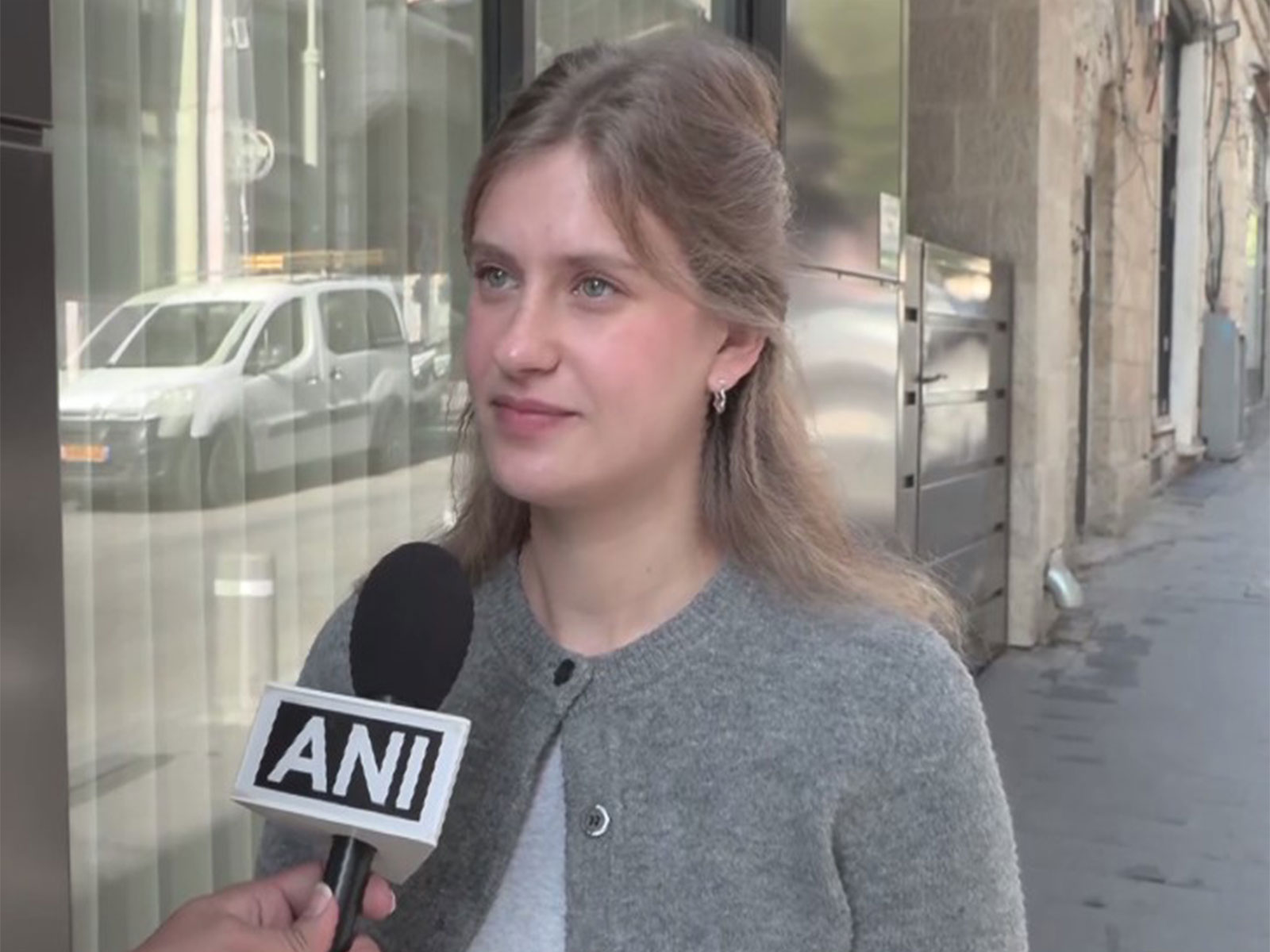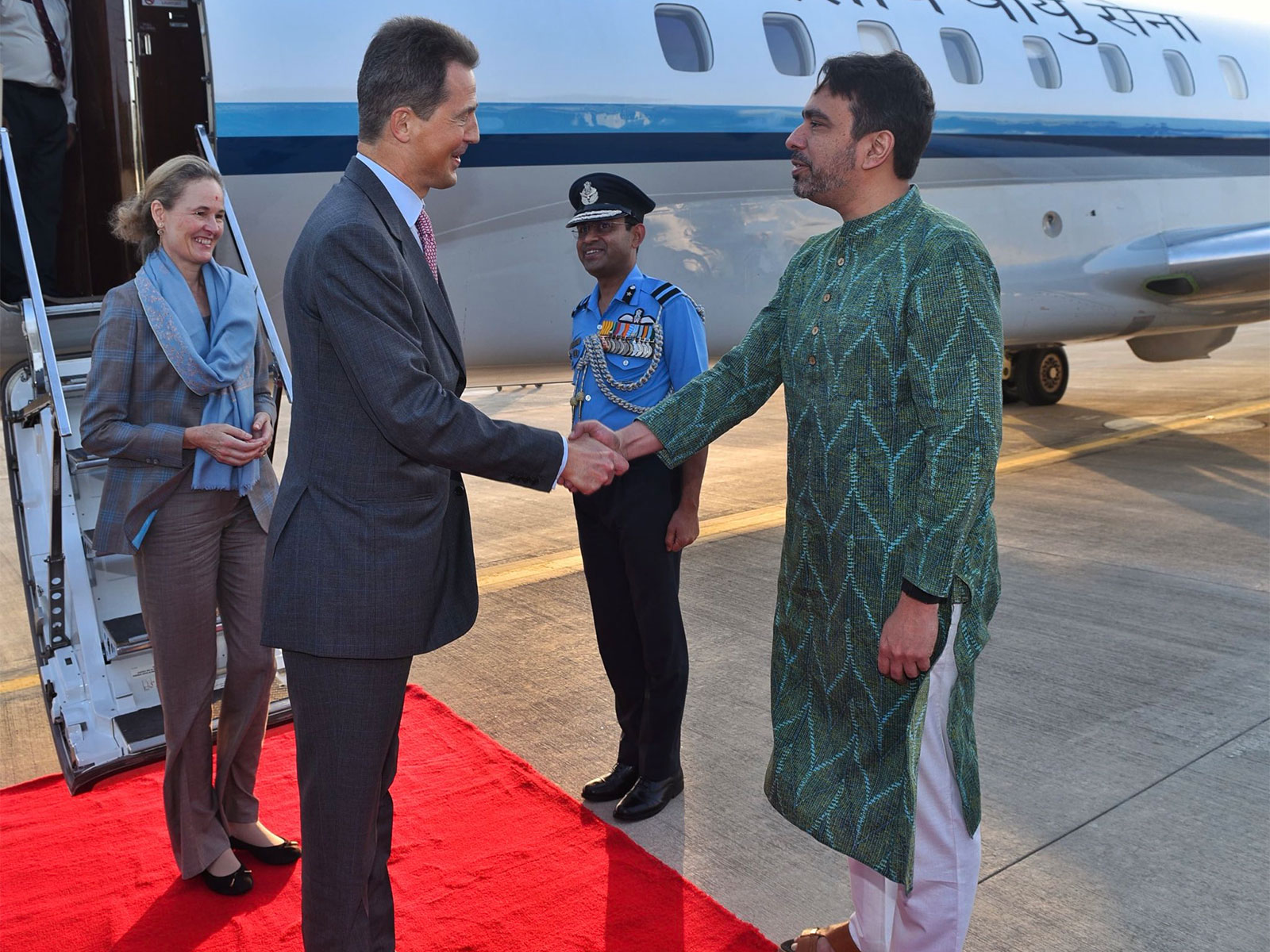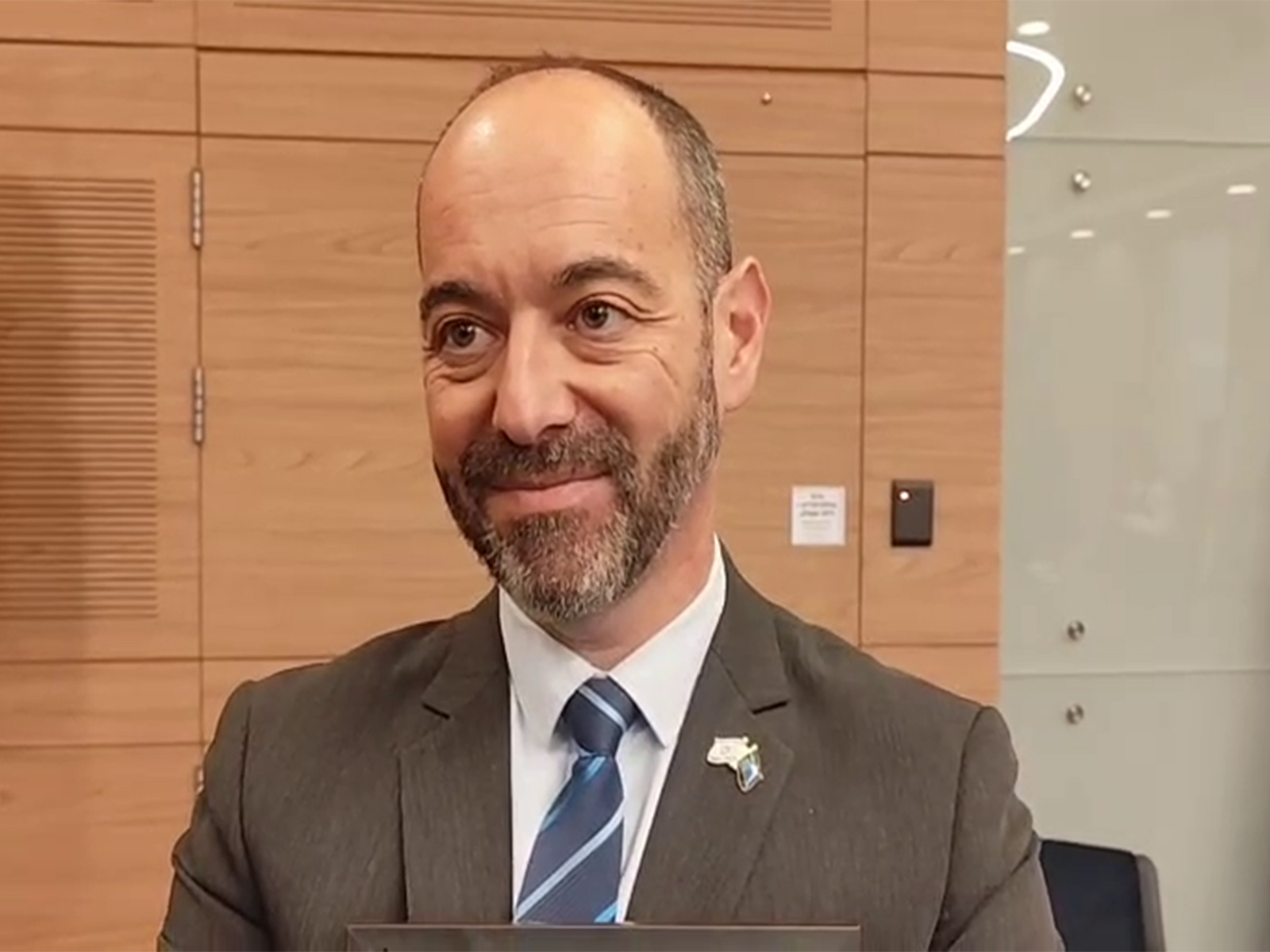
New Delhi [India], October 26 (ANI): Emphasising the strong, enduring bilateral ties between New Delhi and Jerusalem, Spokesperson of the Embassy of Israel in India, Mishelle Sirota, on Monday affirmed that the relationship between India and Israel will remain steadfast regardless of the outcome of the Israeli national elections, scheduled to take place tomorrow.
Speaking with ANI, she said, "India and Israel relationship will not change, even for the slightest, no matter who is going to be chosen," characterising the upcoming polls as a "celebration of democracy" where Israeli citizens gather to decide how they want their nation to look over the next four years.
Highlighting the scale of public participation, Sirota pointed out that around 7.3 million eligible voters are preparing to cast their ballots. She expressed optimism about a strong voter turnout, emphasising that Israelis living abroad often travel back home specifically to exercise their franchise since overseas voting is not permitted.
“Tomorrow, we are voting for the Israeli elections. We have 7.3 million eligible voters that are about to vote,” she noted. “Hopefully, we will have a very high percentage, as historically shown in Israel, people are very eager to vote. This is a very vibrant democracy. People come from abroad even to vote in Israel, because we cannot vote from outside," she stated.
Sirota underscored the significance of the democratic exercise which allows citizens a direct say in governance, noting that “Every election is a time for the society and the Israeli citizens to cast their vote and to see how they want the future of Israel to look like in the next four years.”
Comparing the electoral frameworks of Israel and India, Sirota observed contrast in scale and execution. She pointed out that while elections in India, the world's largest democracy, span several months, Israel completes its single-day voting process manually, yielding rapid results by the following day.
“I think apart from the scale and the fact that your elections go through a few months, and for us it's only one day, and we get the results pretty quickly. So about tomorrow, like the day after the elections, we will already know the results,” she explained. “We also vote manually, so it's not an electronic device. People cast their votes in an envelope.”
Despite operational differences, the Embassy spokesperson emphasised that both democracies are bound by shared priorities, including national security, pluralism, and democratic traditions.
“I do think we have a lot of similarities in that a lot of the voters vote for national security, pluralism, democratic values, liberal values, and traditions,” Sirota added. “As the biggest democracy in the world, and the only democracy in the Middle East, we have a lot of similarities, and I think it's also the beauty of the relationship and what makes us so strongly attached to each other.”
Reiterating the embassy's diplomatic commitment, Sirota stressed that the diplomatic mission represents the state rather than any specific political faction, guaranteeing continuity in international engagements.
“As an embassy, we will obviously represent every government that is going to be chosen, and I do have a very strong belief in the democratic system in Israel,” she stated, highlighting the core tenets of freedom of opinion and religion. “As an embassy and as a diplomat, we are obviously going to support whoever is going to be in power, and I am sure that it's not going to change the relationship between the nations.”
Addressing the public sentiment after prolonged regional conflict, Sirota acknowledged the widespread desire among Israeli citizens for peace and stability, while reinforcing the non-negotiable priority of national security.
“Obviously, there are different opinions. That's the beauty of democracy. So I think after three years of war, a lot of the Israeli citizens want to see better days. We want to be in peace with our neighbours,” Sirota said.
She underscored that protecting citizens remains an absolute consensus across the country's political spectrum, “We obviously have to keep the safety of our civilians in our borders in place, and it's a very strong consensus in Israel that we will make sure that every single citizen is safe no matter what our neighbors are planning. And unfortunately, they are sometimes planning to hurt us very badly.”
Her remarks come as Israel is set to head to the polls in less than 24 hours in what is one of the most bitterly contested elections. The polls come amidst fragile times in West Asia, with Israel embroiled in the Iran conflict and facing heat on its southern border in its skirmish with Hezbollah.
For incumbent Benjamin Netanyahu, the narrative is simple- a projection that only he can keep the Iranian threat at bay especially with his endorsement from US President Trump. Netanyahu's coalition comprises his own Likud Party, Finance Minister Bezalel Smotrich's pro-settler Religious Zionism and National Security Minister Itamar Ben-Gvir's far-right party Jewish Power.
His closest rival is the former military chief Gadi Eisenkot who has projected himself as a security hawk with an image of a political outsider.
The others include the alliance led by former Prime Ministers Naftali Bennett and Yair Lapid, former defence minister Avigdor Lieberman and a four-party coalition with a significant representation of the Arab minority in Israel headed by Yair Golan.
The battle-lines are drawn firmly, consummate political survivor Bibi Netanyahu versus a former Military Chief in a no-holds barred contest. The victory of either could well reshape not just the politics of Israel but also the situation in West Asia. (ANI)
India-Israel ties won't change "even for slightest" by election outcome: Israel Embassy spokesperson Mishelle Sirota