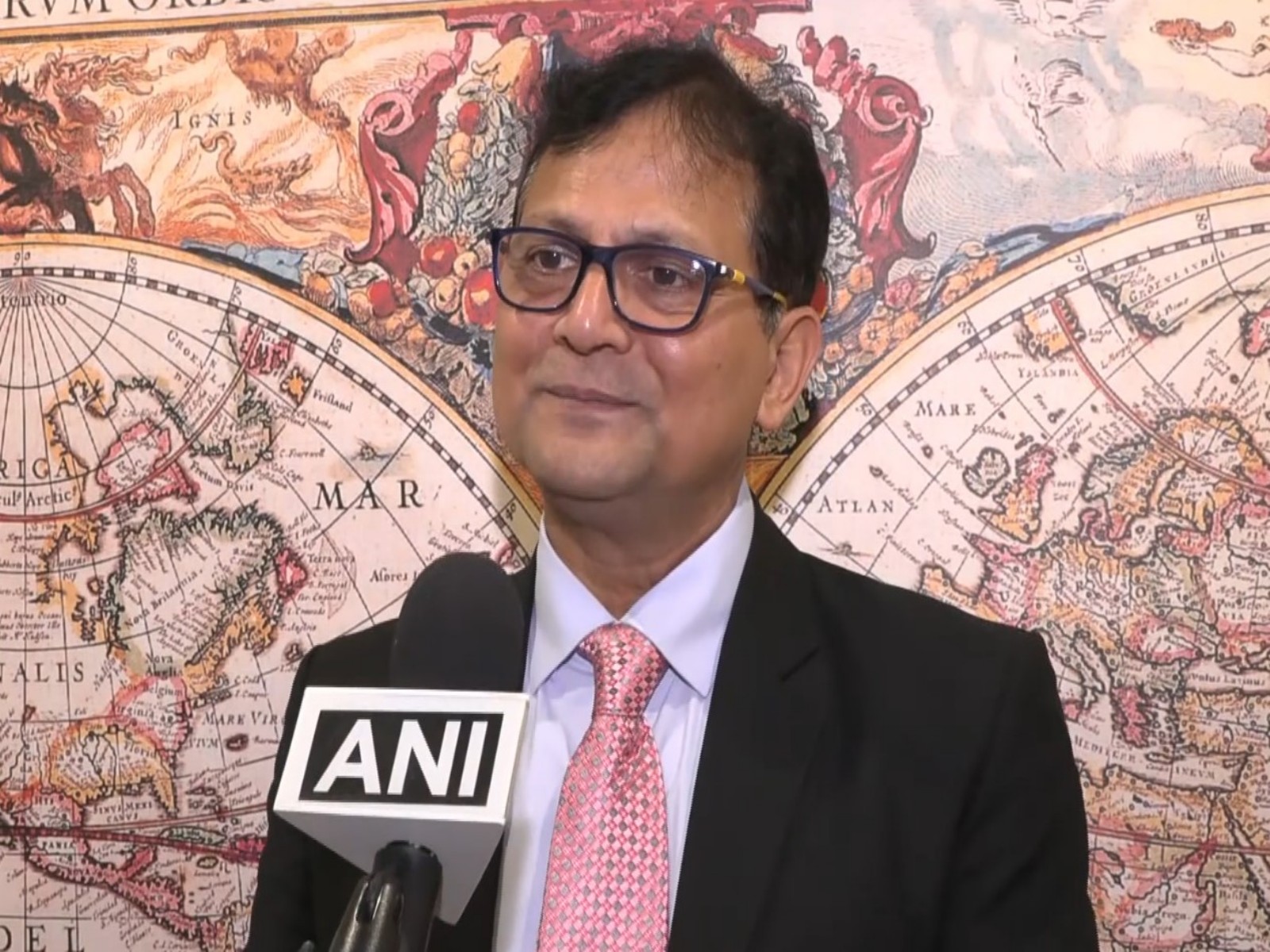
New Delhi [India], September 21 (ANI): India is on the roadmap of moving from Digital Public Infrastructure (DPI) to AI public infrastructure over the next five years, as the country builds on the success of Aadhaar, UPI and Digi Yatra, Rajiv Kumar, President and MD of Microsoft IDC, said.
“I think India is on the roadmap of growing from the digital public infrastructure to AI public infrastructure. Because we have had such a beautiful success with the DPI, where Aadhaar and UPI and Digi Yatra, all those services come to every citizen. What I see the country doing is, how do we now up-level from digital to AI? And that is exciting to see. That’s what I see coming in the next five years,” Kumar told ANI.
Speaking about Microsoft’s new India South Central data centre, located around Hyderabad, which has three zones for tolerance and resiliency, he described it as a strategic data centre and said it is one of Microsoft’s largest data centres, capable of running all Azure services and built to scale to new services that may come up in the future.
“Strategic data centres are data centres that are, this is one of the largest data centers for Microsoft, and strategic because it can run all the Azure services, and it’s built to scale to the new services that may come back, come up in the next year or in the future,” he said.
Kumar said his experience in developing the data centre had been positive, pointing to India’s technology leadership, Digital Public Infrastructure (DPI), favourable policies, startup ecosystem, availability of capital and talent.
“India has been on a roll for technology leadership, and the DPI, the Digital Public Infrastructure, is a great example of how the country adopted the last generation technology, and really impacted positively for everybody’s life,” he said.
Microsoft has announced a total investment of USD 20.5 billion in India, according to Kumar, with a focus on three major areas – infrastructure, skilling, and ensuring AI is sovereign, secure, scalable and sustainable.
“Number one is just the infrastructure. See, Microsoft really wants to make India the AI-first nation. For that, you have to start with infrastructure like data centers, so that you can run these AI capabilities close to the users, close to the customers,” Kumar said.
He said skilling was important because having technology would not be enough if users did not know how to use it or bring AI to end users.
Kumar also highlighted India’s startup ecosystem, saying there were one or two unicorns when he returned to the country in 2005, compared with more than 120 today.
“Now, most of the startups are starting to leverage AI as a technology to solve the customer problem that they are solving,” he said.
Kumar said he had recently reviewed startups at IIT Delhi’s Unnati accelerator and found it exciting to see the problem spaces they had selected and their use of AI to address them.
On sustainability, Kumar said Microsoft has set a goal of being “carbon negative, water positive and zero waste” and that the Hyderabad data centre uses air-cooling technology.
“We have brought the technology that is not water-cooled, but is air-cooled. We do have a tight group of water, but we are not taking in water,” he said.
He added that Microsoft had introduced measures including borewell chargers and soak pits and had replenished about 5 million litres of water in the village around the Hyderabad facility by June 2026.
On power consumption, Kumar said Microsoft would use green energy and was working with companies to generate 1,000 megawatts, or 1 gigawatt, of additional energy in India.
“As of now, they have already started generating 630 megawatts of green energy based on our partnership with them. So we are making sure that we are not eating into the existing resources. In fact, we are adding more,” he said.
Kumar said Microsoft’s global cloud network comprises 80 regions and about 500 data centres, connected through dedicated fibre networks spanning subsea cables, on-terrain cables and optical cables to the last mile.
“We have a dedicated network to connect all these data centers around the world, including one in Hyderabad,” he said. (ANI)
India moving from digital to AI public infrastructure in next 5 years: Microsoft’s Rajiv Kumar