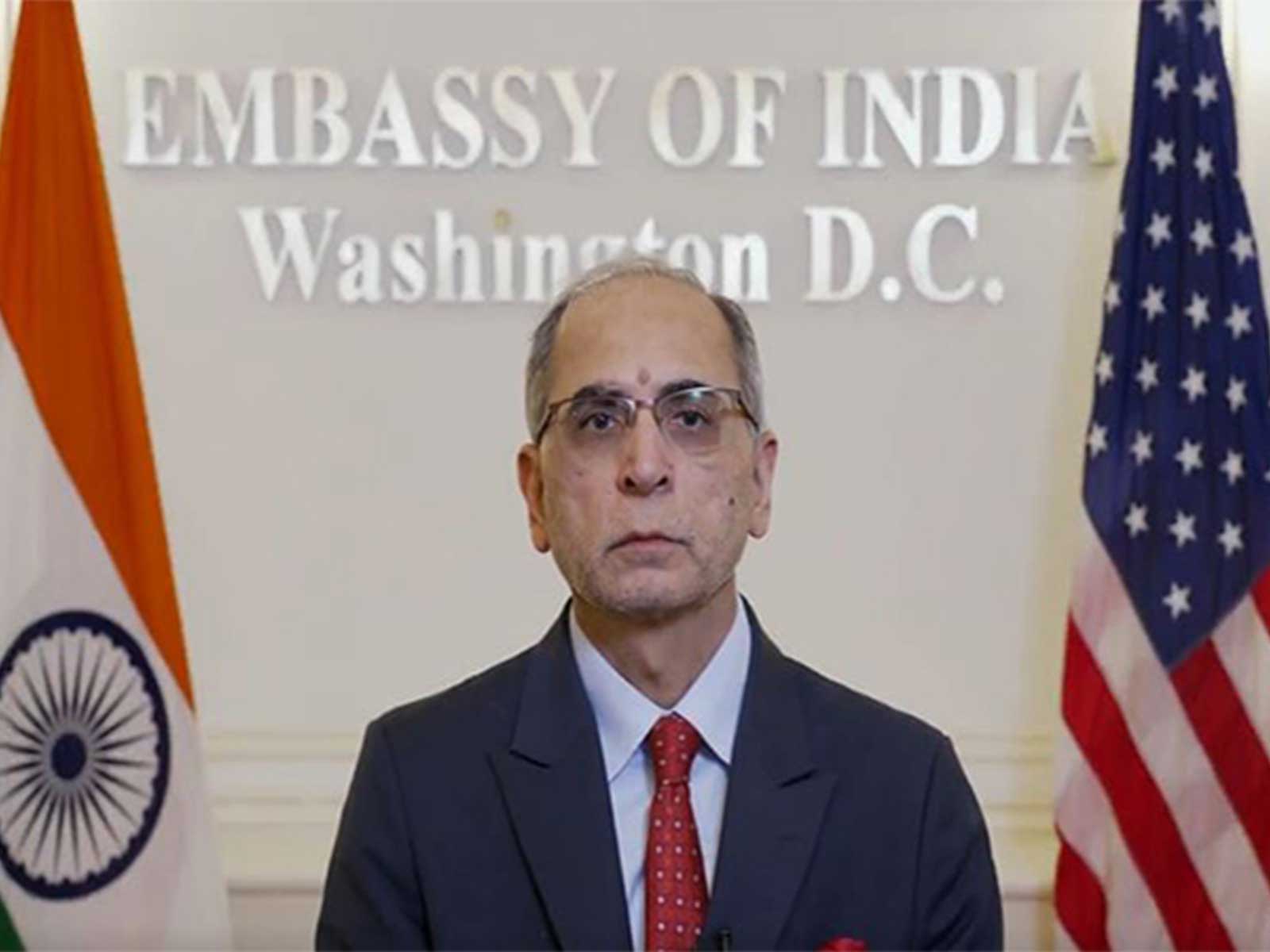
Washington, DC [US], September 17 (ANI): India’s Ambassador to the United States Vinay Mohan Kwatra has laid out a strong defence of the country’s energy policy hours after the US Congress passed legislation opening the door to steep new tariffs on Indian goods over New Delhi’s purchases of Russian oil.
Kwatra said India’s energy sourcing reflects “a fundamental national responsibility”. The US House of Representatives approved the Lindsey O. Graham Sanctioning Russia and Iran Act of 2026 on Wednesday by 262 votes to 159, having already cleared the Senate last month. The bill authorises President Donald Trump to impose tariffs of up to 100% on countries that continue buying Russian oil and gas, including India and China. Though it does not trigger such duties automatically, it hands President Trump discretion to act only if certain conditions are met. The legislation now goes to the President for signature.
In an apparent reference to the vote on social media, Ambassador Vinay Mohan Kwatra said India’s energy consumption was a matter of basic development rather than geopolitical alignment.
In a thread on X titled “People First: What Drives India’s Energy Imperative,” he argued that securing reliable energy is a strategic necessity for India’s 1.4 billion citizens and a cornerstone of the country’s growth.
He noted that India is both the world’s fastest-growing major economy and its third-largest energy consumer, yet the average Indian still uses less than a third of the global per capita average, and roughly a tenth of what the average American consumes, a gap he suggested underlines why the country’s energy demand will keep rising.
Kwatra highlighted the stark disparity in global energy consumption levels, emphasising India's imperative to secure reliable, uninterrupted, and affordable fuel supplies to sustain its economic momentum.
“People First: What Drives India’s Energy Imperative Energy is a vital strategic necessity for 1.4 billion Indians and a foundation of our development….India is the world’s fastest-growing major economy and its third-largest energy consumer. Yet the average Indian consumes less than one-third of the global average and one-tenth of average American. Our energy needs will, and must, grow,” Kwatra said.
He said reliable and affordable supplies power homes, farms, hospitals, schools, factories and transport, protect livelihoods, and sustain growth.
Kwatra, a former Foreign Secretary, said India imports over 85% of its crude oil and around half its natural gas.
“Our sourcing reflects a fundamental national responsibility: looking outside our borders to secure adequate, affordable and uninterrupted energy for our people,” he said.
The message echoes weeks of similar outreach by the Ambassador, who has held a string of meetings with lawmakers from both parties since August, repeatedly stressing what he has called India’s “energy security” and the expanding hydrocarbon trade between the two countries.
The Indian government had said earlier in the day that it has noted the passage of the Sanctioning Russia and Iran Act in the US Congress and is monitoring further developments on this matter.
The government said India remains firmly committed to ensuring energy security for its 1.4 billion people and will continue to do so through diversified sourcing and on the basis of evolving market dynamics.
“This issue has been discussed at high levels in recent months with various US interlocutors. Its potential implications for not just the bilateral relationship but also the international energy market have been very clearly articulated by the Indian side,” the Ministry of External Affairs said in its statement.
It said the Indian side has also made clear its determination to take all necessary measures to protect its trade and economic interests.
“Government will work closely with Indian trade and industry bodies to deal with the implications of these developments,” the MEA statement said.
The new bill also arrives against a fraught backdrop for India-US trade. Washington had already imposed an additional 25% tariff on Indian goods in August, layered on top of earlier duties and linked explicitly to India’s Russian oil purchases, bringing total levies on some Indian exports to 50%.
The US Supreme Court had in February this year invalidated a broader set of tariffs introduced by the Trump administration. A US federal court in May this year also struck down the Trump administration’s 10 per cent blanket global tariffs.
A bipartisan group of US lawmakers has separately introduced a resolution seeking to unwind those emergency tariffs, arguing they damage supply chains and raise costs for American consumers.
India and the the US had, on February 7 this year, announced that they have reached a framework for an Interim Agreement regarding reciprocal and mutually beneficial trade (Interim Agreement).
The joint statement had said that Interim Agreement between the United States and India will represent a historic milestone “in our countries’ partnership, demonstrating a common commitment to reciprocal and balanced trade based on mutual interests and concrete outcomes”.
The two countries are in an advanced stage of negotiations for a Bilateral Trade Agreement.
The two countries are expected to hold further bilateral trade talks on the sidelines of the G20 Trade Ministers’ meeting in Wisconsin at the end of September, as New Delhi and Washington continue negotiating a broader trade agreement even as the tariff threat looms. (ANI)
India pushes back on US energy security stance after Congress tariff vote, envoy Kwatra says sourcing reflects “fundamental national responsibility”