By Vishu Adhana
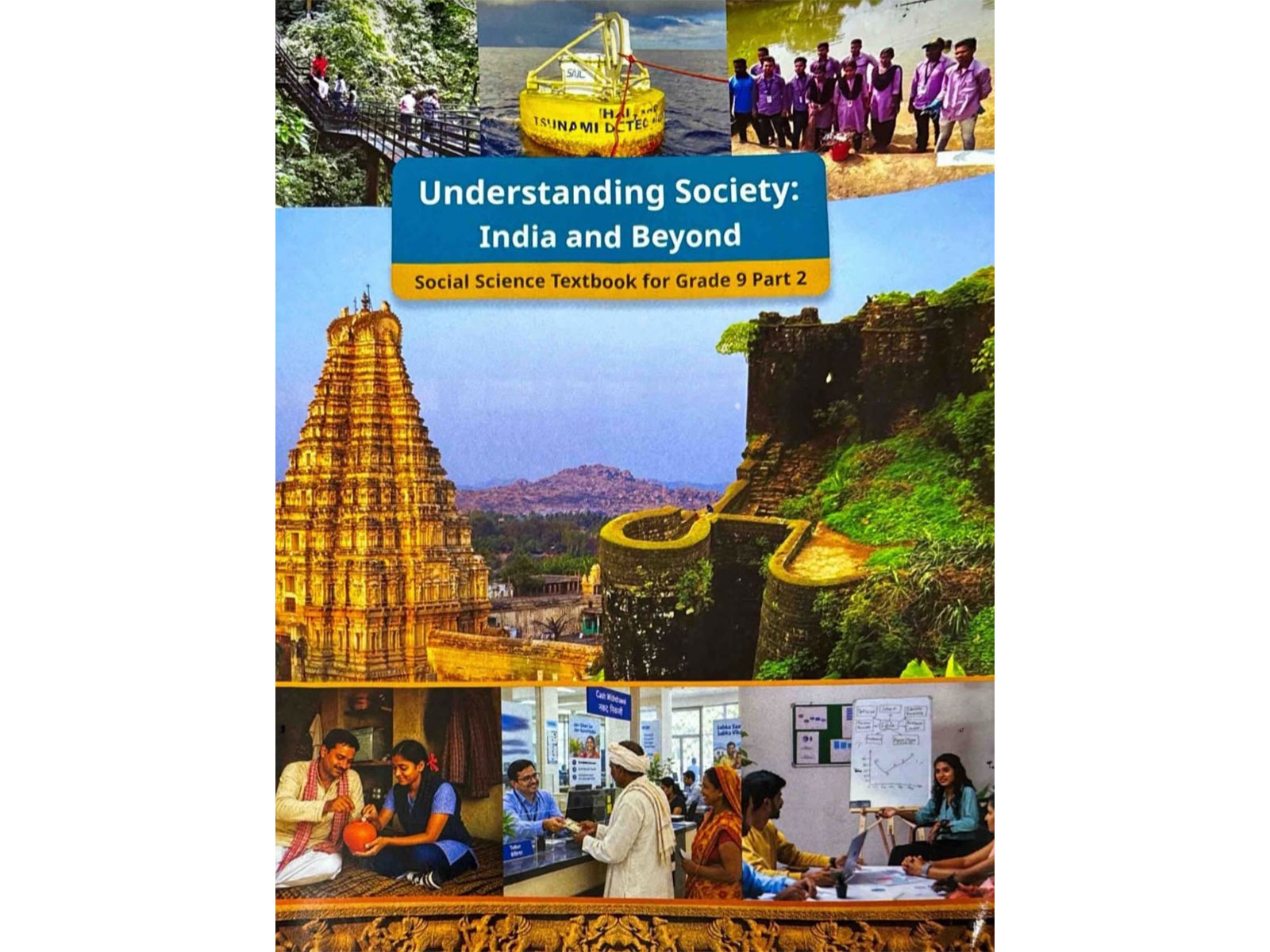
New Delhi (India) September 29 (ANI): The brutality of the Mughal state against Sikh Gurus, particularly Guru Arjan Dev, Guru Tegh Bahadur and Guru Gobind Singh, has few comparisons in history and was deeply rooted in the “rigid religious and discriminatory practices”, the newly released Part 2 of the NCERT Class IX Social Science textbook says.
The textbook, in its chapter Resistance and Resilience (1000–1700 CE), says the “valour and sacrifice” of the Sikh Gurus “for the cause of the faith” became defining features of Sikhism, while their martyrdom strengthened the conviction among Sikhs that persecution had to be met with “firm resistance and resilience”.
“The brutality of the Mughal state against the Sikh Gurus, particularly Guru Arjan Dev, Guru Tegh Bahadur, and the tenth Guru, Guru Gobind Singh, has few comparisons in history,” the textbook says.
“The valour and sacrifice of the Gurus for the cause of the faith became the defining features of Sikhism. Beyond political motivations, the act was also deeply rooted in the rigid religious and discriminatory practices of the Mughals,” it adds.
The book says the Mughal state began increasingly intervening in the affairs of the Sikh Gurus from the beginning of the 17th century as their socio-cultural influence grew.
“Due to the growing socio-cultural influence of the Sikh Gurus, the Mughal state increasingly intervened in their affairs from the beginning of the 17th century,” it says.
According to the textbook, Mughal emperor Jahangir ordered the execution of Guru Arjan Dev, the fifth Sikh Guru, on the pretext of his alleged support to Jahangir’s rebellious son, Khusrau Mirza. It describes his martyrdom as a “significant turning point” in Sikh history and says it contributed to a gradual shift in the community’s organisational and political orientation.
The textbook also records the detention of Guru Hargobind, the sixth Sikh Guru, by Jahangir in Gwalior Fort, noting that Sikhs visited the fort in large numbers and paid their respects to the Guru from outside.
On Guru Tegh Bahadur, the ninth Sikh Guru, the book says: “In 1675 Aurangzeb ordered the execution of Guru Tegh Bahadur, the ninth Sikh Guru. The martyrdom proved a turning point in Indian history.”
The textbook then links the martyrdoms to the emergence of organised resistance.
“The martyrdom of the Sikh Gurus to uphold their faith and principles firmed the conviction of the Sikhs that persecution had to be met with firm resistance and resilience,” it says.
“Such persecution and political pressure could only be countered through collective organisation, and armed resistance as and when required,” it adds.
The chapter also discusses Guru Hargobind’s establishment of the Akal Takht as a seat of temporal authority and the concept of miri-piri, representing spiritual and worldly authority.
Alongside the Sikh resistance, the textbook for the first time also details the resistance of Jat farmers of the Ganga-Yamuna Doab against the Mughal Empire, documenting two major uprisings in the 17th century.
The book says the Jats faced heavy taxation and exploitation under Mughal rule and that these economic hardships, coupled with Aurangzeb’s religious policies, led to growing resentment.
“During the 17th century, the Jats, a farming community from Ganga-Yamuna Doab were burdened with heavy taxes and exploitation by Mughals. These economic hardships combined with Aurangzeb’s religious policies led to growing resentment amongst the Jats,” the textbook says.
In 1669, the Jats rebelled under the leadership of Gokul Jat, with Mughal forces struggling for several months to suppress the uprising. The community rebelled again in 1686, this time under the zamindars of Sinsini and Sogar, while Aurangzeb was engaged in prolonged military campaigns in the Deccan.
“The Mughals sent several armies to suppress the rebellion, leading to a long and fierce struggle in which both sides suffered heavy losses. By 1691, the Mughals had gained the upper hand. Yet, the Jat resistance continued,” the book says.
The Jat and Sikh accounts are part of a wider section on resistance to successive powers between 1000 and 1700 CE. The chapter also records resistance by the Hindu Shahi rulers, Chandellas, Solankis and Chauhans against Turkic invaders, Maharana Pratap’s resistance to the Mughals, the Ahom victory at the Battle of Saraighat and the resistance of rulers such as Queen Naiki Devi, Rani Abbakka Chowta and Rudrama Devi.
The revised Class IX Social Science textbook has reached students months after the academic session began. Its delayed release had triggered concerns and protests from parents on social media over the non-availability of the new books while the academic session was already underway. (ANI)
Mughal brutality against Sikh Gurus has few comparisons in history, deeply rooted in rigid religious and discriminatory practices: NCERT