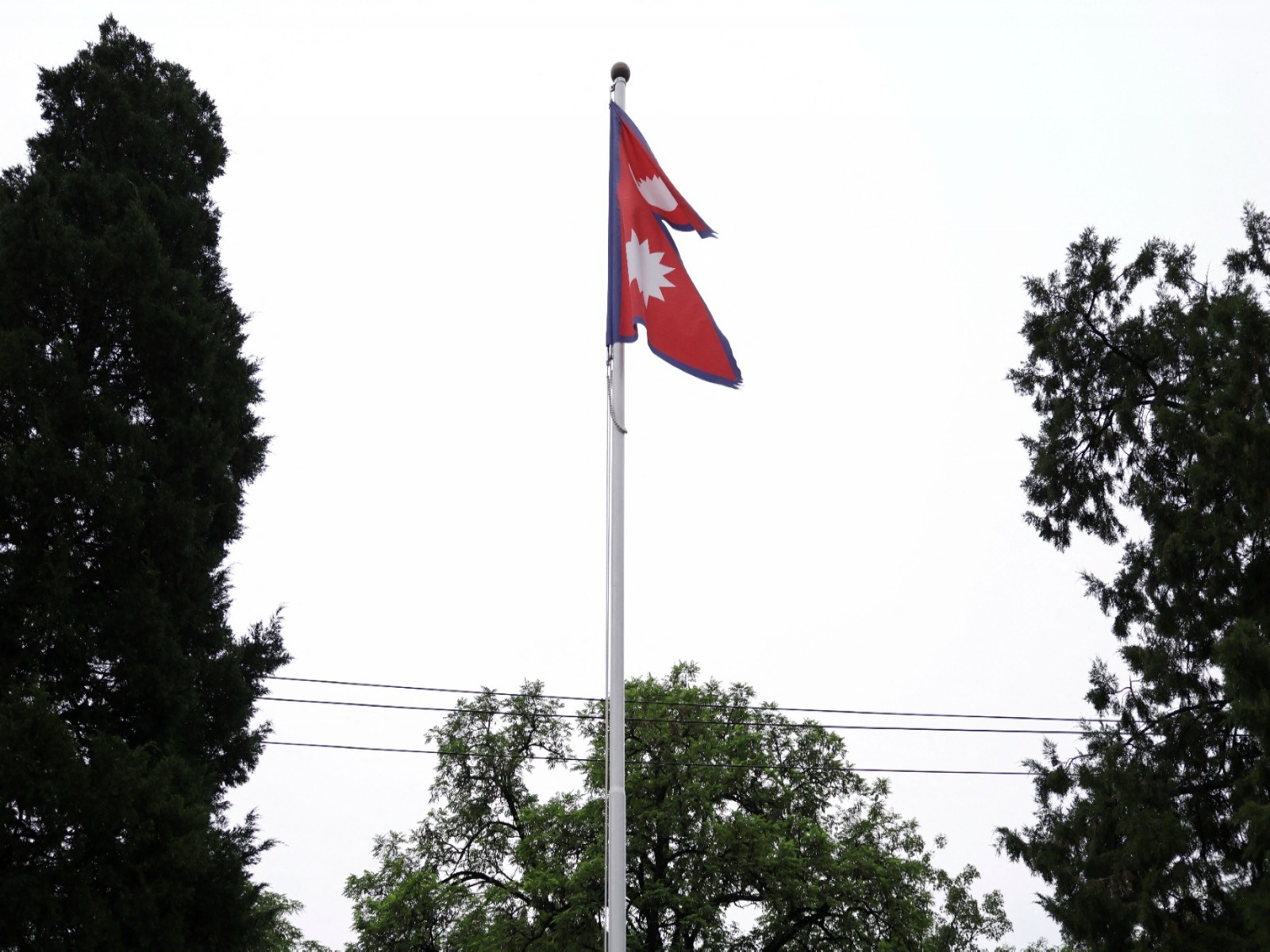
Kathmandu [Nepal], September 16 (ANI): The Constitutional Bench of Nepal’s Supreme Court has ruled it mandatory for both the lower and upper houses to secure two-thirds majorities in their respective Houses to amend the constitution.
The ruling comes with the issuance of an interim order to keep two provisions of the Rules of HoR, 2083 in abeyance, ruling that they should not be implemented immediately.
A five-member Constitutional Bench comprising Chief Justice Dr Manoj Kumar Sharma and Justices Kumar Regmi, Dr Nahakul Subedi, Binod Sharma and Sharanga Subedi ordered that Rule 140(11) and Rule 259 of the Rules of HoR, 2083 not be implemented. The court also observed that Rule 259 appears, at first glance, to be inconsistent with the Constitution.
The order means that the government led by Prime Minister Balendra Shah will face additional procedural requirements for constitutional amendments. Constitutional amendments must now secure a two-thirds majority separately in both Houses of Parliament, rather than being approved through a two-thirds majority at a joint sitting of the two Houses.
The order was issued while hearing a writ petition filed by, among others, Nepali Congress National Assembly Parliamentary Party Leader Kamala Devi Pant.
Senior advocates Radheshyam Adhikari, Harihar Dahal, Tikaram Bhattarai, Sitaram KC, Yubaraj Bhandari and Yadunath Khanal, along with advocates Semanta Dahal, Pramis Khanal and Roshan Nepal, argued on behalf of the petitioners.
The petitioners had challenged the provision in Rule 140(11) concerning the procedure for constitutional amendment and authentication, as well as Rule 259(1), which provides for the regulations to be implemented as special laws equivalent to federal laws.
The petitioners argued that these provisions conflict with Articles 1, 104(1) and 274 of the Constitution and sought an interim order preventing their immediate implementation.
The Supreme Court has ordered the defendants to submit written responses within seven days, excluding the time required for delivery of the notice, explaining the legal grounds and reasons why the order sought by the petitioners should not be issued.
The court has also ordered that the case be presented on a priority basis within 15 days after the written responses are received or the deadline for submitting them expires.
While issuing the interim order, the Supreme Court relied on the principle that the Constitution is the fundamental law of Nepal.
The court noted that Article 1 of the Constitution provides that any law that conflicts with the Constitution is invalid to the extent of the conflict. It also recalled the constitutional provision that it is the duty of every person to comply with the Constitution.
Article 104(1) authorises each House of the Federal Parliament to frame rules governing its proceedings, the orderly conduct of meetings, and the formation, functioning and procedures of committees and the House.
However, Article 274 of the Constitution prescribes a separate procedure for constitutional amendments.
The Supreme Court also compared the disputed provisions of the Rules of H0R, 2083 with the constitutional amendment procedure set out in the National Assembly Regulations, 2075.
According to the bench, Nepal has a bicameral parliamentary system under Article 83 of the Constitution. Exercising the authority granted by Article 104, the National Assembly Regulations, 2075 set out the procedure for constitutional amendment bills under Rule 129.
The court observed that Rule 140(11) of the Rules of H0R, 2083, which separately sets out the procedure and authentication process for constitutional amendments, appears at first glance to be inconsistent with the constitutional framework.
The Supreme Court also held that Rule 259 of the House regulations appears to create a situation in which provisions of subject-specific laws enacted by the legislature could be rendered ineffective or superseded.
The order states that such a provision appears at first glance to be inconsistent with the constitutional framework.
The court issued the interim order on the grounds that immediate implementation of the disputed provisions could cause irreparable harm to constitutional provisions and that the balance of convenience was also in favour of the petitioners.
The Supreme Court has ordered the respondents to keep Rule 140(11) and Rule 259 of the Rules of H0R, 2083 passed by the House of Representatives on May 31, 2026, in abeyance and not implement them immediately.
The court has also directed that the order be communicated to the concerned respondents and that the process proceed in accordance with the law.
The final constitutional validity of the disputed provisions will be determined after the final hearing and further proceedings in the case. (ANI)
Nepal: Constitutional bench rules both houses must secure separate two-thirds majority to amend Constitution