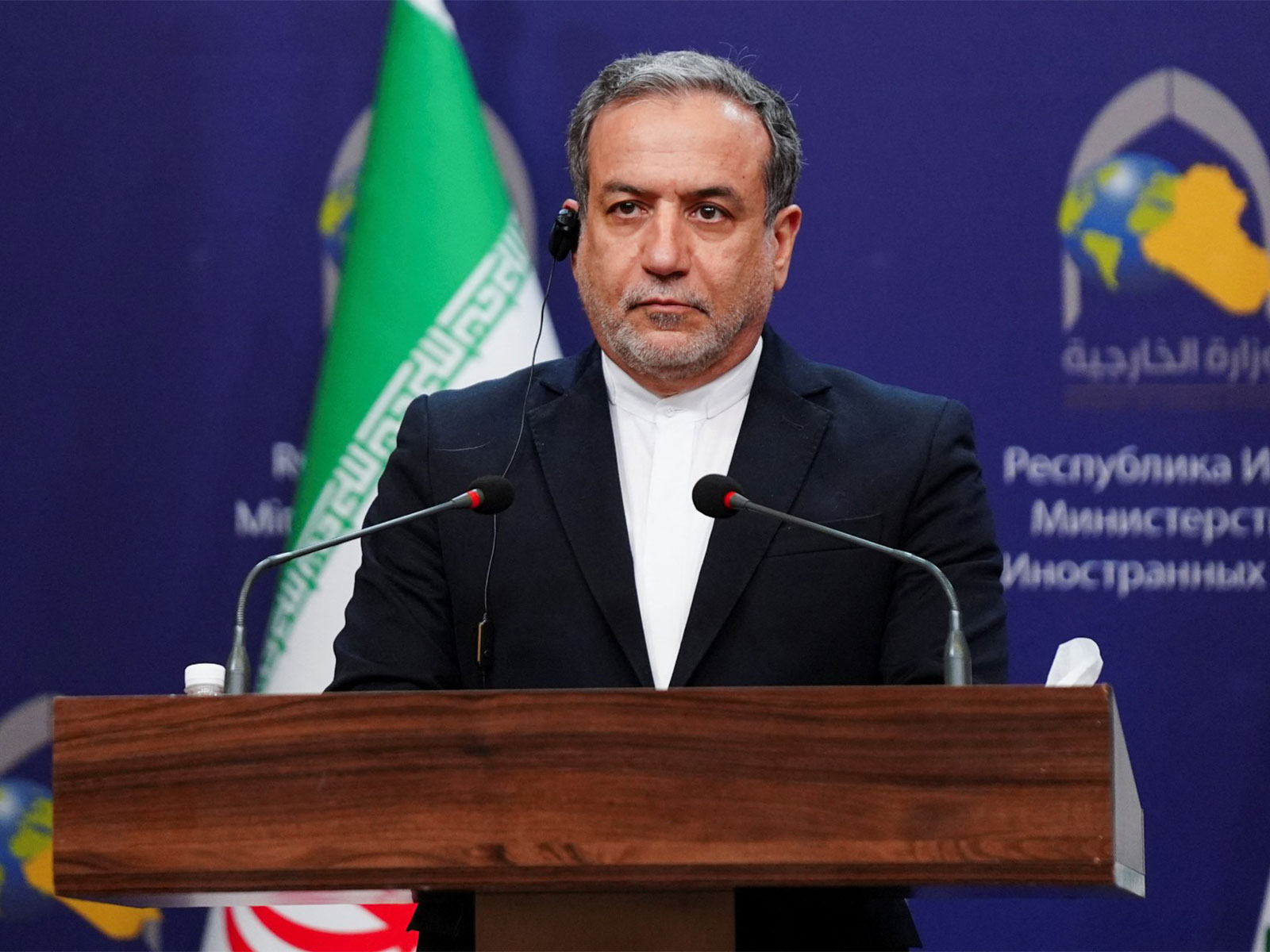
Tehran [Iran], August 16 (ANI): Iranian Foreign Minister Abbas Araghchi said that the ongoing bilateral negotiations between Iran and Oman are "completely separate" from the issue of reopening the Strait of Hormuz.
According to Al Jazeera, Araghchi, speaking with Shahrara News, clarified that ongoing discussions with Muscat focus specifically on designating updated navigation lanes for vessel transit, as previous maritime routes are no longer operational.
"Our negotiations with Oman are ongoing. That is a completely separate matter. It is a technical issue concerning the designation of maritime routes in the Strait of Hormuz for the passage of ships," Araghchi said.
He explained that because the former transit routes are no longer functional, a new navigation path must be established. "For now, we are designing a temporary route, which can then, at a later stage, be turned into a final route," he noted.
While expressing optimism that an agreement could be reached soon, Araghchi emphasised that establishing a new maritime channel does not automatically signal the reopening of the Strait of Hormuz.
"We may reach an outcome soon, but I want to emphasise that these negotiations and the reopening of the Strait of Hormuz are two separate issues. This is a technical negotiation concerning the designation of a maritime route," he reiterated.
Araghchi stressed that once the temporary route is finalised, any decision regarding the actual resumption of shipping through the strategic choke point will depend on Washington fulfilling specific obligations.
"Once this route has been determined, whether the Strait will be reopened or not will depend on the fulfilment of other conditions to which the United States must adhere," Araghchi stated.
Earlier on Friday, Iranian Deputy Foreign Minister Kazem Gharibabadi rejected US President Donald Trump's remarks that he would declare the Strait of Hormuz "a territory of the United States" after defeating Iran, saying the strategic waterway "cannot be seized by tweet" or military force.
In an X post, Gharibabadi said Iran "neither fears threats nor cowers before displays of power", asserting that the Strait of Hormuz "has been Iranian, is Iranian, and will remain Iranian".
"Trump has said that after Iran's defeat, he will soon declare the Strait of Hormuz as US territory! The Strait of Hormuz cannot be seized by tweet, nor by aircraft carrier, nor by issuing an order, nor by an election speech. Iran neither fears threats nor cowers before displays of power," Gharibabadi said.
"Once and for all, accept the reality: up to this point, you have suffered strategic and heavy defeats; the Strait of Hormuz has been Iranian, is Iranian, and will remain Iranian; this strait will only be closed and opened under Iran's command, and as long as you do not accept the reality of defeat and cease your fanciful delusions, Iran will continue to enforce the blockade," he added.
Additionally, Head of the Iranian parliament's National Security Commission, Ebrahim Azizi, warned Trump against US threats to Iran and "endless bluffing" regarding the Strait of Hormuz.
"The U.S. President ought to worry about his own security rather than his endless bluffing regarding the Strait of Hormuz; before he ends up hiding in a food truck," he wrote on X.
His remarks came after Trump, speaking at a rally in Long Island, said he planned to declare the Strait of Hormuz US territory after the conclusion of the war with Iran. "After we finish defeating Iran, which is being very badly defeated -- pretty soon I'll be declaring the Hormuz Strait a territory of the United States," Trump said.
Trump had earlier claimed that the United States exercised "total control" over the Strait of Hormuz and that he "will keep it" amid stalled negotiations with Iran regarding the reopening of the strategic conduit.
Trump asserted, "The USA has total control over the Strait of Hormuz. I THINK WE WILL KEEP IT! Our Naval Blockade is being called, by everyone, 'A WALL OF STEEL,' and there is nothing Iran can do about it."
The Strait of Hormuz remains one of the world's most sensitive geopolitical chokepoints, where past military standoffs have routinely triggered spikes in international crude prices and fears of broader conflict. (ANI)
Oman negotiations, reopening of Hormuz are two separate issues: Iranian FM Araghchi