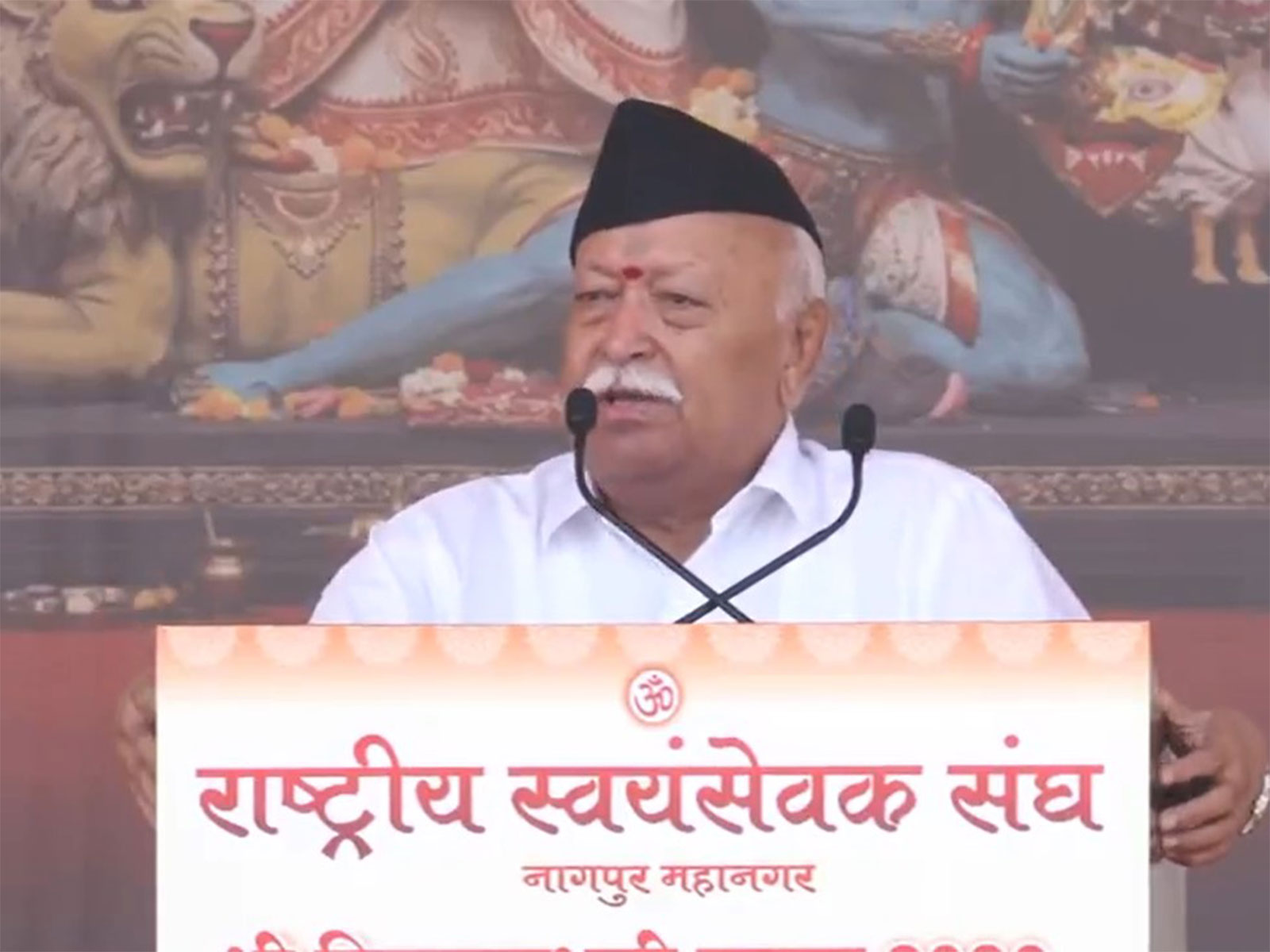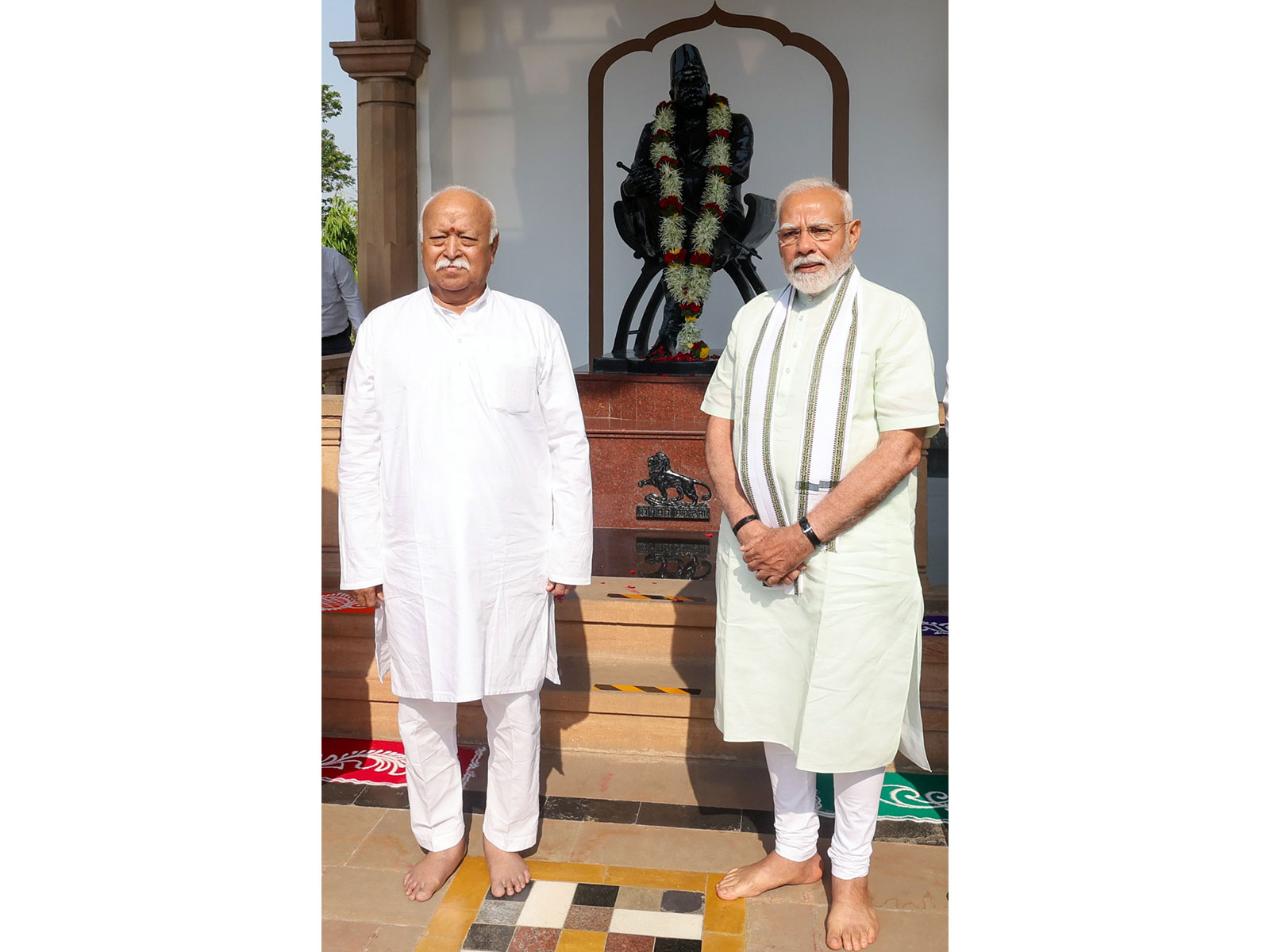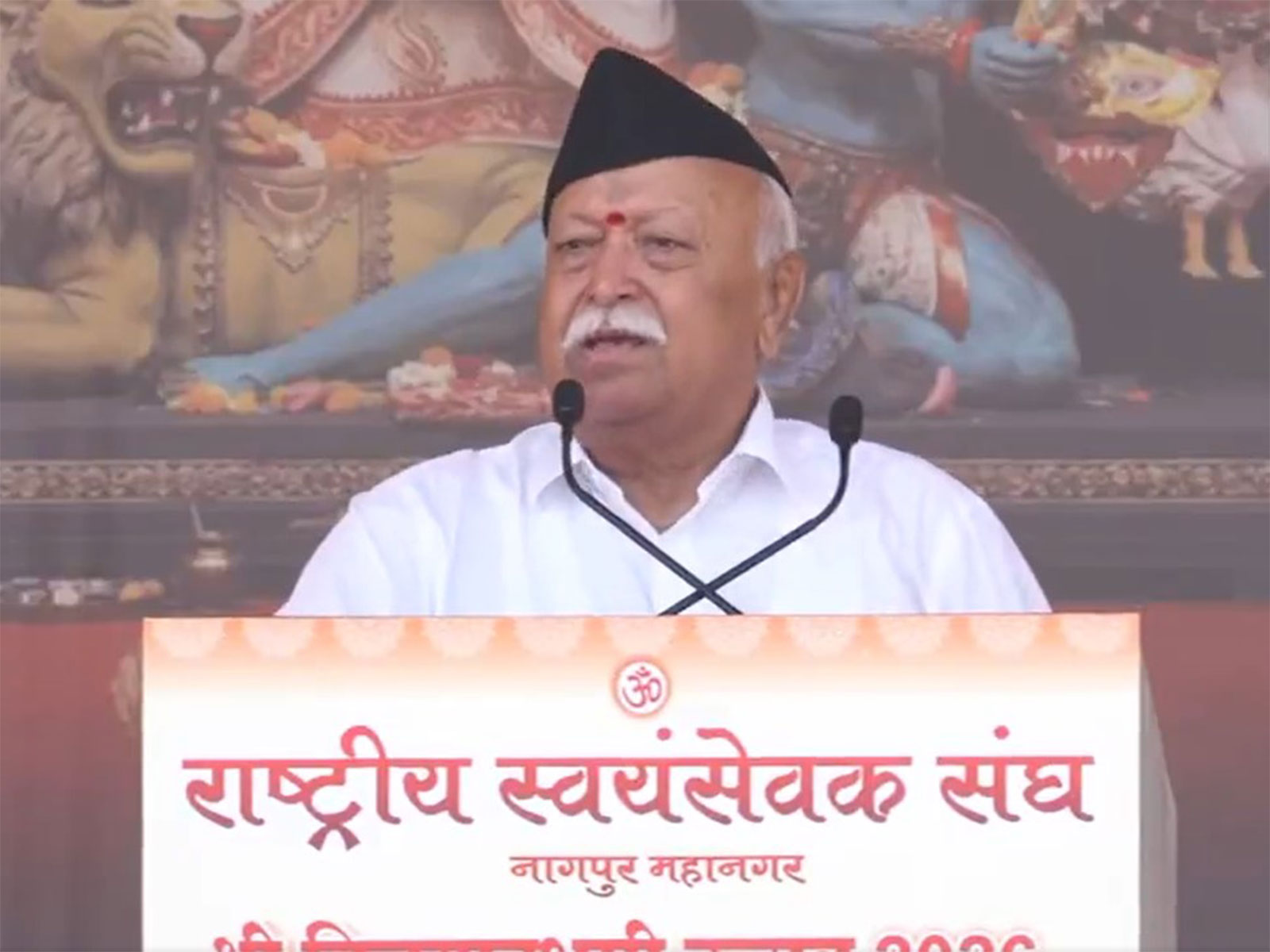
Nagpur (Maharashtra) [India], October 20 (ANI): Highlighting how one-sided development is destroying the Himalayan region, Rashtriya Swayamsevak Sangh (RSS) chief Mohan Bhagwat on Tuesday instead suggested that a balanced approach in the region might offer better outcomes. He highlighted how such instability in the mountainous region has killed over 1,400 people, while more than 6,000 remain unaccounted for.
Addressing the RSS centenary Vijayadashami utsav at Reshimbagh ground in Maharashtra's Nagpur, Bhagwat called for a balanced approach to development that takes ecological stability and human welfare into account.
“Why did what happened in Nepal happen? Across the entire Himalayan region, the countries through which the Himalayas pass — in today's maps, India, Tibet, Bhutan and China — one-sided development efforts are creating instability in nature throughout the Himalayan region,” he said.
Nepal witnessed a “Himalayan Tsunami” on August 26, triggered by a rock-and-ice avalanche. Search and recovery efforts are underway in flood-affected areas, with widespread destruction leaving more than 70,000 people directly affected and rendering them homeless.
Expressing grief over the loss of lives in disasters, Bhagwat said, “Technological science has progressed, but when human lives are lost on such a large scale, everyone feels the sorrow. We pay tribute to those who lost their lives, and we also engage in relief efforts, as we should. But the fundamental solution is to develop a comprehensive and balanced vision of development — development that takes everyone along, development that can be sustained, and development that is not so expensive that the very people carrying it out cannot survive because of it."
“We will have to relearn the principles of how to carry out such development. When that comprehensive and balanced vision emerges, human beings learn to use resources in the right direction. It is the human being who decides what is appropriate and what is inappropriate,” he said.
Bhagwat also spoke about India's Sanatan vision, describing it as one that views the world as an integrated whole and promotes harmony, restraint and universal brotherhood.
“India's Sanatan vision has its own comprehensiveness, and it sees the entire world as one integrated whole. Because of this, it wants to give the culture of harmony and restraint to the entire world and wants to see these values prevail throughout the world. That is why our ancestors called it ‘Sa Prathama Sanskriti Vishwara’ (the foremost culture of the world),” he said.
He said India's progress should also involve offering the world a model of development based on this vision.
“India must establish its own new model of comprehensive and integrated development on the basis of this vision. Today, we are progressing, but along with this progress, India also has the responsibility of showing the world a new path. Therefore, while the direction of our progress should be towards remaining at the forefront of the world, it should also be aimed at giving the world a new model. This is necessary, and that very vision exists in our national ethos,” Bhagwat said.
Explaining what he described as the Hindu perspective, Bhagwat said, “We know this vision by the name of the Hindu perspective. The Hindu perspective does not make any particular form of worship compulsory. One may continue to have whatever kind of devotion one feels, and see the Divine in whichever form one chooses. This perspective does not concern itself with which form of worship you follow, or whether you worship at all."
“It does not prescribe any particular method of worship, food habits, customs, lifestyle, social or political differences, language or region. It is for everyone; in fact, it is the religion of humanity and human culture. This is because its defining characteristics, above all these differences, are universal brotherhood, spirituality and humanity. These are its characteristics,” he said.
Bhagwat further said, “People who live in their respective regions, follow their respective faiths and traditions, speak their languages and observe their food habits and customs, but carry this vision of spirituality, universal brotherhood and humanity, are described by the word Hindu. Look at the history of the word Hindu, and you will find this.”
He said the Hindu spirit had the capacity to bring people together without erasing their distinct identities, “This is how we live, and this is our tradition. Therefore, India is devoted to the worship of Bhava, or radiance. May the protection of Indian identity be ensured. This is what we call the Hindu spirit, and it has the power to unite the entire world — without changing anyone, without destroying the distinct identities of anyone, and by beautifully weaving all identities together into one thread. It has the capacity to take the entire world along."
“And how is this spirit practised in India? The first thing is devotion to Bharat Mata. India comes above everything else. The second is that we all have the same ancestors. Whatever our region, faith or language, our roots are the same. Since then, people have lived this very culture and have shed their blood and sweat to protect it. Such are the ideals of our great personalities,” he added.
The RSS chief also raised concerns about the unrestricted availability of information through social media.
“All kinds of information are openly available to everyone through social media. But does the person receiving this information have the discernment to absorb it and understand it? How can it work without discernment? Whatever information they receive is what they have. All these new things are unfamiliar to them. Through experience, they can gradually learn what is right and what is not, but they must learn with discernment,” he said.
Bhagwat said the absence of the ability to distinguish between appropriate and inappropriate content could lead to harmful consequences.
“They receive this information, but without the ability to distinguish between what is appropriate and what is inappropriate, it leads to harmful consequences. After experiencing these consequences, society is discussing whether some restrictions, rules, policies and discipline should be imposed on these information-providing platforms, as has been done in other countries. Society in our country is also discussing whether such rules are needed,” he said.
Referring specifically to OTT platforms, Bhagwat said, “There was a particular focus on OTT platforms, so the government and administration should also consider this. They will do what they have to do, but when it comes to our rules, values and cultural ethos, we must teach our new generation how to choose and how to distinguish between what is appropriate and what is inappropriate.”
He also described drug abuse as a serious national problem, saying that awareness of its harmful effects did not necessarily prevent people from developing an addiction.
“Because of the absence of this discernment, several harmful consequences can be seen in personal, family and social life. One problem that has emerged due to this lack of discernment is drug abuse. It is not that people do not know that drugs are harmful; they have this information, but they still develop the habit. This has become a serious national problem. We must address it in time, both the government and administration, as well as society,” he said. (ANI)
“One-sided development causing instability in Himalayan region”: RSS chief Mohan Bhagwat on Nepal disaster