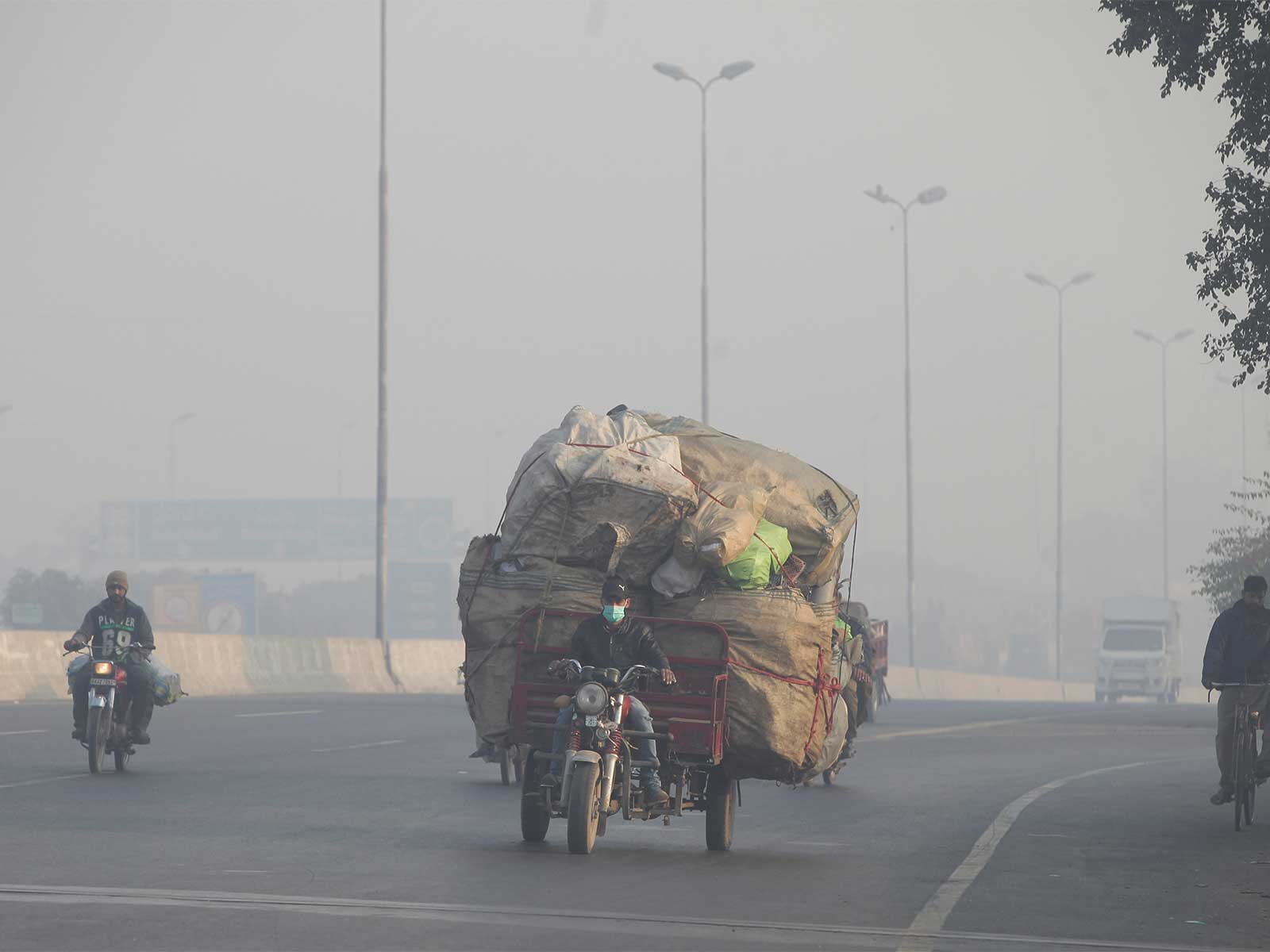
Lahore [Pakistan], October 28 (ANI): Pakistan’s worsening air pollution crisis is shortening lives, claiming thousands of victims prematurely and placing a substantial burden on the country’s struggling economy, according to a report by the Pakistan Air Quality Initiative (PAQI), as reported by The Express Tribune.
According to The Express Tribune, the assessment estimates that polluted air reduces the average life expectancy of Pakistanis by 3.9 years and contributes to approximately 128,000 premature deaths every year. The economic damage is equally alarming, with pollution-related costs estimated at 6.5 per cent of the country’s gross domestic product (GDP.
Titled Unveiling Pakistan’s Air Pollution: A National Landscape Report on Health Risks, Sources, and Solutions, the study presents a unified emissions inventory and evaluates air quality across four major urban regions: Lahore, Karachi, Islamabad-Rawalpindi and Peshawar.
The report combines ground-level air quality readings, satellite observations and local data on fuel consumption, vehicle fleets, industrial activities and emissions from different economic sectors. It examines fine particulate matter (PM2.5), carbon monoxide, nitrogen oxides and sulphur dioxide to identify the principal sources of pollution.
Lahore emerges as one of the worst-affected urban centres. The report estimates that the city’s annual average PM2.5 concentration exceeds 110 micrograms per cubic metre, more than 22 times the World Health Organisation’s recommended annual limit of five micrograms.
Sustained exposure to these hazardous pollution levels could reduce life expectancy in Lahore by as much as seven years. The situation worsens further during winter, when temperature inversions trap polluted air close to the ground, preventing pollutants from dispersing effectively, as cited by The Express Tribune.
Transport is identified as Lahore’s largest source of primary PM2.5 emissions, contributing 35 per cent, followed by industrial activities at 28 per cent and brick kilns at 17 per cent. Karachi, meanwhile, has a distinct pollution profile, with industries responsible for 49 per cent of emissions, as reported by The Express Tribune. (ANI)
Pakistan’s toxic air cuts life expectancy by nearly 4 years, costs 6.5% of GDP