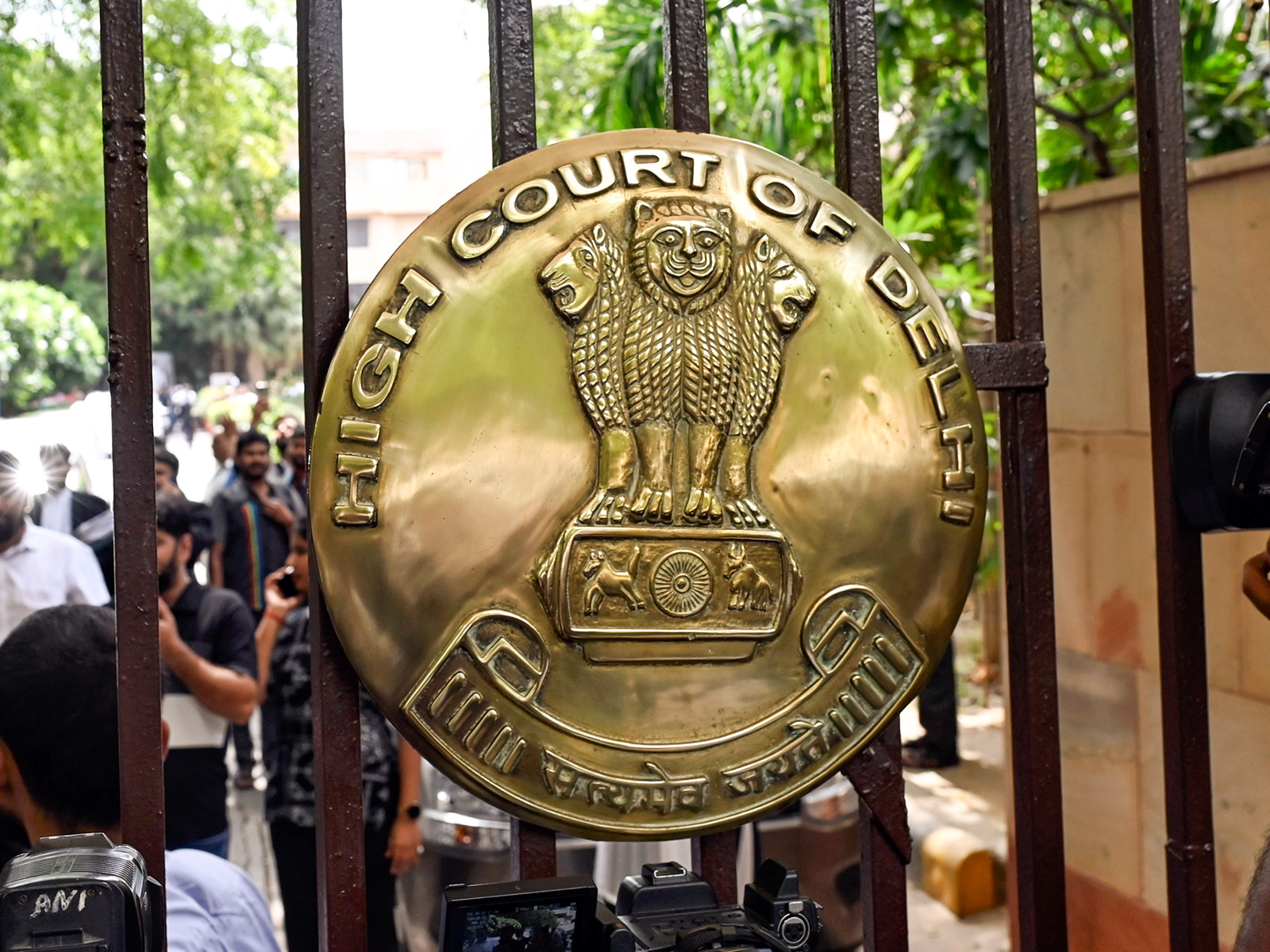
New Delhi [India], August 18 (ANI): The Supreme Court on Tuesday directed the Centre and the Captive Elephant Health and Welfare Committee (CEHWC) to take steps to strengthen the regulatory mechanism for the upkeep, health and welfare of elephants kept in captivity across the country.
The Court also sought a report from the Ministry of Environment, Forest and Climate Change (MoEFCC) on DNA profiling of captive elephants and directed the authorities to ensure an effective and transparent system for their medical care.
A bench of the Chief Justice of India (CJI) Surya Kant and Justices Joymalya Bagchi and V. Mohana was hearing a PIL filed by the Wildlife Rescue and Rehabilitation Centre concerning the welfare of captive elephants.
The Court was informed that the latest census carried out in compliance with the Court's earlier order regarding the safety of elephants in 2018 showed 2,725 captive elephants across 27 States, including elephants kept by private individuals, temples, zoos, circuses, rehabilitation centres, forest departments and tourist operators.
The petitioners alleged that several elephants were being kept in captivity in violation of statutory safeguards and that the source and manner in which many elephants came into private possession was not properly documented.
The PIL also raised concerns over the illegal sale and transfer of elephants and their use for commercial, religious and recreational purposes.
Senior Advocate Parmeshwar, appearing for the petitioners, submitted that the petition was seeking to interfere with religious practices in Kerala involving temple elephants as they have approached this court during the festive season.
"Kerala is the only state where every captive elephant has been radio-tagged so that its moment can be traced," Parmeshwar submitted.
The Court said that its focus on the issue is that it requires a uniform mechanism to ensure that captive elephants are properly housed, medically examined and cared for. It clarified that it was not examining the religious rights associated with the use of elephants in temples.
"We are not entering into the religious rights or personal rights. We have to harmoniously deal with the religious rights," the Court observed.
The Court said that where elephants are kept in temples, their use must nevertheless be regulated and their welfare ensured. "Respect for divinity should extend to the elephant," the Court observed.
The Court's focus, the CJI said, was particularly on elephants kept by private individuals, circuses and those used for recreational activities at resorts.
"We are concerned about all 2,725," the CJI said, stressing the need to determine why elephants were being kept in private captivity and whether their owners were capable of providing adequate care.
The Court also sought greater clarity on the ownership and provenance of captive elephants. The Court noted that an elephant cannot be treated as ordinary private property and that what is described as ownership is essentially only possessory and is subject to the statutory regulatory framework.
The Court was informed by the ASG Aishwarya Bhati representing the Centre that the latest data showed 1,678 elephants in private possession, 96 with temples, 63 in zoos, and 332 in rehabilitation centres, besides those with forest departments and other entities.
The ASG also placed before the Court an Office Memorandum dated February 25, 2026, containing the proceedings of a meeting of the Captive Elephant Health and Welfare Committee constituted under Project Elephant. The minutes record decisions to introduce a new sampling kit for DNA profiling and data collection through the Suchna App, besides preparing a handbook/manual on captive elephant management and publishing best practices for elephant care.
The Court directed the CEHWC to implement the decisions taken at the meeting and file a status report.
The Court also directed the MoEFCC and the Centre to inform it whether DNA profiling of all captive elephants had been completed and whether the details had been uploaded on the Suchna App. The Court noted that DNA profiling was important for establishing the identity of elephants and preventing their illegal transfer or trade.
The Court further emphasised the need for a transparent medical-care mechanism for captive elephants, including specialised elephant clinics and periodic compulsory medical examinations.
The Court said the authorities must consider prescribing periodic medical check-ups for all captive elephants and maintaining proper records of their health, treatment, food and overall upkeep.
The Court also directed that any transfer or transportation of a captive elephant should be permitted only after complete details of the transferor and transferee are recorded and the applicable rules are complied with.
Justice Joymalya Bagchi expressed concern over the findings placed before the Court regarding the source of captive elephants.
"The minutes of the meeting are quite alarming," Justice Bagchi observed, pointing to the lack of information concerning the absence of the source of a significant number of captive elephants.
The Court also stressed the need for proper ownership certificates and said that the circumstances surrounding the elephant concerned should be reviewed whenever such certificates are renewed.
The Court referred to its earlier November 1, 2018, order, pursuant to which the MoEFCC had undertaken a census of captive elephants. The earlier census had recorded 2,067 captive elephants, including 905 in Assam and 518 in Kerala. The latest figures indicated an increase in the overall number, it noted.
The Court observed that the increase in captive elephants and the limited capacity of enforcement authorities made it necessary to strengthen the regulatory framework rather than merely rely on existing enforcement mechanisms.
The Court clarified that it was not considering a blanket prohibition on captive elephants. It said its immediate concern was the welfare and well-being of elephants regardless of the institution or person keeping them.
The matter has been directed to be listed after two months for further consideration and for the status report from the authorities. (ANI)
Respect to divinity should extend to elephants: SC directs Centre to strengthen safeguards for captive elephants