Varanasi (Uttar Pradesh) [India], November 18 (ANI): For the first time, a significant global genomic study involving 12 scientists from 10 institutions has completed the first detailed DNA research on the Rohingya community.
The team primarily consisted of geneticists and linguists.
The research revealed that the Rohingya are genetically linked mainly to Eastern South Asia, a finding corroborated by linguistic analysis. It was also observed that, despite their long-term residence in the Arakan region of Myanmar, there has been limited but distinct genomic admixture with neighbouring Tibeto-Burman-speaking communities.
Compared to the neighbouring Bangladeshi population, they possess a higher proportion of East/Southeast Asian ancestry. Furthermore, specific genes identified in their DNA suggest adaptation to local environmental conditions.
Scientists from BHU Varanasi, the University of Dhaka (Bangladesh), the University of Tartu (Estonia), CDFD Hyderabad, KU Leuven (Belgium), the University of Bari (Italy), Trinity College Dublin, the University of Calcutta, and the University of Bern (Switzerland) participated in this research.
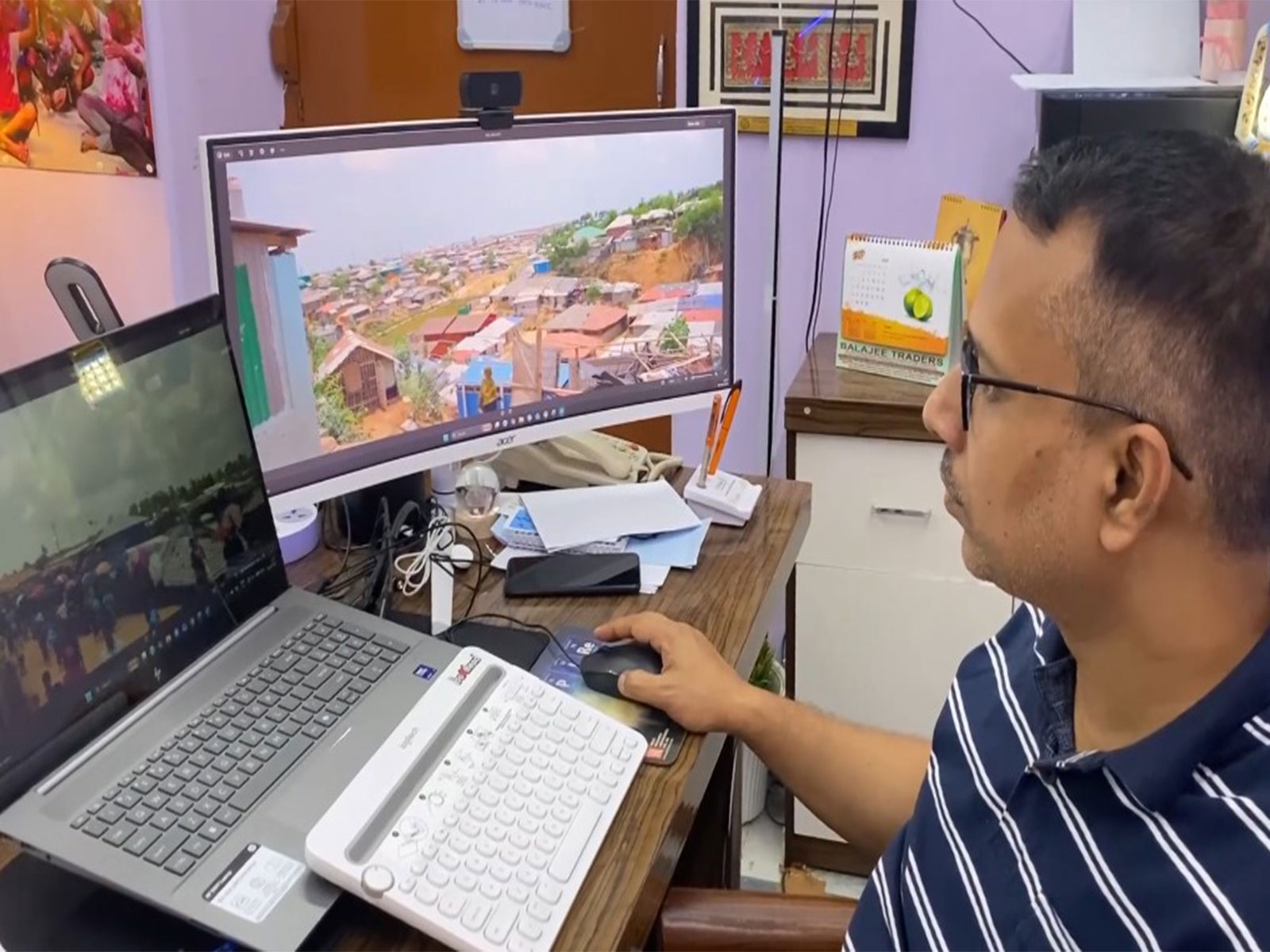
After obtaining permission from Bangladesh's Ministry of Disaster Management and Relief, DNA scientist Gazi Nurun Nahar Sultana collected blood samples from 25 Rohingya individuals at the Cox's Bazar camp in Bangladesh. For comparative purposes, samples were also collected from 27 Bangladeshi Muslims, 9 Bangladeshi Hindus, and 9 members of the Bawm tribe. These data were compared against genetic information from 2,217 individuals across Eurasia.
According to the lead author, Gazi Nurun Nahar Sultana of the University of Dhaka, preliminary DNA analysis showed the Rohingya forming a tight cluster closest to South Asian groups. Although they appear slightly shifted between South Asia and East/Southeast Asia, their primary ancestral base was South Asian.
Lead author Prajwal Pratap Singh stated, "Model-based statistical analysis revealed that the Rohingya possess approximately 59 per cent 'Kol-related' (North Indian-like) ancestry and about 41 per cent ancestry linked to Burmese sources; a similar ratio, roughly 69 per cent and 31 per cent, was observed in the neighbouring Bangladeshi Muslim group.
These results indicate admixture of Rohingya DNA with that of the people of Myanmar."
The team further determined the timing of this admixture based on DNA data. The mixing of South and Southeast Asian components in the Rohingya population was found to have occurred between 701 and 974 years ago. This clearly implies that the Rohingya have been residing in the Arakan Valley (Myanmar) for at least the past 1,000 years.
Homozygosity analysis indicates that the Rohingya did not exist as a very small or strictly endogamous group. Their effective population size remained relatively large, similar to patterns observed in Bangladeshi and Indian caste groups.
Genetics reveals not only where ancestors originated but also how certain segments of a group's genome evolve more rapidly than others.
Using the 'Population Branch Statistic' method, the research team examined this selection process in the Rohingya population, comparing them against West Eurasian (French) and East Asian (Han) reference groups.
Consequently, signs of selection were observed in several genes, including BAG3, ITPR3, SNAP91, COL27A1, and PLCB1. Among these, the genes BAG3, ITPR3, and SNAP91 were deemed particularly noteworthy, as they are associated with cellular stress responses, calcium signalling, autophagy (the cell's cleanup mechanism), and vesicle transport. Simply put, these pathways help the body cope with temperature fluctuations, infections, metabolic stress, and neuronal signalling. Signs of selection at genomic loci associated with immune responses have previously been observed in South Asian populations.
The signal related to ITPR3 in the Rohingya can be viewed in this context, as the gene is linked to calcium signalling and immune cell function.
Linguist George van Driem explained, “The story of the Rohingya is like a mosaic; the dominant layer is from Eastern South Asia, and their language belongs to the same family. A Myanmar-related component was added after they settled in Arakan.”
A South Asian genetic foundation predominates in the Rohingya genome, while the Southeast Asian admixture is limited but statistically significant. (ANI)
Rohingya have primarily South Asian genetic roots, with limited Myanmar admixture: First detailed genome study