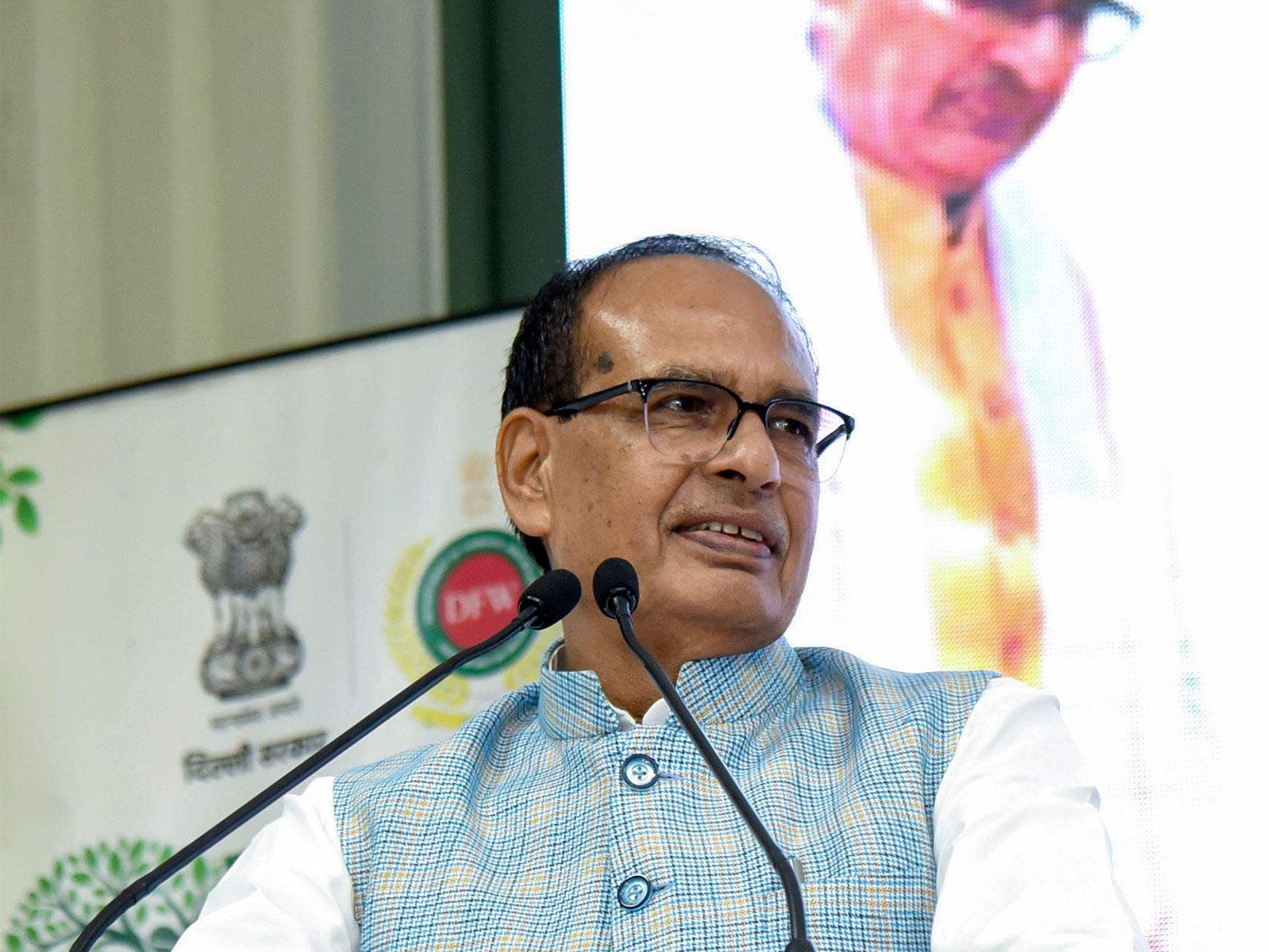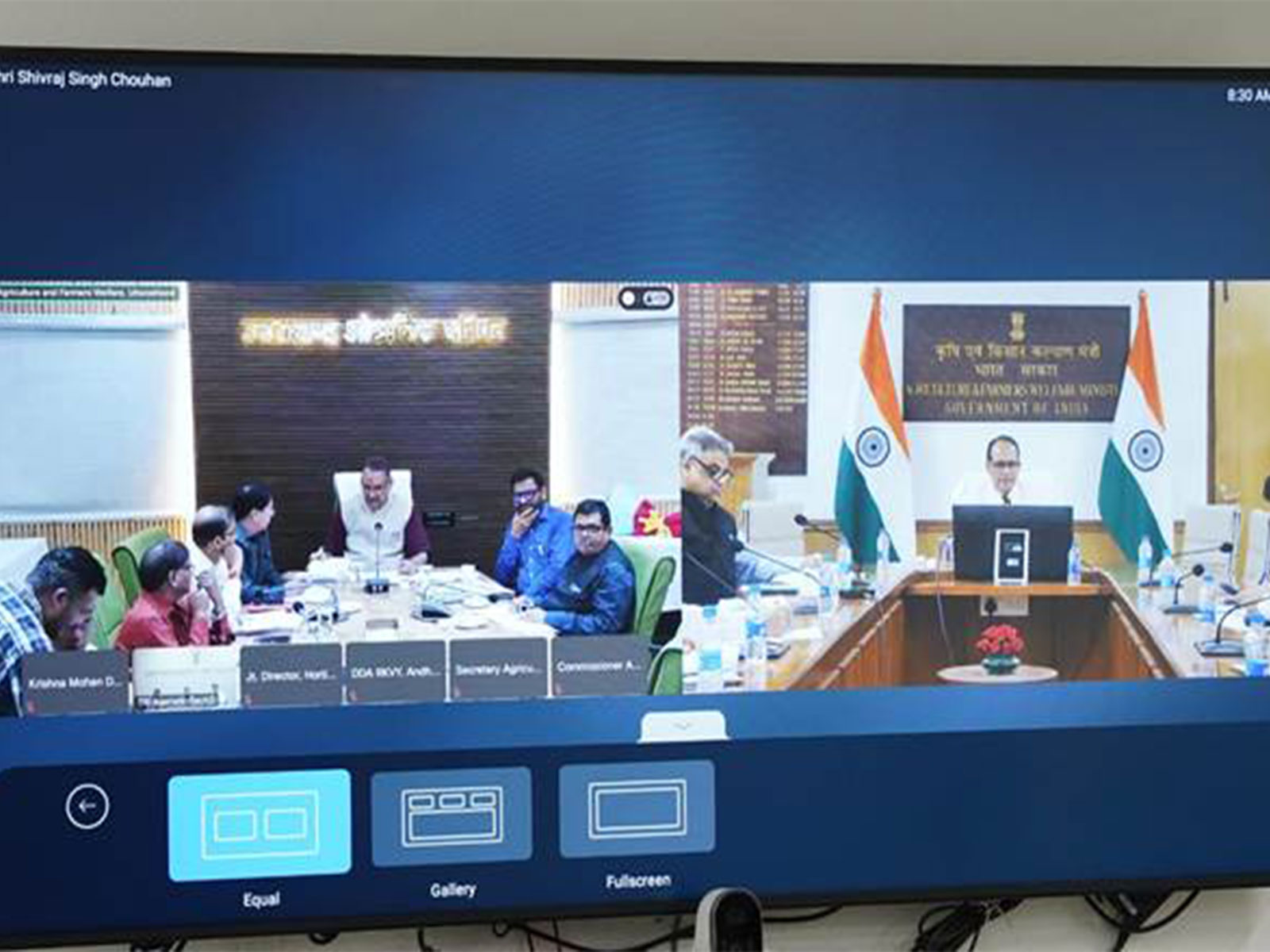
New Delhi [India], September 2 (ANI): Union Minister for Agriculture & Farmers Welfare and Rural Development, Shivraj Singh Chouhan, on Tuesday reviewed the progress of the Prime Minister Dhan-Dhaanya Krishi Yojana (PM-DDKY) at Krishi Bhawan, New Delhi, as per the Ministry of Agriculture & Farmers Welfare press release.
The review focused on accelerating implementation in the 100 identified districts, strengthening convergence among schemes, improving district-level performance and ensuring that interventions translate into measurable outcomes and tangible benefits for farmers.
During the review, the Minister was apprised of the progress of PM-DDKY through the scheme's dashboard, including district-wise performance, District Action Plans, field monitoring by Central Nodal Officers (CNOs), financial progress, capacity building, convergence of schemes and mechanisms being developed to track beneficiary-level outcomes.
PM-DDKY aims to accelerate agricultural development in 100 districts identified on the basis of low agricultural productivity, low cropping intensity and low agricultural credit disbursement.
The scheme focuses on six key objectives: increasing agricultural productivity; promoting crop diversification and sustainable agricultural practices; enhancing post-harvest storage capacity; improving irrigation infrastructure; enabling greater access to short- and long-term agricultural credit; and improving governance and service delivery, the release added.
The scheme is being implemented through the convergence of 36 Central schemes of 11 Ministries and Departments, along with State schemes and private-sector participation.
A total of 121 indicators, comprising 74 output indicators and 47 outcome indicators, have been identified across the 36 schemes for monitoring progress against annual targets. District performance on output indicators is ranked every month through the PM-DDKY dashboard, while outcome indicators will facilitate assessment of progress against the baseline.
The average score of the 100 districts across the six objectives increased from 22.54 in April 2026 to 38.85 in July 2026, an improvement of 16.31 points.
Objective-wise performance also recorded improvement during the period. The average score for agricultural productivity increased from 2.53 in April to 6.70 in July; crop diversification and sustainable agricultural practices from 5.60 to 8.65; post-harvest storage capacity from 2.61 to 3.82; irrigation infrastructure from 1.65 to 4.20; access to agricultural credit from 2.81 to 5.59; and governance and service delivery from 7.94 to 10.33, the release added.
The review noted that all 100 districts have uploaded their District Action Plans (DAPs) and feedback has been provided on the DAPs of all 100 districts.
All 100 districts have submitted data against output indicators up to July 2026, while all 100 districts have also submitted outcome-indicator data for the financial year 2025-26.
Committees have been constituted at the State, District and national levels for review and monitoring. Central Nodal Officers are also undertaking regular field-level monitoring of implementation.
The review emphasised strengthening the monitoring framework to move beyond tracking activities and expenditure towards measuring outcomes and the actual benefits reaching farmers.
The Financial Progress Module of the PM-DDKY dashboard was implemented on 31 August 2026. A Beneficiary Progress Module is targeted for implementation by mid-September 2026 to enable systematic capture of beneficiary-level progress.
The strengthened dashboard will also facilitate consolidation of investments and interventions undertaken through Central schemes, State schemes and other sources in the Dhan-Dhaanya districts.
This will enable a comprehensive assessment of the resources deployed, activities undertaken, farmers benefited and outcomes achieved across the identified districts.
Capacity development is an important component of PM-DDKY implementation. During January to July 2026, a total of 6,90,530 farmers and 88,961 extension workers were trained in various skills.
In addition, 2,20,683 farmers and extension workers were trained in natural farming during the period.
Krishi Vigyan Kendras (KVKs) are being utilised as technical partners for capacity development and field-level interventions, strengthening the agricultural extension system and facilitating dissemination of improved agricultural practices among farmers.
The review also focused on strengthening convergence among the 36 Central schemes of 11 Ministries and Departments, State schemes and private-sector interventions.
The Department of Public Enterprises has included adoption of PM-DDKY districts for CSR activities by Central Public Sector Enterprises (CPSEs) for 2026-27 and 2027-28, providing an additional avenue for supporting development interventions in the identified districts.
The monitoring mechanism is being strengthened to capture such convergence and investments, enabling assessment of the combined impact of interventions being implemented in the Dhan-Dhaanya districts.
PM-DDKY was approved by the Union Cabinet on 16 July 2025 and officially launched by the Hon'ble Prime Minister on 11 October 2025. The PM-DDKY dashboard was activated in the last week of October 2025, with monthly output-indicator rankings commencing from November 2025.
As the scheme approaches completion of its first year in October 2026, a programme is being planned to highlight the progress and performance of the 100 Dhan-Dhaanya districts. Progress will also be showcased during Rabi and regional conferences.
The review also considered convening a meeting of the National Executive Committee under the chairmanship of the Agriculture Minister and strengthening farmer participation through the proposed nomination of two progressive farmers in each District Dhan-Dhaanya Committee. (ANI)
Shivraj Singh Chouhan reviews progress of Prime Minister Dhan-Dhaanya Krishi Yojana