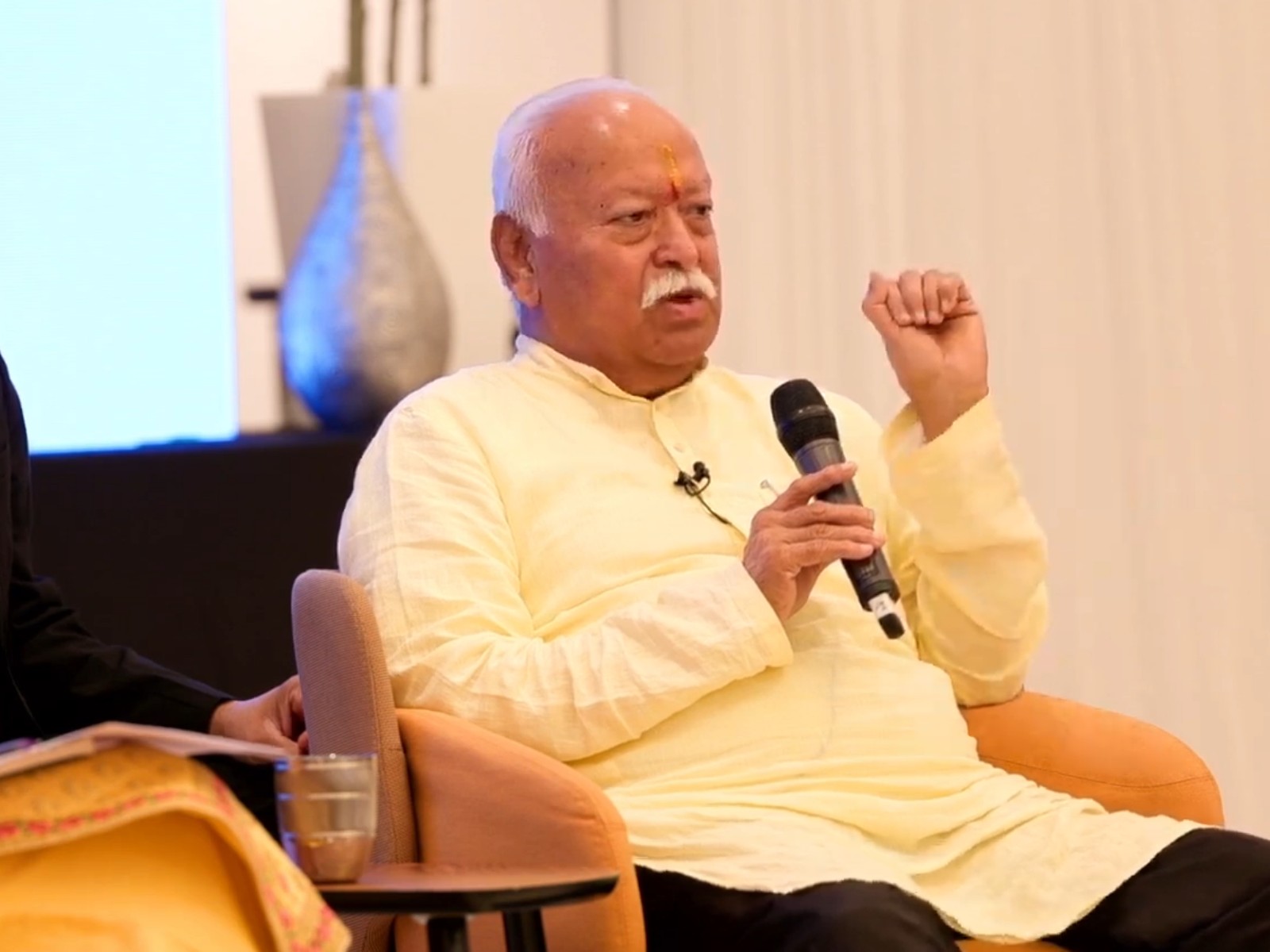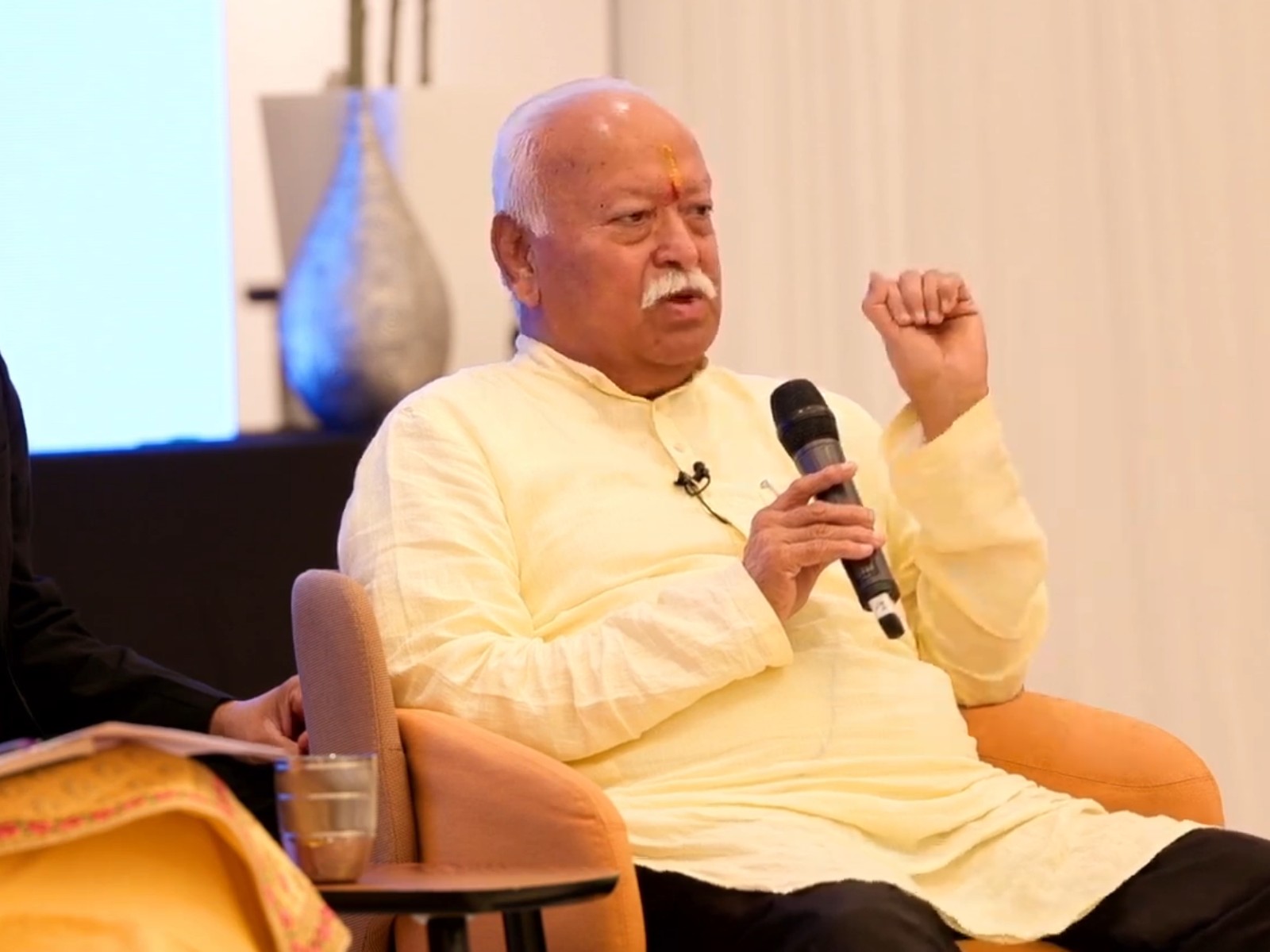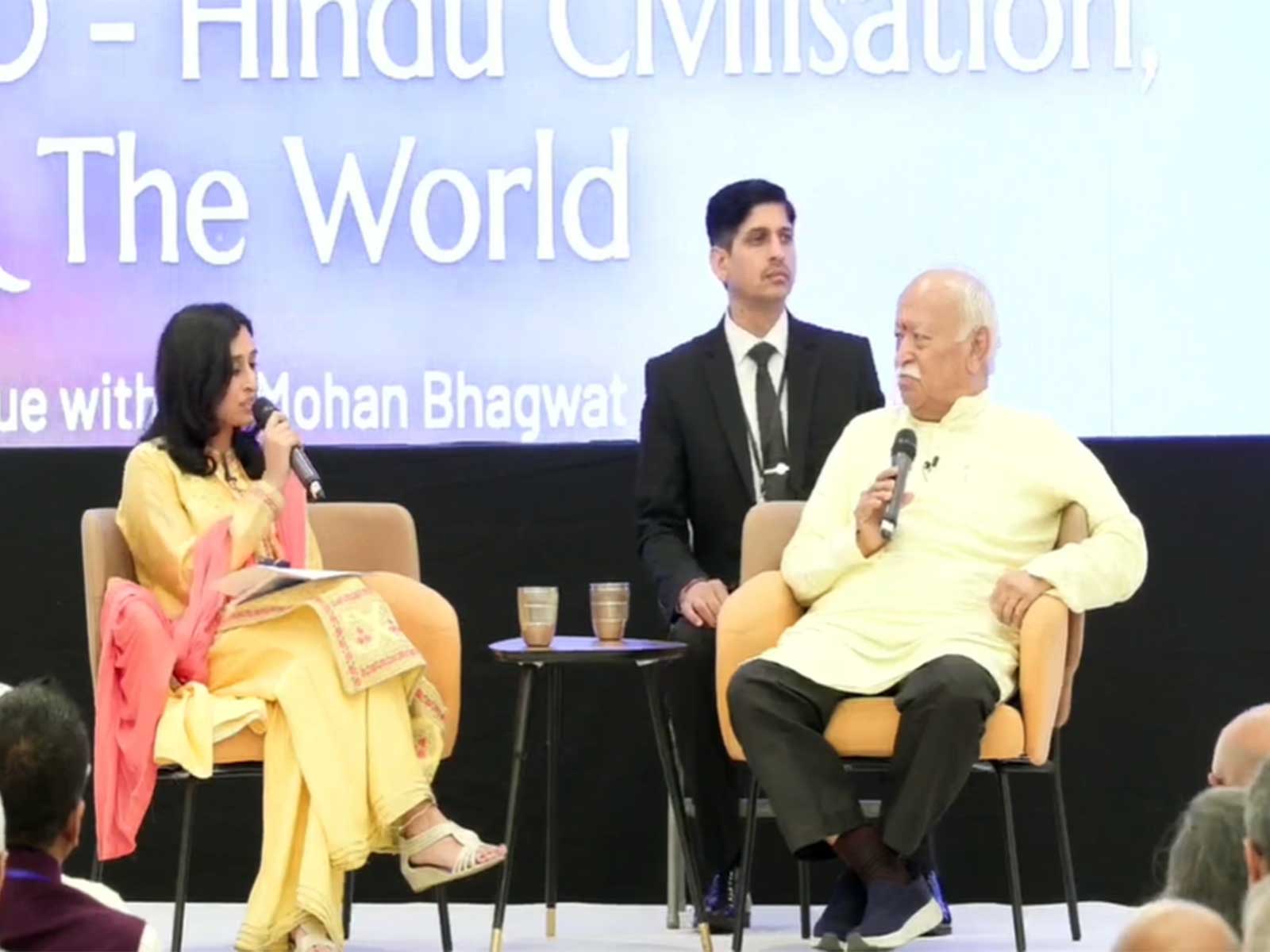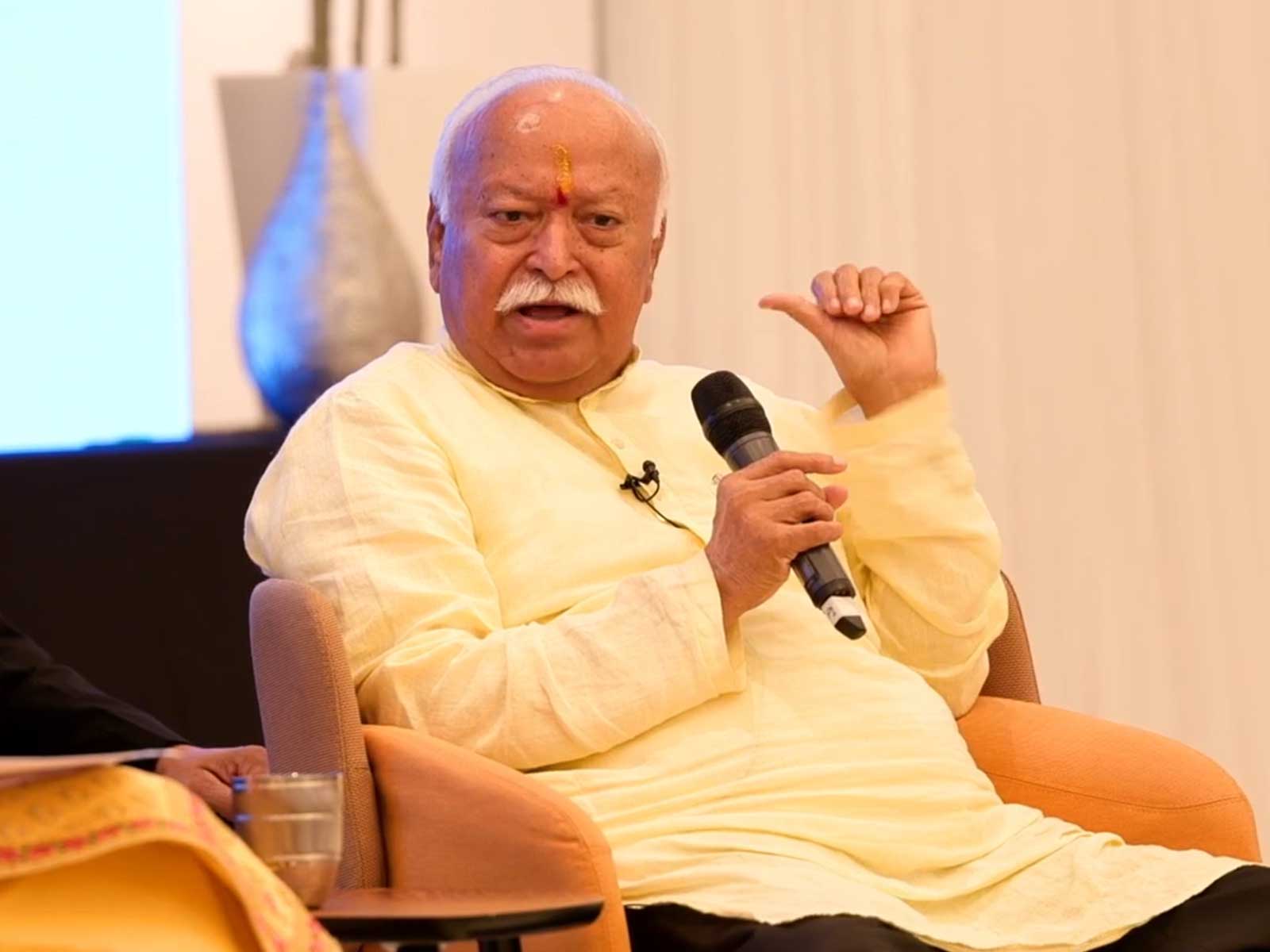
London [UK], September 6 (ANI): Rashtriya Swayamsevak Sangh (RSS) Chief Mohan Bhagwat on Sunday (local time) said that “Shuddha Saatvika Prem”, or pure and noble love, is the foundation of the organisation’s work, rejecting claims that “intense hatred” forms the basis of its activities.
Speaking at an immersive dialogue in London, Bhagwat said that “apnapan”, or a sense of oneness and belonging, is central to Hindu thought and the RSS’s approach.
“I heard some people say, intense hatred is the basis of our work. It is just the reverse. ‘Shuddha Saatvika Prem’, that is the basis of our work,” Bhagwat said.
He said the concept of “apnapan” extends from the individual to family, community, society and humanity, while also emphasising the Hindu civilisational connection with nature.
“So, a Hindu is not an individual; he is family, as well as his community, as well as his society, as well as humanity. And, as all of us know, Hindus, they love nature. Not only worship, they love nature,” he said.
Bhagwat said this sense of belonging and love forms the basis of unity and character and has remained central to the RSS even after 100 years.
“We sing a song in Sangh; we say: ‘Shuddha saatvika prem apne karya ka aadhaar hai.’ (Pure, noble love is the foundation of our work.) I heard some people say intense hatred is the basis of our work. It is just the reverse. Shuddha saatvika prem, that is the basis of our work,” he said.
“And that has not worn out even in 100 years. You will find the same shuddha saatvika love in the behaviour of swayamsevaks, in the atmosphere of the Sangh,” Bhagwat added.
Responding to a question on what Hindu civilisation could offer the world amid global conflicts, ecological and economic challenges and the disruptive effects of the digital era, Bhagwat said Hindu thought is rooted in the idea that existence is fundamentally one despite the diversity visible in the world.
“Existence is really one. It appears to be diverse. Diversities are natural. So we have to accept them; we have to respect them. But we have to deal with diversities keeping in mind that these are the various decorations of the unity of existence,” he said.
“One has to become many; therefore, many are respected. So deal with many, because it is practical; you have to go through nature. But when dealing with them, you should not look at them as something separate. We are one. All is one,” Bhagwat said.
He argued that viewing humanity as interconnected could also help resolve conflicts by encouraging “win-win” solutions rather than competition and enmity.
“When we think in terms of enmity, or competition, or ‘I want this, and he should not get this, I want more, and he should not get it’... If I say, ‘He needs this, I need this, we both should get this. And if I get it, I will give some of it to him,’ if we think like that, we don't have to conquer nature; we are part of nature,” he said.
Bhagwat also linked human development with environmental protection, saying progress should not come at the expense of nature.
“And when we are part of nature, our progress must add to and aid the progress of nature. Why should development and progress be at loggerheads? It should be complementary,” he said.
He said the idea of “green solutions” reflected this balance, as solutions should address human needs while also protecting nature.
“So live and let live--not only that: live, let live, and make others live. That is how our thought processes evolve. So Hindus have to give this balance to the world,” Bhagwat said.
The RSS chief said the Hindu civilisational framework seeks to reconcile apparently competing ideas, including individual rights and social responsibility, as well as human development and environmental protection.
“Society and the individual, they can progress together. They can add and aid to each other's progress. And humanity progresses with the progress of nature--protected nature; it should not destroy nature. This can happen together,” he said.
“What is the connecting principle? That is the unity of existence,” Bhagwat said, adding that the concept provided a framework through which different aspects of life could progress simultaneously.
“This can happen; this is not impossible. The world is connected. All is one,” he said.
Bhagwat said the RSS and the wider Hindu civilisational tradition had previously translated these ideas into practical life and that there was a need to develop contemporary solutions based on them.
“In the past, we have translated it into practical life and given this to the world. Once again, together we have to wake up and give these solutions to the modern world, in modern paristhiti (conditions), what will be a new model that we can build. And that is needed, because there is no other solution,” he said.
The community leaders’ reception and civilisational dialogue under the theme “Celebration of Oneness” is being held in London on September 6 as part of the Rashtriya Swayamsevak Sangh’s (RSS) centenary celebrations and its wider overseas outreach programme.
The event was initiated by the Hindu Swayamsevak Sangh UK (HSS UK), a Hindu social and cultural organisation established in Britain in 1966, with support from Integral. More than 310 community organisations and associations from across the United Kingdom are expected to participate in the celebration.
The programme is part of RSS Sarsanghchalak Mohan Bhagwat’s three-city centenary outreach, which has taken him from New York to Toronto and now London. Bhagwat arrived in London on September 2 for the final leg of his visit to the United States, Canada and the United Kingdom. (ANI)
"Shuddha Saatvika Prem" is basis of our work, not intense hatred: RSS Chief Mohan Bhagwat