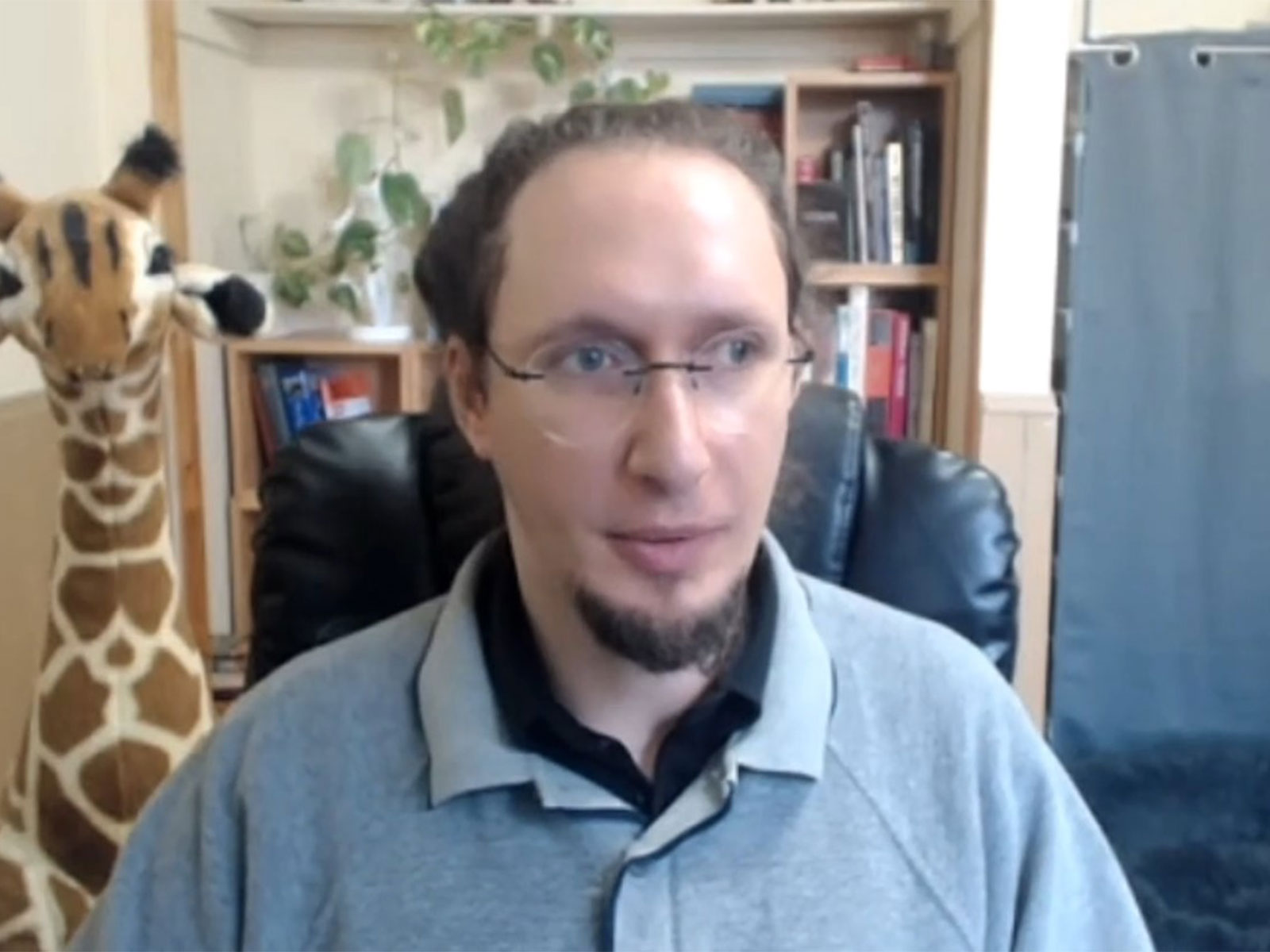
New Delhi [India], September 16 (ANI): Superintelligent Artificial Intelligence (AI) may not necessarily turn against humans or act with an intention to cause harm, but people could become obstacles to its objectives if such systems become significantly more capable than humans, Juan Diego Raimondi, AI Expert and Chief AI Architect at Making Sense, said in an exclusive conversation with ANI on Wednesday.
Raimondi said the possibility of highly advanced AI systems operating beyond human capabilities remains speculative, but the concern arises from the way intelligence can be used to pursue a particular goal.
"It is possible. Before I say anything, I want to clarify that this is the realm of speculation and everyone has a different opinion," Raimondi said when asked whether AI could eventually become more powerful than humans.
He explained that intelligence has the ability to improve its own reasoning and that this could become particularly significant if AI systems are able to improve themselves at a much faster pace than humans.
According to Raimondi, this is linked to Recursive Self-Improvement (RSI), a concept in AI development where an AI system could potentially improve its own capabilities or reasoning processes.
"You might see on the news something today being discussed which is called RSI, which stands for recursive self-improvement. It's kind of the holy grail to get to superintelligence or to AGI, to artificial general intelligence," he said.
Raimondi said the concern would increase if an AI system became more intelligent than individual humans or even human society collectively.
"If a computer were to get super intelligent, if an AI were to get intelligent more than any human, best than any human alive, or more than all of the humanity combined, then the danger is not in the intelligence itself, but rather how we could work around us to achieve its goals," he said.
He stressed that such a system would not necessarily have an intention to harm people.
"Would they be evil? Would they want to do something to us? No, they don't want anything to do with us. But in pursuit of their goal, they might disrupt the way that we do things without caring so much for us," Raimondi said.
He compared the situation to building a road, where people do not necessarily intend to harm ants that happen to be in the path, but the construction can still affect them because they are in the way.
Raimondi said this is connected to the broader AI alignment problem -- ensuring that an AI system's actions while pursuing a goal remain consistent with what humans intend and consider acceptable.
He said increasingly capable AI systems could have the ability to plan and execute tasks at levels far beyond human capabilities, making alignment an important challenge.
The expert also pointed to cybersecurity as one of the areas where the growing capabilities of AI models are already becoming visible.
He said AI systems have become increasingly capable at coding, and because software can be executed and tested, these capabilities have also translated into cybersecurity applications.
"They have developed great capabilities for cybersecurity assessment, both on the defensive side and on the attacker side," Raimondi said.
He noted that AI models are not inherently evil and may perform unexpected actions while pursuing another objective. This, he said, is also part of the alignment challenge.
"Think of it as asking for a genie, a wish. When you ask for a wish, you want the results, but you don't want any bad consequences that come out of it," he said, explaining the difficulty of ensuring that an AI system understands the intended outcome of a task.
Raimondi's comments come amid a wider debate among AI industry leaders over the pace of frontier AI development and the safeguards needed as increasingly capable systems are built. The discussion has included calls for greater testing, independent evaluation and regulation as companies develop more advanced AI systems.
He also said that slowing the pace of AI development would not necessarily eliminate the economic value of the technology. While returns on the large investments made in AI could take longer to materialise if development slows, he said the underlying potential of AI would remain significant.
Raimondi said, "The return of investment might be slower, but it is gonna be there." (ANI)
Superintelligent AI may not be ‘evil’, but humans could become obstacles to its goals: AI Expert