New Delhi [India], October 14 (ANI): The subject of commercial satellite communication in India is at the centre of a heated debate after Elon Musk the CEO of Space X, which controls key player in the space Starlink, claimed that his company’s licenses were being blocked in India by vested interest.
The Ministry of Communications denied those claims despite Musk playing to the galleries by painting an altruistic picture and claiming that Starlink would provide Internet connectivity to the least-served.
Now, a research paper by the Kutniti Foundation, a Delhi based Operational Think Tank, titled "An appraisal of technology for geopolitical control," seeks to caution of the rise of Starlink. The paper argues that the satellite network does not just serve commercial interests but acts as an instrument to exert US geopolitical influence.
The argument presented in the report says that while Starlink positions itself as a provider of connectivity to underserved populations, it functions as a "wolf in sheep’s clothing," acting as a key asset for the U.S. "Intel-Military-Industrial complex".
The report’s argument lies in the theory of "weaponized interdependence." It asserts that whoever controls the hub of a global network gains both the ability to observe and a the ability to deny access. According to the report, Starlink integrates these capabilities into a single, vertically integrated platform.
The report highlights some key areas which it argues Starlink works in to facilitate the US dominance. It details how Starlink enables numerous U.S. intelligence programs, including ECHELON (global signals intelligence analysis network operated by the Five Eyes alliance) and various SIGINT/COMINT operations, utilizing a space-based sensor mesh and advanced ground stations that bypass local governance.
Citing contracts with the U.S. Department of Defence, the Space Force, and the National Reconnaissance Office (NRO), the report describes Starlink as a "dual-use" technology. It argues that the satellite network serves as a "future combat concept test bed," capable of enhancing U.S. battlefield communications, missile tracking, and surveillance of moving targets.
The report claims a pattern of "kill-switch" threats, where the service has been used or restricted based on the political preferences of the U.S. government or its allies. Another argument by the authors speaks on how by providing internet to remote regions, Starlink gains legitimacy while simultaneously establishing a direct, unregulated connection between end-users and US infrastructure.
The report also speaks of Starlink's alleged ‘resistance’ to the laws of nations. The report claims a pattern in Starlink selling its service prior to securing licenses, contesting regulations and only complying when faced with coercion. The report cites an example of Brazil where Starlink was reportedly faced with freezing of its assets in the country. In 2024, Brazil's Supreme Federal Court froze and later unfroze Starlink's financial assets and bank accounts following a legal dispute.
The authors of the study claim that the possible entry of Starlink poses a direct threat to India’s "technological sovereignty" and the stability of its domestic New Space industry. India’s space economy, is currently valued at $8 billion with a share of 2–3% in the global space economy. It is projected to grow five-fold to $40–45 billion over the next decade, with its global share targeted at 8% by 2030. Over the last twelve years, the Government has significantly accelerated the commercialisation of the space sector through major institutional reforms and private sector participation.
"For India, any satellite network whose terminal-level control sits outside Indian jurisdiction is a standing lever over Indian security decisions," the report warns
The Kutniti Foundation’s analysts propose that India adopt a more protectionist approach, advocating for strict, non-negotiable license conditions for any foreign Low Earth Orbit Satellite (LEO) operator. These include requirements that all Indian traffic land at domestic gateways without satellite-to-satellite bypasses, that India retain an auditable ability to switch services on or off within its territory, and that lawful interception and data localization operate solely under Indian law.
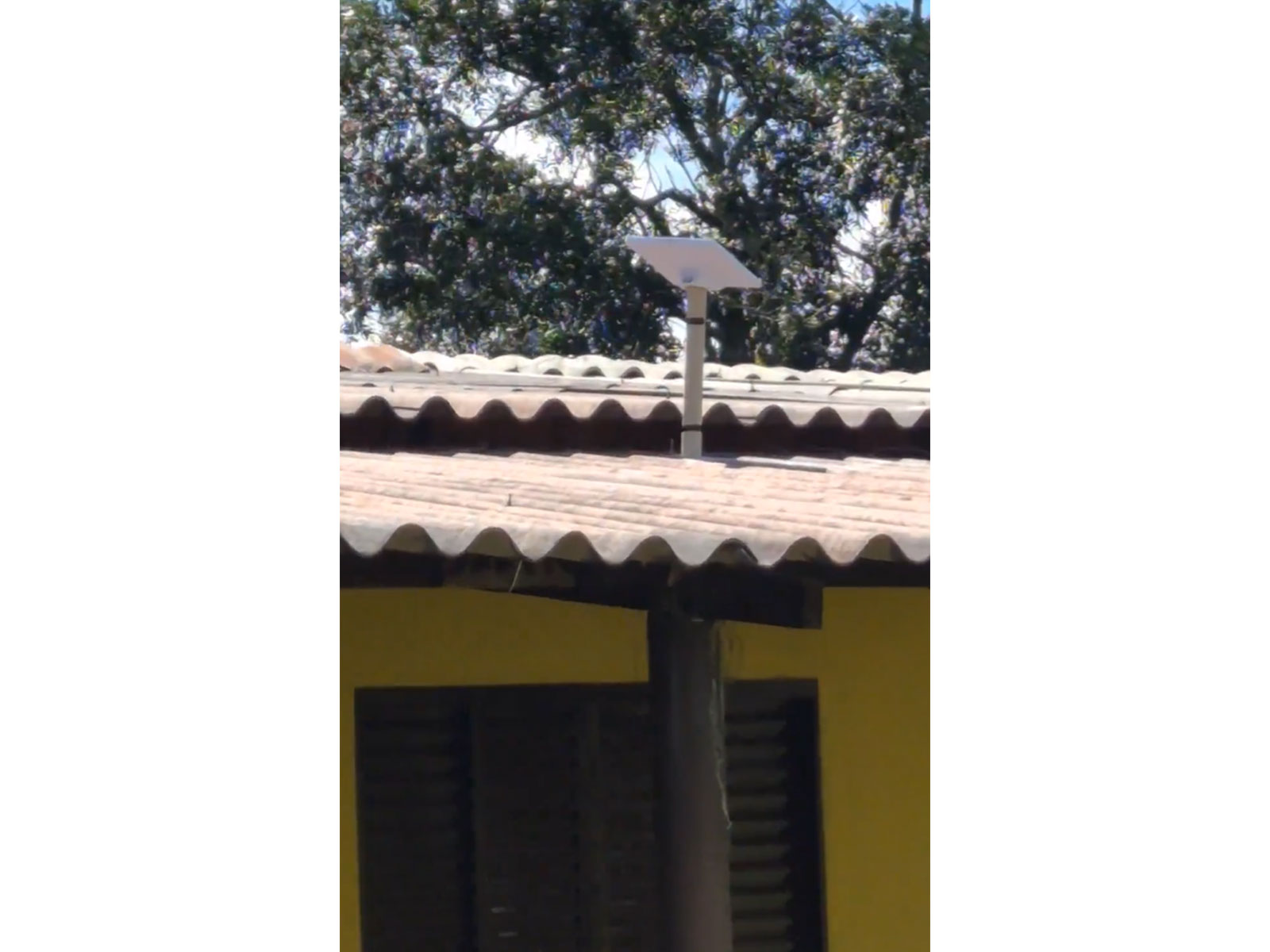
On October 7, Vice President, Starlink Business Operations Lauren Dreyer while speaking at India Mobile Congress 2026 said the company had developed India-specific security controls and has built 20 gateway sites in India, adding, the company is “keeping Indian users’ data within India.”
Dreyer said Starlink has invested in building the infrastructure required to serve the Indian market. The Starlink VP further added that the company has already invested in and built ground infrastructure in India, including 20 gateway sites with hundreds of antennas, and established operations to begin serving the market.
Starlink services are available in about 160 countries, including some in India's neighbourhood in Bangladesh, Bhutan and soon in Sri Lanka.
Meanwhile, India maintains that its does not encourage monopolistic conditions in any sphere asserting that commercial licenses in the Satellite communication space will be completed when each of the three companies in the fray comply and fulfil all security concerns and prerequisites. (ANI)
Think Tank flags security concerns over Starlink, advocates protectionist approach by India