Washington DC [US], November 10 (ANI): US President Donald Trump has come out in defence of Nvidia Chief Executive Officer Jensen Huang amid allegations involving his relationship with a woman suspected of working for Chinese intelligence.
Democratic lawmakers have called for a halt to advanced AI chip exports to China and demanded answers from the Trump administration, while Republican lawmakers have sought a closed-door briefing with Nvidia CEO Jensen Huang over potential national security risks.
The controversy has triggered an independent investigation by Nvidia's board, a shareholder lawsuit and fresh allegations involving billions of dollars worth of advanced chip shipments to China, putting the leadership and business dealings of the world's leading AI chipmaker under scrutiny.
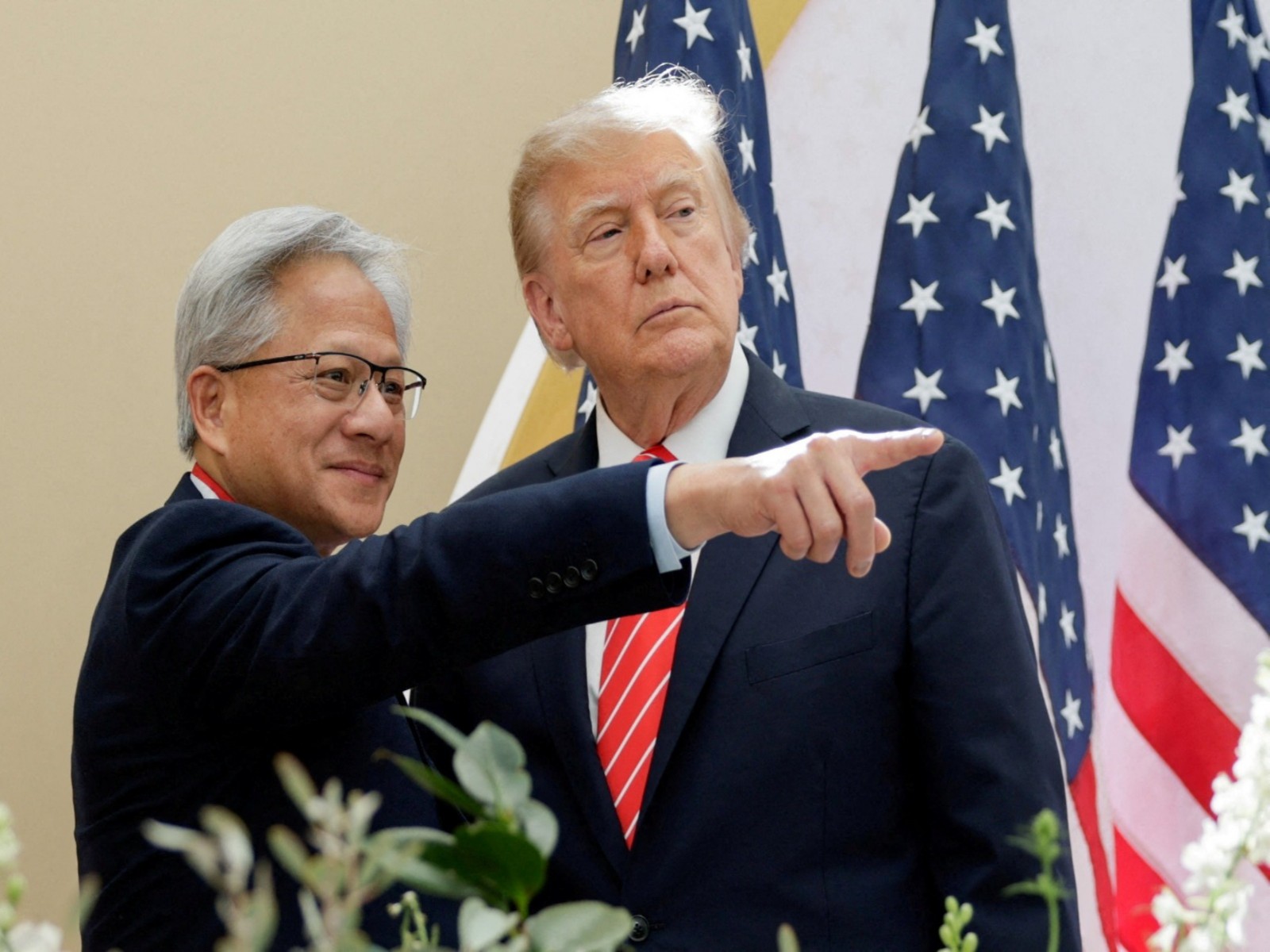
Trump, who has maintained close ties with Huang, said he had personally spoken to the Nvidia chief about his reported relationship with Alice Huang, a former executive at Singapore-based data centre company Megaspeed, whom US intelligence agencies reportedly suspect of being a Chinese intelligence asset.
"He said, 'I had no idea that she was a spy', and I really believe him," Trump told reporters, according to Fox News.
The US President described Huang as a "very high-quality person" and praised his contribution to the American technology industry.
"You know, when you think about it, he's got a chip that's 10 years advanced, because of the complexity, can't even—the Blackwell—can't even be copied. He's an amazing guy," Trump said.
Trump also acknowledged that the Federal Bureau of Investigation was examining the matter but expressed confidence that Huang would emerge from the controversy without serious consequences.
"I know the FBI is looking into it in terms of something else, and I think that he'll be in good shape," he said.
The President also faced questions about an earlier memorandum prepared under Secretary of State Marco Rubio that reportedly warned senior administration officials about Huang's relationship with the Chinese businesswoman.
According to The New York Times, Rubio had overseen the preparation of a classified memorandum warning that Alice Huang was suspected of having links to China's Ministry of State Security.
Asked whether he had read the memorandum, Trump said, "I would certainly check with the intelligence people. It could have been mentioned. Certainly, it didn't make much of an impact on me."
While Trump has defended the Nvidia chief, Democratic lawmakers have questioned the administration's handling of national security concerns and its decision to permit exports of advanced artificial intelligence chips.
According to The New York Times, Democratic members of the House Foreign Affairs Committee, including Gabe Amo, Gregory Meeks and Sydney Kamlager-Dove, have demanded answers from US Commerce Secretary Howard Lutnick regarding the administration's export policies.
"You cannot claim to be protecting American leadership in artificial intelligence while allowing our most advanced technology to reach a strategic competitor," the lawmakers wrote.
"National security must come before corporate sales targets," they added.
The lawmakers also raised concerns about the possible transfer of advanced American semiconductor technology to Chinese companies, including entities linked to the country's military and artificial intelligence programmes.
Republican lawmakers have separately sought answers from Huang. According to Axios, three Republican House committee chairs requested a closed-door meeting with the Nvidia chief to examine his reported association with Alice Huang and whether restricted AI chips were being routed to China through third countries.
The political scrutiny comes as fresh allegations have emerged about the scale of Nvidia chip shipments allegedly facilitated by a network associated with Alice Huang.
According to a Reuters report citing The Information, Alice Huang and her associates allegedly helped facilitate shipments of at least USD 7.5 billion worth of Nvidia chips to Chinese companies.
The report alleged that approximately 240,000 advanced Nvidia processors, including H100, H200 and some A100 chips, were moved into China through a network of companies operating across China and Singapore.
Reuters said it could not independently verify the allegations, while Nvidia did not immediately respond to its request for comment.
The developments have also intensified questions about Huang's efforts to secure greater access to China's semiconductor market despite US export restrictions.
In an interview with Fortune conducted in October, Huang had described the Chinese market as an important opportunity for Nvidia.
"I think the opportunity in China is large and growing, just like the AI market across the world is large and growing," Huang said.
Amid the allegations, Nvidia's board of directors has launched an independent investigation into whether its chief executive was targeted by a foreign intelligence operation.
"A committee of independent directors, assisted by outside independent counsel, will oversee the investigation," Nvidia said in an official statement.
The company added, "While the Board has no reason to believe that either national security or NVIDIA secrets were compromised, the Board's inquiry will examine all available information."
Nvidia also expressed confidence in Huang's leadership and said he would cooperate fully with the investigation.
Huang has separately acknowledged being unfaithful to his wife and apologised to his family, employees and shareholders.
"I was unfaithful to my wife. My actions hurt her and our children. There is no excuse for what I did," he said in an internal communication reported by Fox News.
The controversy has also led to legal action against Nvidia and its chief executive.
According to Reuters, shareholders have filed a proposed class-action lawsuit in a federal court in San Jose, California, alleging that the company and Huang failed to disclose his reported relationship and associated national security risks, potentially misleading investors. The lawsuit seeks unspecified damages.
The allegations have also affected Nvidia's market performance. Its shares closed 4.27 per cent lower at USD 178.67 on Monday, wiping out approximately USD 190 billion from its market capitalisation.
In pre-market trading on Tuesday, Nvidia shares opened 2.09 per cent higher at USD 182.40 on Tuesday, recovering some of the losses from the previous session.
Meanwhile, China has rejected allegations that its intelligence agencies targeted Huang.
Chinese Foreign Ministry spokesperson Guo Jiakun described the reports as "groundless speculation, and a smear against China."
The controversy has also raised concerns among Asian semiconductor suppliers. According to Focus Taiwan, industry executives expect global AI demand to remain strong despite the developments, although possible tighter US export restrictions could increase regulatory pressure on semiconductor companies.
With Trump continuing to support Huang and lawmakers from both parties seeking answers, the Nvidia chief faces growing political, legal and corporate scrutiny over his reported relationship and the company's China business. (ANI)
Trump defends Nvidia CEO Jensen Huang as Democrats seek action over alleged Chinese spy links