New Delhi [India], October 31 (ANI): Walk into any Indian kitchen at dinner time and you will find some version of the same scene: a stack of rotis, a bowl of dal or sabzi, and a family that has eaten this way for generations. Nutrition conversations rarely start there. They tend to start with supplements, powders and a new set of routines that assume a certain income and lifestyle. For most households, that is not how food works.This is the gap MillD is looking to address by bringing more protein into one of India's most familiar everyday staples: the roti.
A recent CEEW study offers a useful reality check. It found that nearly half of India’s at-home protein intake comes from cereals, which are a source of calories first and protein second. It also found that the wealthiest households consume about 1.5 times as much protein as the poorest. In other words, the quality of what a family eats still follows what it can afford.
That should make us pause. Are we paying enough attention to the quality and affordability of what Indian families eat every day? Protein plays an important role in supporting muscle, strength and recovery, and clinical nutrition guidelines stress its importance in preserving muscle mass and physical function during treatment and recovery. If good protein is easy for some households and out of reach for others, we have a nutrition gap that no awareness campaign alone will close.
Luxury scoops are not found on most Indian plates, and expecting them to appear is not a plan.
Much of the current thinking around protein quietly asks people to do more. Buy the supplement. Add the scoop. Rework the plate. But getting more protein does not have to mean adding an expensive new product to a routine.
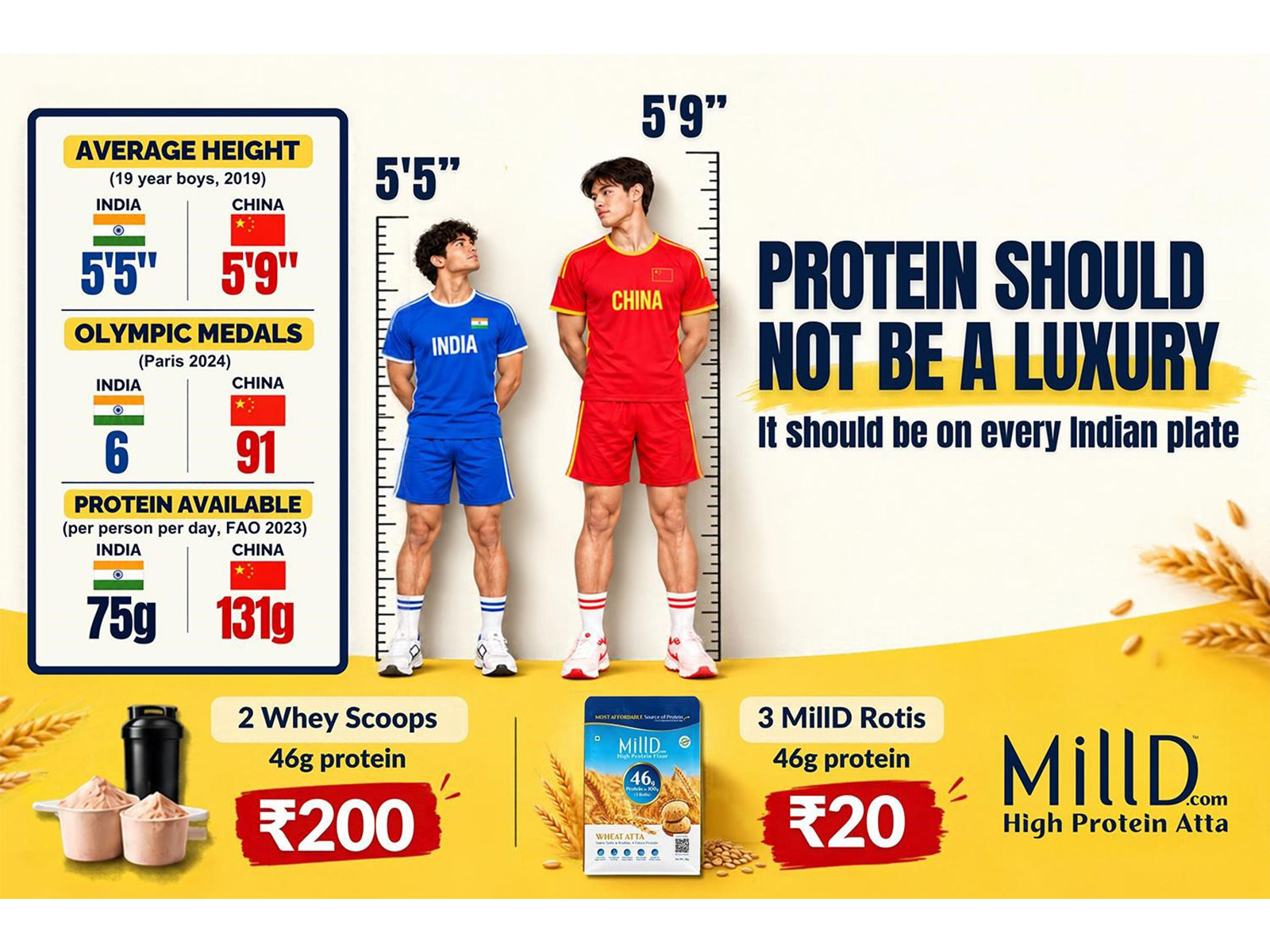
MillD approaches this differently, asking one question: “Can it begin with the food already on our plate?” Rather than asking consumers to change their diets or adopt new routines, the idea is to improve the nutritional value of an existing staple. Each roti puffed on the griddle (tawa) can offer approximately 15g of protein and costs about INR 7, which means individuals can benefit from approximately 46g of protein from just 3 rotis, given it is produced using MillD.
Echoing this thought, MillD’s latest OOH campaign has been drawing massive attention, with Bollywood stars Riteish Deshmukh and Genelia D’Souza spotted engaging with it. The campaign puts everyday protein in focus and pushes back on the idea that better nutrition has to cost more, showing that it can begin with foods Indians already eat.
Sivaram Briyas, Co-founder, MillD, said, “The opportunity we see is much larger than building another protein product. We are looking at whether high-protein staples can become part of regular household consumption. Atta gives us that opportunity because the behaviour already exists. Consumers do not need to create a separate nutrition routine or fundamentally change the way they eat. If the everyday meal itself can deliver more, that is where we believe the category can become significantly larger.”
Prashant Pitti, Investor, MillD, said, “If India wants to become a stronger and healthier nation, we need to pay more attention to what people eat every day. In a country as large and diverse as ours, we cannot expect everyone to depend on expensive protein supplements or change their eating habits. We need affordable solutions built around foods Indian families already consume.”
Protein in a diet is too often treated as an extra task, something separate from daily life. It does not have to be and everyday staples are the most direct route into the daily lives of millions of families. When it arrives through a meal people already eat, there is nothing to remember, nothing to measure and nothing to learn. solutions that matter will be the ones that fit into the kitchens, budgets and habits people already have. Sometimes progress looks less like a new routine and more like a better roti. (ANI)
Why India’s protein conversation needs to move beyond supplements