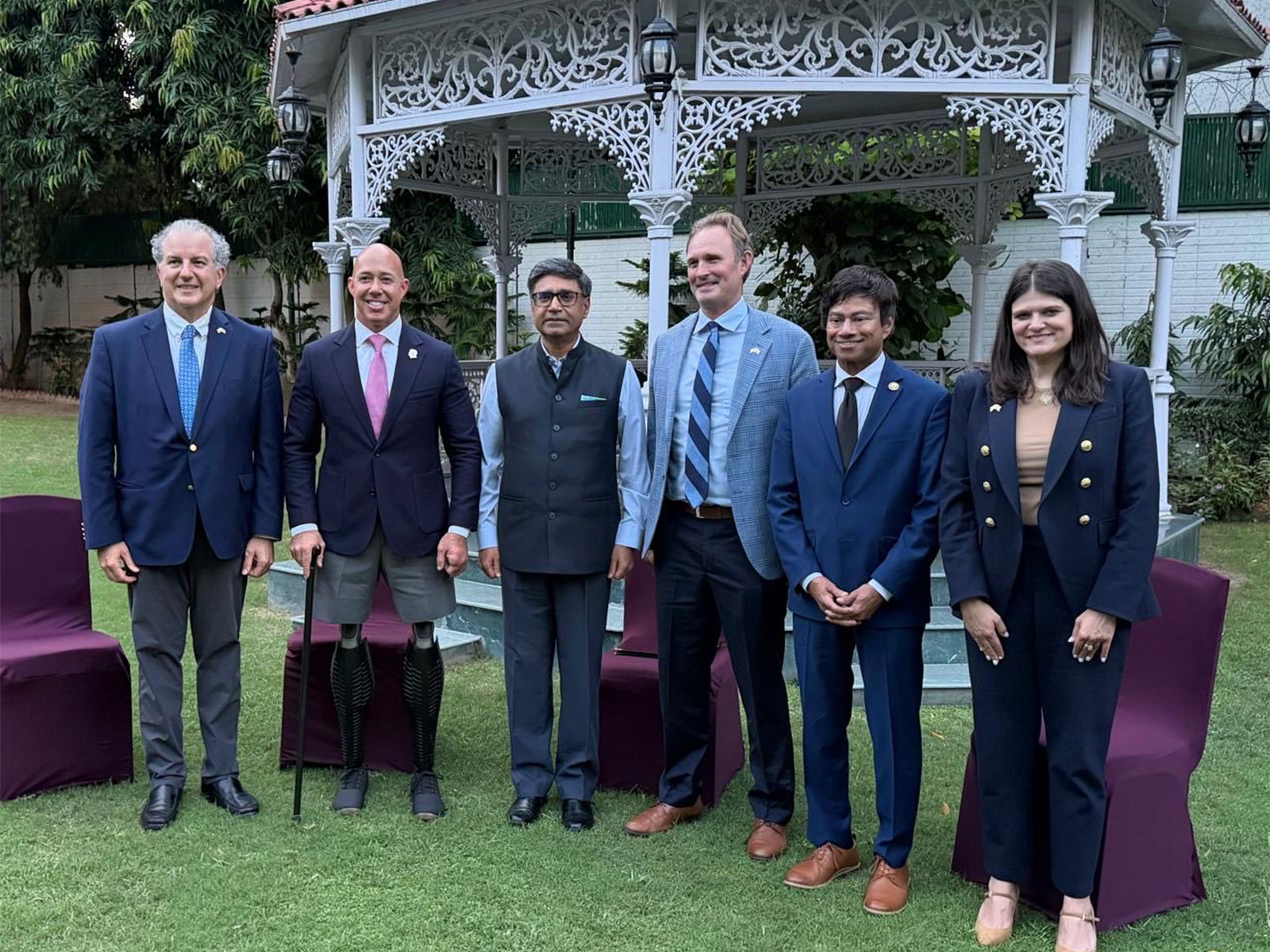
New Delhi [India], September 27 (ANI): Foreign Secretary Vikram Misri on Sunday met a bipartisan US Congressional delegation led by Chairman of the House Foreign Affairs Committee Representative Brian Mast.
Ministry of External Affairs spokesperson Randhir Jaiswal wrote in a post on X, "Foreign Secretary @VikramMisri met a bipartisan US Congressional delegation led by Rep. @RepBrianMast, Chairman of the House Foreign Affairs Committee."
He added that the Foreign Secretary held wide-ranging discussions with the delegation, including the Lindsey O Graham Sanctioning Russia and Iran Act of 2026 and the future trajectory of India-US bilateral ties.
"Discussions covered the entire gamut of India–US relations, including the recently enacted SRIA legislation and the future trajectory of the relationship. They also exchanged views on international issues of mutual concern, energy security, counter-terrorism and freedom of navigation," the MEA spokesperson noted.
Foreign Secretary @VikramMisri met a bipartisan U.S. Congressional delegation led by Rep. @RepBrianMast, Chairman of the House Foreign Affairs Committee.
Discussions covered the entire gamut of India–U.S. relations, including the recently enacted SRIA legislation and the future… pic.twitter.com/ee0TSYK9MP
The discussion on SRIA comes as India continues to assess the implications of US legislation targeting Russia's energy trade and countries purchasing Russian oil and gas.
The Sanctioning Russia and Iran Act, or SRIA, provides a statutory framework for expanded sanctions, import duties and trade restrictions concerning Russia, while also extending economic measures relating to Iran. The legislation focuses on areas including Russia's petroleum and military sectors, government officials, financial institutions and vessels associated with efforts to circumvent restrictions on Russian crude exports.
For India, the legislation has particular relevance because it creates a potential mechanism under which Washington could impose tariffs of up to 100 per cent on imports from countries that continue purchasing Russian energy, subject to the statutory conditions and any subsequent invocation by the US President Donald Trump.
The legislation itself, however, does not automatically impose a 100 per cent tariff on Indian goods. Rather, it provides the executive branch with authority to impose such tariffs under specified conditions.
Earlier on Friday, Foreign Secretary Vikram Misri held a series of meetings in New York on the sidelines of the United Nations General Assembly (UNGA), with discussions covering critical and emerging technologies, Pax Silica, semiconductors, critical minerals, energy security, civil nuclear cooperation and the recently enacted Sanctioning Russia and Iran Act (SRIA).
In separate posts on X, Misri said he met US Under Secretary of State for Economic Affairs Jacob Helberg and Under Secretary of State for Political Affairs Allison Hooker, with the engagements covering key areas of India-US bilateral cooperation.
"Great to meet Under Secretary of State for Economic Affairs Jacob Helberg in New York. Agreed to advance India–US cooperation in critical and emerging technologies, including through Pax Silica, and strengthen cooperation in semiconductors and critical minerals," Misri said.
In another post, the Foreign Secretary said he discussed energy security and several other strategic issues with Hooker.
"A productive meeting with Under Secretary of State for Political Affairs Allison Hooker in New York today. Discussed various elements of India-US bilateral cooperation, including energy security and the recently enacted SRIA, civil nuclear cooperation, TRUST and the Indian Ocean Strategic Venture initiative," he said.
The meetings come against the backdrop of negotiations for a Bilateral Trade Agreement (BTA) between the two nations and expanding cooperation in areas considered strategically important to economic and national security, including supply-chain resilience, advanced technologies and energy.
Meanwhile, Pax Silica, launched in December 2025 by Helberg, is the US State Department's flagship initiative focused on AI and supply-chain security. The initiative seeks to build cooperation among partner countries around secure and innovative supply chains spanning critical minerals, energy inputs, advanced manufacturing, semiconductors and AI infrastructure. (ANI)