Sao Paulo [Brazil], November 22 (ANI): The growing influence of emerging economies and the transformation of international geopolitics have made it increasingly difficult to sustain a global order that excludes developing nations.
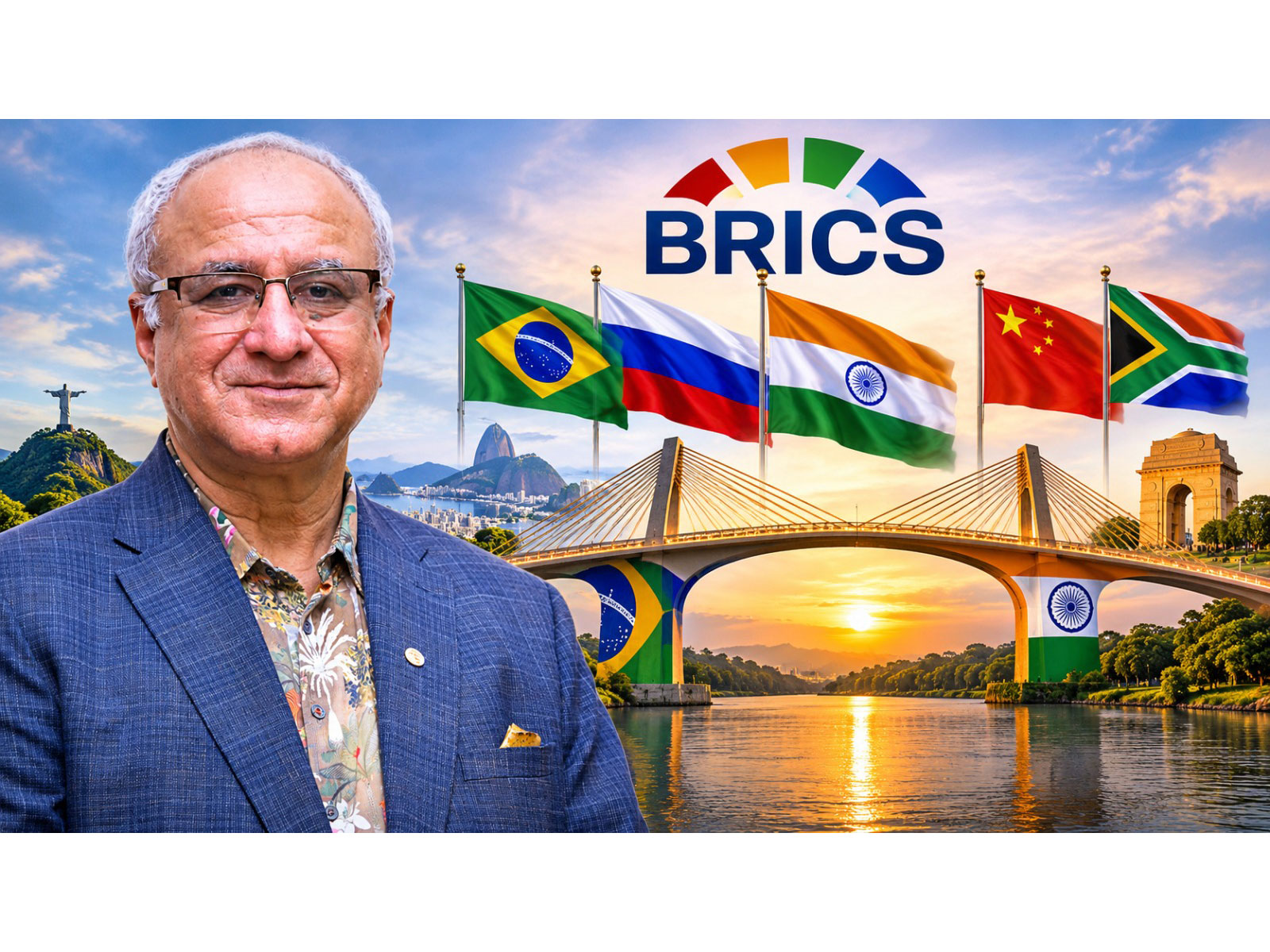
This assessment was presented by Indian journalist, political commentator and community leader Munish Gupta during the inaugural episode of the Global South Podcast, the first English-language programme produced in Brazil by TV 247 in partnership with the Global South Institute, an initiative founded by Brazilian journalist Leonardo Attuch.
According to a report by Shobhan Saxena published by Brasil 247 on November 20, Gupta joined the programme from New Delhi for a conversation with Saxena, an Indian journalist and Brasil 247 columnist based in São Paulo who hosts the new podcast.
The discussion focused on the growing demographic, economic and technological influence of developing countries and their demand for greater representation in international decision-making.
"The countries of the Global South represent almost two-thirds of the world, and without those two-thirds, there can be no good world order in any sense. The voices of the Global South, led by the original founders of IBSA, India, Brazil and South Africa are not only relevant but vital for the Global North itself to look toward its future, because if they exclude us from their future, they will have no future," Gupta said.
Gupta questioned the effectiveness and legitimacy of traditional Western-led institutions, including the Group of Seven (G7) and the United Nations Security Council, citing institutional deadlock and inadequate representation of emerging economies such as India and Brazil.
He described the India-Brazil-South Africa Dialogue Forum (IBSA) and BRICS as important platforms for strengthening cooperation among developing nations, promoting inclusive development and advancing a multipolar world order.
Highlighting India-Brazil relations, Gupta underscored the understanding between Brazilian President Luiz Inácio Lula da Silva and Prime Minister Narendra Modi.
He said reciprocal high-level visits had strengthened bilateral engagement, while trade between the two countries had considerable potential to expand and could double in the coming years.
He identified defence, aviation, renewable energy, agriculture, advanced technology, education and financial services as promising areas of cooperation. He also highlighted the potential connectivity between India's Unified Payments Interface (UPI) and Brazil's Pix digital payment system.
Gupta said Brazil could serve as India's gateway to Latin America, while India could facilitate Brazil's engagement with Asian markets, including the Association of Southeast Asian Nations (ASEAN).
Emphasising the importance of media, Gupta called for stronger communication networks to ensure developing countries present their own perspectives on international developments rather than depend on narratives shaped by dominant Western media organisations.
He welcomed the Global South Institute's initiative to connect universities, think tanks, researchers, policymakers and journalists across continents. Gupta said discussions were underway with Indian diplomats and research institutions to establish an Indian hub, with plans to expand the network to South Africa in 2027.
The inaugural podcast episode, titled 'Strong India-Brazil ties: A key to BRICS and Global South cooperation', is available on TV 247's YouTube channel. (ANI)
"Global North has no future without Global South": Indian journalist Munish Gupta