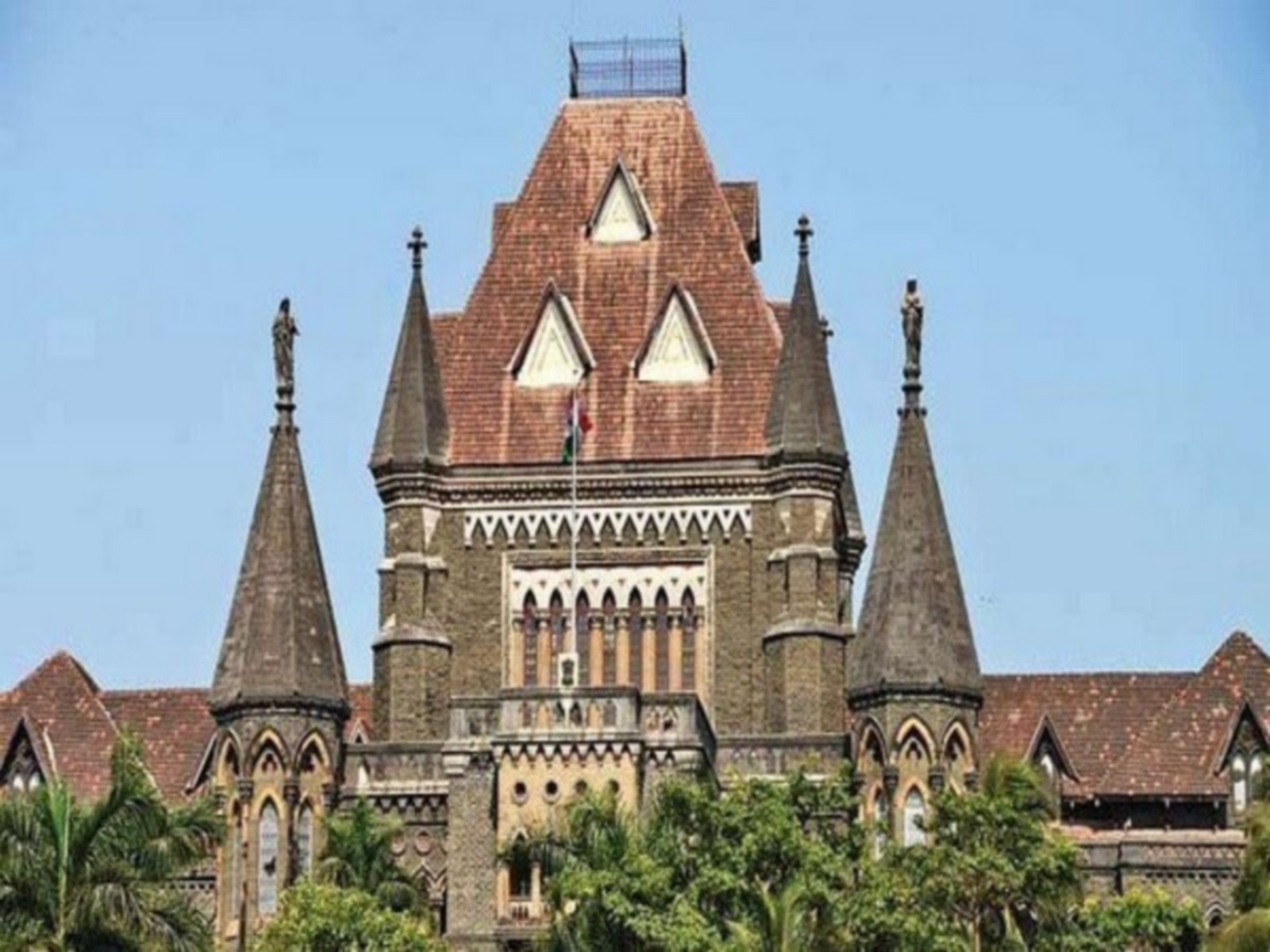
Mumbai (Maharashtra) [India], November 20 (ANI): The Bombay High Court has sounded a strong warning over the worsening air and noise pollution witnessed in Mumbai during and after Diwali, signalling that the state may have to consider significantly stricter restrictions on the use of firecrackers if existing measures continue to be ignored.
A division bench of Justices Girish Kulkarni and Neela Gokhale, hearing a suo motu public interest litigation along with connected petitions seeking wider restrictions on firecrackers, expressed deep concern over the scale of violations despite repeated directions and regulatory measures. The bench reserved its order after taking note of the continuing deterioration in air quality, excessive noise levels and a large number of fire-related incidents reported during the festive period.
The observations assume significance because the issue before the court is no longer merely about regulating the timing or type of firecrackers. The hearing has raised the possibility of a much broader prohibition across Maharashtra, with the court indicating that a wider ban may become unavoidable if public compliance does not improve.
One of the major concerns before the court was the number of fire incidents reported around Diwali. More than 300 fire-related incidents were brought to its notice, including cases involving rockets that reportedly caused fires in buildings.
For the court, such incidents add another dimension to the pollution debate. Firecrackers are not only contributing to deteriorating air quality and excessive noise but can also pose a direct threat to life and property when rockets or other explosive devices are used in densely populated urban areas.
Mumbai’s high population density makes the consequences particularly serious. A fire caused by a stray rocket or another cracker can rapidly escalate when buildings, balconies, vehicles and other combustible material are located close together.
The court also took note of alarming Air Quality Index readings, with levels reaching around 400 and, in some instances, going even higher.
Such readings indicate extremely poor air quality and raise serious concerns about the impact of concentrated pollution on the public. Diwali-related pollution is particularly significant because the deterioration can occur within a short period when large quantities of firecrackers are simultaneously used across the city.
The problem is compounded by Mumbai’s already challenging urban environment, where vehicular emissions, construction activity, industrial pollution and other sources contribute to the overall pollution burden.
The court’s concern, therefore, appears to be centred on whether firecracker use during a limited festive period should be allowed to push an already stressed urban environment into hazardous levels.
During the hearing, the bench indicated that there may be little alternative but to consider a wider prohibition on firecrackers if existing restrictions continue to be disregarded.
One possibility suggested during the proceedings was to permit what could effectively be described as “community firecrackers” at designated grounds rather than allowing individuals to burst crackers on streets, residential premises and other locations across the city.
Such a model would fundamentally change the way firecrackers are used during Diwali. Instead of thousands of individuals independently bursting crackers in neighbourhoods, the celebrations could be concentrated at designated locations under controlled conditions.
The approach would potentially make enforcement easier while reducing the widespread exposure of residents to smoke and noise.
The debate before the court also moved beyond restrictions on the use of crackers. Counsel appearing for one of the petitioners suggested a complete ban on the sale of firecrackers across Maharashtra, drawing a comparison with the prohibition imposed on gutka.
The argument essentially places the emphasis on controlling the availability of firecrackers rather than attempting to monitor their use after they have already been purchased.
The difficulty with the existing system, the arguments suggest, is that enforcement becomes extremely challenging when firecrackers are widely available, and thousands of people use them simultaneously. A prohibition at the point of sale, if legally sustainable, would substantially alter the enforcement equation.
The court-appointed amicus curiae also supported a more stringent approach, suggesting that restrictions should extend even to private roads and that firecrackers should be confined to designated community grounds.
The suggestion reflects the larger concern that allowing individuals to burst crackers on residential streets or private spaces can undermine the effectiveness of broader pollution-control measures.
The amicus also referred to international practices, including examples from Germany, to highlight how other jurisdictions have attempted to regulate fireworks in densely populated areas.
The underlying principle is straightforward: festive celebrations need not necessarily disappear, but they may have to be reorganised in a manner that limits their impact on people who do not participate in them.
The Maharashtra government told the court that enforcement agencies had taken action during Diwali. Nearly 500 police cases were registered, warnings were issued, and firecrackers worth more than ₹20 lakh were seized.
The figures demonstrate that authorities did not remain inactive. However, they also raise a larger question: whether conventional enforcement measures are sufficient when violations occur on such a large scale and over a short period.
Registering hundreds of cases and seizing illegal or prohibited crackers can address individual violations, but it may not necessarily prevent the overall pollution spike caused by widespread use of legally available firecrackers.
This appears to be one of the central challenges confronting policymakers: whether better enforcement of existing rules can solve the problem, or whether the regulatory framework itself needs to be fundamentally changed.
For Mumbai’s civic administration, the challenge is particularly complex. Any future policy will have to balance environmental concerns with practical questions of enforcement, public participation, emergency response and the traditional nature of Diwali celebrations. A policy that exists only on paper is unlikely to achieve much. The experience of previous years has shown that restrictions can be difficult to enforce when large numbers of people choose to disregard them.
The BMC and other agencies will therefore have to consider whether designated community celebration zones, stronger monitoring, restrictions on sales and tougher penalties can work together as part of a comprehensive strategy.
Intervenors such as the Awaaz Foundation have argued that public health and environmental protection must take precedence over commercial considerations.
That argument brings the case to the heart of a larger policy debate. Firecrackers represent an important part of the festive economy, supporting manufacturers, traders, retailers and seasonal employment. At the same time, their use imposes costs that are not reflected in the price of the product, from pollution and health impacts to noise-related distress and fire risks.
The question, therefore, is whether economic activity associated with firecrackers can justify unrestricted use in densely populated urban areas when the environmental and public-safety consequences become severe.
The Bombay High Court’s intervention does not necessarily amount to a rejection of Diwali celebrations. Instead, it highlights the growing difficulty of reconciling traditional celebrations with the realities of a densely populated metropolitan city.
For millions of people, Diwali is inseparable from celebrations, lights and family gatherings. Firecrackers have historically been part of that tradition. But the scale of urbanisation has changed the circumstances in which those traditions are practised.
A cracker burst in an open rural setting, and thousands of crackers being simultaneously burst in a densely populated metropolitan neighbourhood do not produce the same consequences.
Mumbai’s narrow residential lanes, high-rise buildings, heavy traffic and population density make the impact considerably greater.
If the court ultimately opts for stricter restrictions, community fireworks could emerge as a compromise between a complete prohibition and unrestricted individual use.
Designated grounds could allow people to witness fireworks collectively while reducing the number of locations at which crackers are simultaneously burst. Such areas could also potentially have controlled timings, emergency services and monitoring mechanisms.
However, the effectiveness of such a model would depend heavily on public acceptance and enforcement. If people continue to burst crackers outside designated areas, the problem would simply shift rather than disappear.
One approach is to continue with existing restrictions and attempt to improve enforcement. Another is to impose substantially tougher controls, including restrictions on sales and use. A third could be a controlled community-fireworks model that seeks to preserve some aspects of the tradition while sharply reducing its environmental and safety impact.
Whatever course is eventually chosen, the court’s observations make one point clear: the status quo is increasingly difficult to defend when pollution levels soar, noise restrictions are routinely violated, and hundreds of fire incidents are reported.
The debate over firecrackers is therefore moving beyond the familiar question of whether they should be allowed or banned. It is increasingly becoming a question of what kind of festive celebration a modern, densely populated city can sustainably accommodate.
The Bombay High Court’s forthcoming order could consequently have implications extending far beyond one Diwali. It may determine whether Maharashtra continues with a model based primarily on regulating individual behaviour—or moves towards a fundamentally different framework in which public health, environmental protection and collective celebration take precedence over unrestricted personal use of firecrackers. (ANI)
Mumbai’s diwali pollution crisis: Bombay High Court signals tougher crackdown on firecrackers