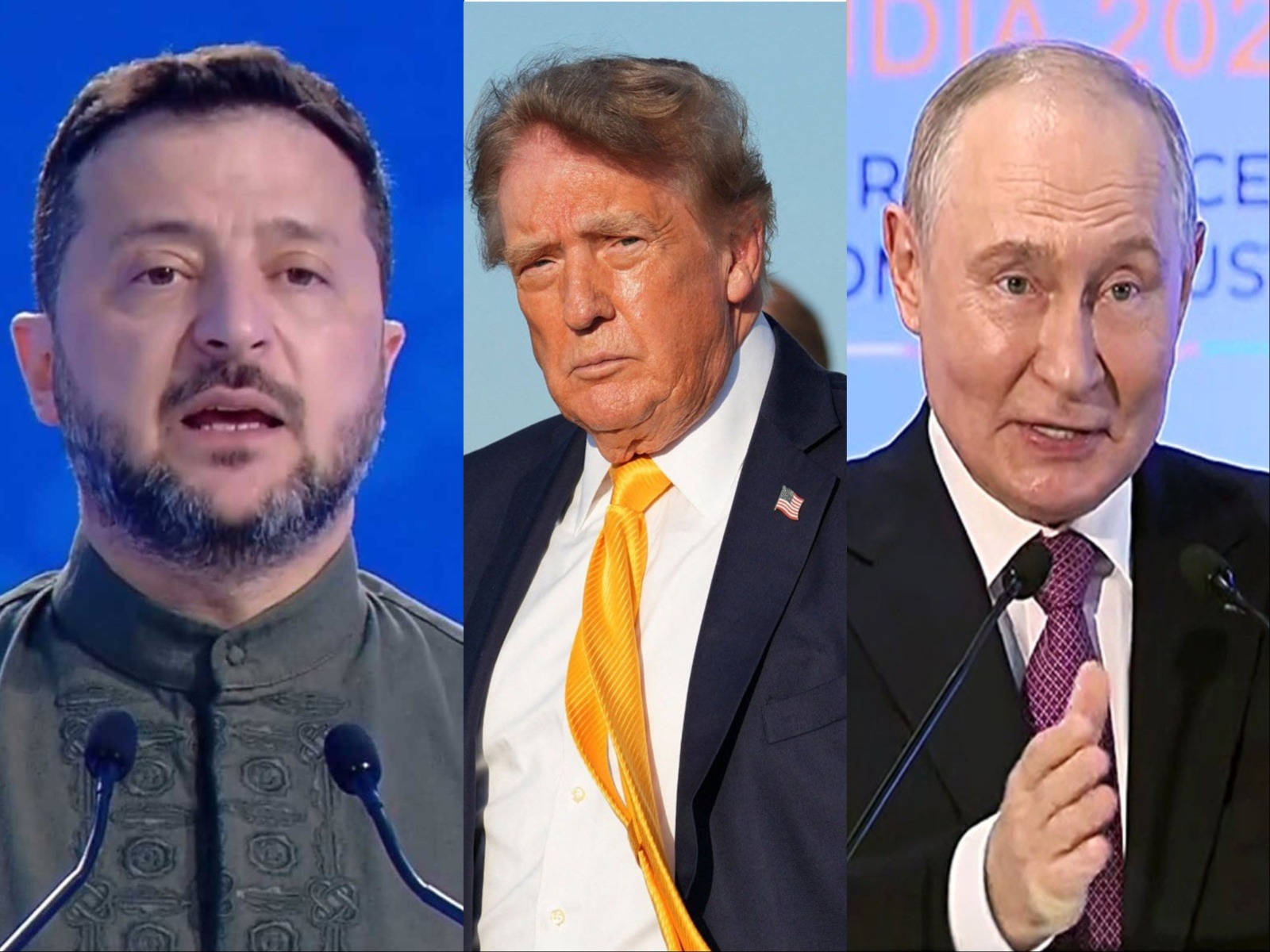
Washington, DC [US], September 18 (ANI): US President Donald Trump is expected to sign the Lindsey O. Graham Sanctioning Russia and Iran Act of 2026 later on Friday (local time).
A White House official confirmed the development to ANI without revealing further details.
The bill, officially named the Lindsey O. Graham Sanctioning Russia and Iran Act of 2026, passed the House of Representatives by a vote of 262-159, having already cleared the Senate last month.
The legislation gives Trump discretion to impose tariffs of up to 100% on countries that continue buying Russian oil and gas, though it does not trigger the levies automatically.
The legislation also targets vessels linked to Russia's "shadow fleet", which the US says has been used to maintain the flow of Russian energy shipments despite existing Western restrictions.
A major provision of the bill would provide the US President with authority to impose tariffs of up to 100 per cent on the five largest importers of Russian petroleum or natural gas.
The legislation includes an exemption for countries importing less than 15 per cent of Russian natural gas exports that have taken substantial measures to reduce those purchases.
For India, the legislation establishes a statutory pathway that could allow Washington to impose tariffs of up to 100 per cent on Indian imports in response to continued purchases of Russian energy.
However, the bill does not itself impose a 100 per cent tariff on Indian goods. Instead, it gives the executive branch authority to impose such tariffs under specified statutory conditions if the legislation is enacted and subsequently invoked by Trump.
India and China are among the major purchasers of Russian crude, making their continued energy trade with Moscow a significant element of the debate surrounding the legislation.
The US Senate had previously approved the legislation by an 86-11 vote on August 7, but its progress in the House slowed amid disagreements over provisions concerning tariffs and their potential implications for US trade policy.
The package also incorporates Trump's demand for a five-year extension of existing sanctions on Iran, which was a key element in securing his backing for the legislation.
In July, Trump backed adding Iran to a proposed Russia sanctions bill, writing on Truth Social, "Republicans should add Iran to the Russian Sanctions Bill. That's what Lindsey wanted to do, and it was going to happen. Important!!!"
Supporters of the bill have argued that the legislation would increase economic pressure on Russia and push Russian President Vladimir Putin towards negotiations.
Republican Congressman Michael McCaul said the bill would "cripple Russia's war machine and finally bring Putin to the negotiating table."
On the other hand, several US lawmakers who voted against the legislation have raised concerns that the legislation would give US President Donald Trump broad authority to impose tariffs, even as they expressed support for holding Russia accountable over its war against Ukraine.
US Congresswoman Pramila Jayapal said she supports the Ukrainian people but voted against the bill because it "grants President Trump incredibly broad authority to impose tariffs" without necessary safeguards.
US Congresswoman Ilhan Omar also voted against the legislation, saying it would not hold Russia accountable.
Congresswoman April McClain Delaney also opposed the bill, saying she supported provisions aimed at holding Russia accountable but could not support granting Trump additional tariff powers.
The measure represents the most substantial American legislative effort supporting Ukraine since Trump re-entered the White House, following a period of parliamentary gridlock that persisted for nearly two years after a 2024 emergency aid package.
Ukrainian President Volodymyr Zelenskyy has welcomed the passage of the bill by the US House, directly linking the legislative action to an overnight wave of Russian missile and drone attacks across Ukraine.
The Russian assault targeted residential neighbourhoods and power grids across eight regions, leaving over 10 civilians injured, including children, and sparking community fires. In a post on X, President Zelenskyy urged international partners to intensify diplomatic and economic pressure on Moscow to force an end to the war.
Zelenskyy called the timing of the Russian assault "symbolic," emphasising that economic pressure remains essential to forcing Moscow to negotiate as the war enters its fifth year.
President Zelenskyy thanked congressional leaders and lawmakers, framing strong economic curbs as a direct pathway to ending the conflict.
"The Lindsey Graham bill, along with other strong sanctions steps by our partners against the source of this war – against Russia – is an extremely powerful tool that can stop this terrorist war and bring Russia to the point where it has to make peace. Sanctions must be strong so that all efforts for peace – including our joint diplomatic efforts with the United States, Europe, and our other friends – can succeed. I thank the members of the House of Representatives, senators, and leaders of the U.S. Congress for supporting this legislation. Russia needs to end this war," said Zelenskyy.
On the other hand, Russian President Vladimir Putin revealed that Russia has been hit with over 30,000 sanctions, more than double the total restrictions slapped on all other countries in the world combined, as he condemned global economic coercion and "ugly" competitive tactics.
Delivering his remarks at the Leaders' Session of the BRICS Business Forum in the national capital, Putin lashed out at Western nations for turning trade and diplomatic pressure into state-level interference.
In a veiled attack against the US, Putin detailed how trade conflicts have escalated into extreme geopolitical disruptions, emphasising the blockade of transport corridors, destruction of pipelines, illegal restrictions and the threat of possible "so-called secondary sanctions" targeting countries that don't abide by "someone else's interest."
"Sometimes competition is taking some ugly forms. This ugly form is something we see even at the State level, at the Government level," Putin asserted. "Sometimes the measures resorted to are of physical nature, when pipelines are being destroyed, when attempts are undertaken to block international transport corridors to seize maritime vessels, illegal restrictions are applied and there is also the threat of so-called secondary sanctions against those who do not want to follow someone else's interest and rather look after their own," he remarked.
Despite the unprecedented wave of punitive measures, the Russian President emphasised that Moscow has successfully pivoted its trade strategy by expanding ties with "reliable, predictable partners."
"Against this difficult backdrop, Russia has been working actively and Russia has managed to achieve great success. We have reinforced our national sovereignty, we are developing ties with reliable, predictable partners." Putin noted.
The bill arrives at a difficult moment for US-India trade relations. Washington imposed an additional 25% tariff on Indian goods in August, tied explicitly to New Delhi’s purchases of Russian oil, pushing total levies on some Indian exports to 50%.
Section 113 of the statutory text of the amendment document outlines mandatory ad valorem trade duties.
"Not later than 30 days after the date of the enactment of this Act, the President shall, notwithstanding any other provision of law, increase the rate of duty for all goods imported into the United States from a country described in subsection (c) (and only from a country described in subsection (c)) to a rate of up to 100 percent ad valorem," the section read.
According to Section 113(c), a covered country is any foreign nation that "knowingly made new purchases of crude oil or natural gas that originated in the Russian Federation on a date that is on or after 30 days after the date of enactment of this Act; and was among the 5 largest importers, by total volume, of crude oil or natural gas that originated in the Russian Federation during the most recent 12-month period preceding the date of the enactment of this Act; or was among the top 5 countries facilitating Russian oil sanctions evasion during the most recent 12-month period preceding the date of the enactment of this Act."
Section 113(f) emphasises that any duty imposed under this section "shall be in addition to any other duty, fee, tax, exaction, or charge applicable with respect to the good."The Amendment also states that the United States Trade Representative (USTR) is granted statutory authority under Section 113(b) to adjust duty rates between zero and 100 per cent if a country takes "significant steps to increase" or "to decrease or cease engaging in the importation, sale, supply, transfer, or purchase of such crude oil or natural gas."Section 113(d) outlines a specific exception for natural gas, noting that duties will not apply if a country's natural gas imports from Russia were "less than 15 percent of the total annual exports of natural gas from the Russian Federation during that period" and the country has taken significant steps to reduce those imports.
However, no such exception is provided for major crude oil buyers.
Additionally, Section 115(a) provides executive authority for a waiver, stating that the US President may waive the "application of any sanctions provision with respect to a foreign person, any restriction with respect to a person, or any duty under this title." To grant a waiver, the President must submit a written certification to the US Congress confirming that the action is in the national interest of the United States.
Beyond tariffs on energy buyers, the Act institutes comprehensive measures against Russian leadership, financial institutions, and maritime networks.
The bill imposes blocking sanctions and visa revocations on top leadership—including the President, Prime Minister, Defence Minister, and military commanders of the Russian Federation—as well as foreign entities supplying items like CNC tools, lubricant additives, chemical coatings, advanced sensors, and fibre optic cables to Russia's defence industrial base.
Furthermore, it targets Russia's "shadow fleet" by blocking foreign vessels and sanctioning foreign persons that transport Russian energy without adequate maritime insurance or evade price caps established by the Price Cap Coalition.
It also mandates severe financial prohibitions, blocking all property and restricting correspondent accounts for the Central Bank of Russia, Sberbank, VTB Bank, and Gazprombank, while penalising foreign financial institutions that engage in significant transactions with them.
Following the green light from Trump, late American Senator Lindsey Graham had said earlier this year that the bipartisan Russia Sanctions Bill would give leverage against India, China, and Brazil to stop them from purchasing Russian oil and punish the countries "fueling Putin's war machine".
In a post on X, he had said that the move comes amid the backdrop of the ongoing peace negotiations for Ukraine ahead of the bipartisan vote.
"After a very productive meeting today with President Trump on a variety of issues, he greenlit the bipartisan Russia sanctions bill that I have been working on for months with Senator Blumenthal and many others. This will be well-timed, as Ukraine is making concessions for peace and Putin is all talk, continuing to kill the innocent. This bill will allow President Trump to punish those countries who buy cheap Russian oil fueling Putin's war machine. This bill would give President Trump tremendous leverage against countries like China, India and Brazil to incentivize them to stop buying the cheap Russian oil that provides the financing for Putin's bloodbath against Ukraine. I look forward to a strong bipartisan vote, hopefully as early as next week," he had said.
India has reaffirmed its commitment to ensuring energy security for its citizens, while noting that during high-level talks with US interlocutors, New Delhi had highlighted the potential trade and economic risks arising from the legislation.
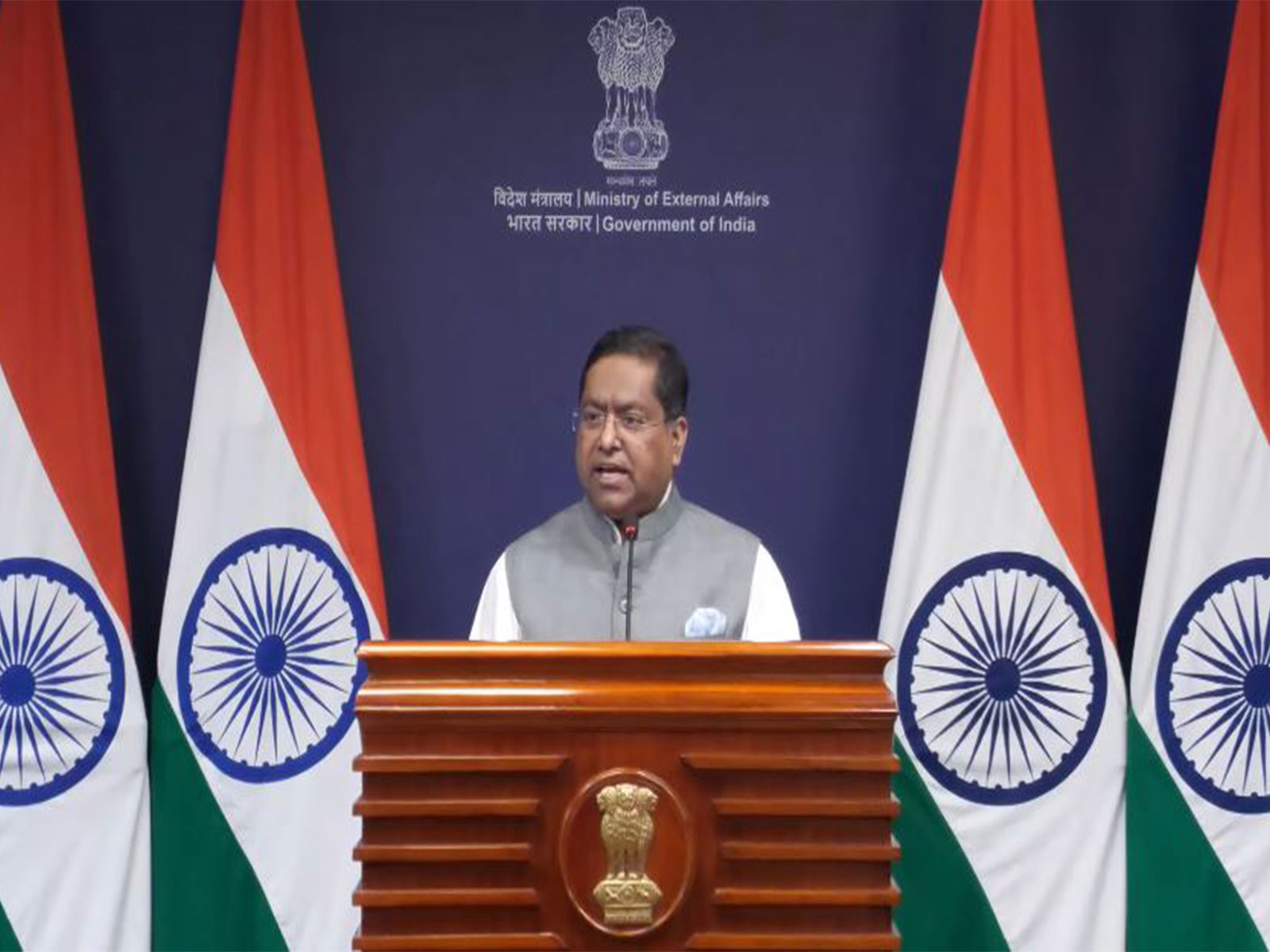
In a statement issued following the passing of the legislation, the Ministry of External Affairs said that New Delhi made clear its determination to protect its trade and economic interests while monitoring further developments on the matter.
Reiterating India's position on energy security, the ministry said, "As stated on several earlier occasions, India remains firmly committed to ensuring energy security for its 1.4 billion people. It will continue to do so through diversified sourcing and on the basis of evolving market dynamics."
MEA added that the government was “monitoring further developments."
The bill’s passage comes against a backdrop of legal setbacks for the Trump administration’s broader tariff agenda. The US Supreme Court invalidated a wider set of tariffs in February, and a federal court struck down a 10% blanket global tariff in May. A bipartisan group of lawmakers has since introduced a separate resolution seeking to unwind those measures.
Meanwhile, the US and India are continuing negotiations toward a bilateral trade agreement, with further talks expected on the sidelines of the G20 Trade Ministers’ meeting in Wisconsin later this month.
Once enacted, the Lindsey O. Graham Sanctioning Russia and Iran Act of 2026 would provide the administration with expanded sanctions and tariff authorities aimed at increasing economic pressure on Russia and countries continuing significant trade in Russian energy. (ANI)
Trump expected to sign Russia Sanctions Bill today, says White House official